
Baker Hughes and Hanwha Partner to Develop Small-Size Ammonia Turbines for Maritime Decarbonization
Generado por agente de IACyrus Cole
lunes, 3 de febrero de 2025, 2:07 am ET2 min de lectura
BKR--
Baker Hughes (NASDAQ: BKR), a leading energy technology company, and Hanwha, a global conglomerate with expertise in energy and materials, have announced a strategic partnership to develop small-size ammonia turbines for maritime applications. The collaboration aims to accelerate the decarbonization of the maritime industry by providing a viable, low-carbon fuel solution for ship propulsion.
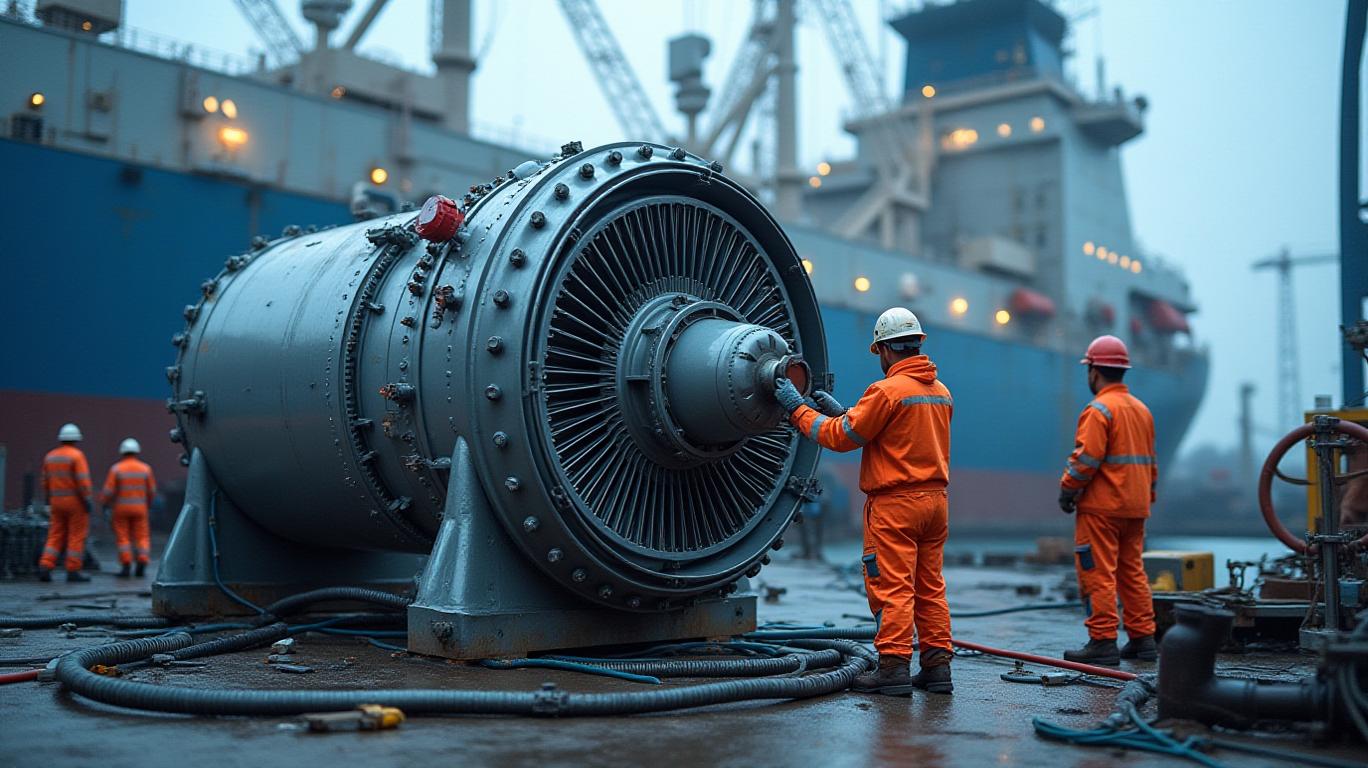
The partnership combines Baker Hughes' proven gas turbine technology with Hanwha's ammonia combustion system, resulting in a 16MW ammonia turbine suitable for marine, onshore, and offshore applications. This innovative solution addresses a critical gap in the industry's decarbonization toolkit, particularly for medium-sized vessels where alternative solutions like hydrogen fuel cells or battery systems face practical limitations.
The new ammonia turbine will be capable of operating on both ammonia and natural gas, providing important operational flexibility during the transition period. This dual-fuel capability reduces adoption risks for shipowners by allowing them to maintain operations even as ammonia bunkering infrastructure develops globally. As ammonia bunkering becomes more accessible, shipowners can gradually increase their use of ammonia, ultimately reducing their carbon footprint.
The strategic timing of this partnership aligns with several key factors, including:
1. IMO's strengthened emissions regulations: The International Maritime Organization (IMO) is set to enforce stricter emissions regulations in 2026. The new ammonia turbine is expected to be commercially available by the end of 2027, positioning it to capture early-mover advantages in the maritime energy transition and potentially establish industry standards for ammonia propulsion systems.
2. Growing global ammonia production and distribution infrastructure: The global ammonia production and distribution infrastructure is expanding, making ammonia a more accessible and viable fuel option for maritime propulsion. By 2027, when the turbine is expected to be commercially available, the infrastructure is likely to be more developed, enabling easier adoption of ammonia as a fuel source.
3. Market demand for low-carbon solutions: There is growing pressure on shipping companies to adopt low-carbon solutions due to increasing environmental concerns and regulations. The partnership's focus on developing a 16MW ammonia turbine addresses a critical gap in the industry's decarbonization toolkit, particularly for medium-sized vessels where alternative solutions face practical limitations.
By combining their expertise, Baker Hughes and Hanwha can effectively address the technological challenges in developing 16MW ammonia turbines, such as ammonia combustion, turbine material compatibility, dual-fuel capability, and efficiency and emissions optimization. This collaboration positions both companies to capture a significant share of the emerging green maritime market.
In conclusion, the partnership between Baker Hughes and Hanwha marks a pivotal advancement in maritime propulsion technology, offering a viable, low-carbon fuel solution for shipowners seeking to reduce their carbon footprint and comply with increasingly stringent emissions regulations. The strategic timing of this collaboration, combined with the growing global ammonia production and distribution infrastructure, creates an attractive market opportunity for investors in both companies.
ELPC--
SHIP--
Baker Hughes (NASDAQ: BKR), a leading energy technology company, and Hanwha, a global conglomerate with expertise in energy and materials, have announced a strategic partnership to develop small-size ammonia turbines for maritime applications. The collaboration aims to accelerate the decarbonization of the maritime industry by providing a viable, low-carbon fuel solution for ship propulsion.
The partnership combines Baker Hughes' proven gas turbine technology with Hanwha's ammonia combustion system, resulting in a 16MW ammonia turbine suitable for marine, onshore, and offshore applications. This innovative solution addresses a critical gap in the industry's decarbonization toolkit, particularly for medium-sized vessels where alternative solutions like hydrogen fuel cells or battery systems face practical limitations.
The new ammonia turbine will be capable of operating on both ammonia and natural gas, providing important operational flexibility during the transition period. This dual-fuel capability reduces adoption risks for shipowners by allowing them to maintain operations even as ammonia bunkering infrastructure develops globally. As ammonia bunkering becomes more accessible, shipowners can gradually increase their use of ammonia, ultimately reducing their carbon footprint.
The strategic timing of this partnership aligns with several key factors, including:
1. IMO's strengthened emissions regulations: The International Maritime Organization (IMO) is set to enforce stricter emissions regulations in 2026. The new ammonia turbine is expected to be commercially available by the end of 2027, positioning it to capture early-mover advantages in the maritime energy transition and potentially establish industry standards for ammonia propulsion systems.
2. Growing global ammonia production and distribution infrastructure: The global ammonia production and distribution infrastructure is expanding, making ammonia a more accessible and viable fuel option for maritime propulsion. By 2027, when the turbine is expected to be commercially available, the infrastructure is likely to be more developed, enabling easier adoption of ammonia as a fuel source.
3. Market demand for low-carbon solutions: There is growing pressure on shipping companies to adopt low-carbon solutions due to increasing environmental concerns and regulations. The partnership's focus on developing a 16MW ammonia turbine addresses a critical gap in the industry's decarbonization toolkit, particularly for medium-sized vessels where alternative solutions face practical limitations.
By combining their expertise, Baker Hughes and Hanwha can effectively address the technological challenges in developing 16MW ammonia turbines, such as ammonia combustion, turbine material compatibility, dual-fuel capability, and efficiency and emissions optimization. This collaboration positions both companies to capture a significant share of the emerging green maritime market.
In conclusion, the partnership between Baker Hughes and Hanwha marks a pivotal advancement in maritime propulsion technology, offering a viable, low-carbon fuel solution for shipowners seeking to reduce their carbon footprint and comply with increasingly stringent emissions regulations. The strategic timing of this collaboration, combined with the growing global ammonia production and distribution infrastructure, creates an attractive market opportunity for investors in both companies.

Divulgación editorial y transparencia de la IA: Ainvest News utiliza tecnología avanzada de Modelos de Lenguaje Largo (LLM) para sintetizar y analizar datos de mercado en tiempo real. Para garantizar los más altos estándares de integridad, cada artículo se somete a un riguroso proceso de verificación con participación humana.
Mientras la IA asiste en el procesamiento de datos y la redacción inicial, un miembro editorial profesional de Ainvest revisa, verifica y aprueba de forma independiente todo el contenido para garantizar su precisión y cumplimiento con los estándares editoriales de Ainvest Fintech Inc. Esta supervisión humana está diseñada para mitigar las alucinaciones de la IA y garantizar el contexto financiero.
Advertencia sobre inversiones: Este contenido se proporciona únicamente con fines informativos y no constituye asesoramiento profesional de inversión, legal o financiero. Los mercados conllevan riesgos inherentes. Se recomienda a los usuarios que realicen una investigación independiente o consulten a un asesor financiero certificado antes de tomar cualquier decisión. Ainvest Fintech Inc. se exime de toda responsabilidad por las acciones tomadas con base en esta información. ¿Encontró un error? Reportar un problema




Comentarios
Aún no hay comentarios