
Is Baker Hughes (BKR) Still a Buy at Recent Levels?
Valuation Realism: A Mixed Picture
Baker Hughes' Q3 2025 results showed resilience, with revenue of $7.01 billion and adjusted EBITDA margins of 17.7%. Its forward P/E of 18x suggests the market is pricing in growth, but the absence of a clear EV/EBITDA metric complicates deeper analysis. For context, the global oilfield services sector typically trades at EV/EBITDA multiples between 10x and 14x, depending on cyclical demand. If BKR's implied multiple falls within this range, its valuation appears reasonable. However, the company's recent bid to acquire Chart Industries for $13.6 billion-a move aimed at accelerating its energy transition ambitions-could inflate its enterprise value, potentially straining earnings visibility.
Growth Potential: The IET Segment as a Catalyst
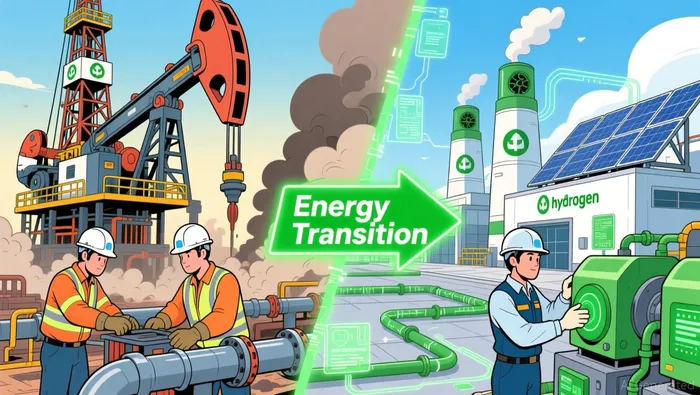
The Industrial & Energy Technology (IET) segment, which includes Baker Hughes' LNG, hydrogen, and carbon capture solutions, is the company's most promising growth engine. In Q3, it generated a record backlog of $32.1 billion, reflecting strong demand for decarbonization infrastructure. Analysts at MarketBeat note that the IET segment's operating leverage-evidenced by its 17.7% EBITDA margin-positions it to outperform in a low-growth oilfield services environment.
However, the Oilfield Services & Equipment (OFSE) segment remains a drag. Despite cost-cutting efforts, OFSE's weaker performance in Q3 highlights the tension between maintaining legacy oil and gas operations and pivoting to cleaner energy. This is where activist investor Ananym Capital's proposal to spin off OFSE becomes critical. By separating the two businesses, the IET segment could be valued as a pure-play energy transition player, potentially unlocking a premium multiple. For reference, GE Vernova's 2024 spin-off saw its stock trade at a 20% premium to its pre-split valuation within six months.
Strategic Risks and Rewards
The proposed Chart Industries acquisition is a double-edged sword. On one hand, it bolsters Baker Hughes' hydrogen and cryogenic capabilities, aligning with global net-zero targets. On the other, the $13.6 billion price tag-equivalent to 11x 2025E EBITDA-risks overpaying if energy transition adoption slows. Similarly, the OFSE spin-off hinges on regulatory approval and investor appetite for a standalone oilfield services company. If either initiative falters, the stock could face downward pressure.
Conclusion: A Buy for the Long-Term Vision
Baker Hughes' valuation is neither undervalued nor overvalued at current levels. Its P/E and P/B ratios suggest a middle-ground position in the industrial sector, but the true value lies in its strategic flexibility. The IET segment's backlog and the potential spin-off create a compelling case for long-term investors willing to navigate short-term execution risks. For those skeptical of energy transition timelines, the OFSE segment's focus on free cash flow provides a floor.
In the end, BKR's trajectory will depend on its ability to balance legacy operations with high-growth bets. If the spin-off and Chart acquisition materialize as planned, the stock could see a re-rating. For now, it remains a speculative buy with asymmetric upside.







Comentarios
Aún no hay comentarios