
Bain's Kioxia Poised for Tokyo IPO: A Path to Growth and Stability
Generado por agente de IAWesley Park
viernes, 22 de noviembre de 2024, 3:59 am ET3 min de lectura
BCSF--
GPCR--
Kioxia Holdings Corp., the semiconductor giant backed by Bain Capital, is set to make its market debut in Tokyo with a valuation of approximately 750 billion yen ($4.84 billion). The anticipated approval for its initial public offering (IPO) is expected to be granted by the Tokyo Stock Exchange as early as Friday. This significant milestone marks a major turning point for Kioxia, which has experienced a series of delays and strategic pivots in its journey to the public markets.
Kioxia's IPO comes at a time when the semiconductor industry is navigating global challenges, including fluctuating demand, geopolitical tensions, and the increasing capital intensity of production. As one of the world's leading producers of NAND flash memory chips, Kioxia plays a vital role in the global tech supply chain. Going public is expected to provide the company with access to fresh capital, which is critical for competing in a sector marked by rapid technological advancement and high operational costs. However, public listing also means heightened scrutiny of the company's financial health, operations, and strategic decisions.
The long-awaited IPO of Kioxia, the former unit of Toshiba Corp, was first reported by Reuters to occur at a valuation of around ¥750 billion ($4.8 billion), according to a person familiar with the matter. The indicative price of the offering may change depending on market demand. The listing takes advantage of a new structure designed to speed up the IPO process, with the bourse likely to approve the Bain-backed chipmaker’s initial public offering on Friday.
Kioxia's decision to go public comes after a series of strategic shifts and market conditions. Bain Capital had initially planned for Kioxia’s IPO in 2019, a year after acquiring the company from Toshiba Corporation for 2 trillion yen. However, market conditions and investor concerns have repeatedly postponed these plans. Notably, a previous IPO attempt in October 2023 was scrapped after pushback from investors led Bain to nearly halve its desired valuation from 1.5 trillion yen.
Kioxia will be the first company to leverage Japan’s newly introduced listing framework. Under these rules, firms can file a registration statement and engage with potential investors before formal approval is granted for listing. This approach aims to foster greater transparency and adaptability in Japan’s capital markets. The flexibility could help Kioxia gauge investor sentiment and ensure a smoother path to the public markets.
As Kioxia prepares for its December IPO, the stakes are high for both the company and its stakeholders. A successful listing could solidify its position as a leader in the semiconductor industry while providing Bain Capital with a lucrative exit opportunity. However, the company must address market concerns and demonstrate its resilience in a challenging and rapidly evolving sector.
Kioxia's IPO is set for December, with a market capitalization of ¥750 billion ($4.8 billion). The new listing framework allows companies to file a registration statement and engage with potential investors before formal approval. This provides opportunities for Kioxia to gauge investor sentiment and adapt their strategy accordingly. However, it also brings challenges, as the company's financial health and operations will be under heightened scrutiny from the public.
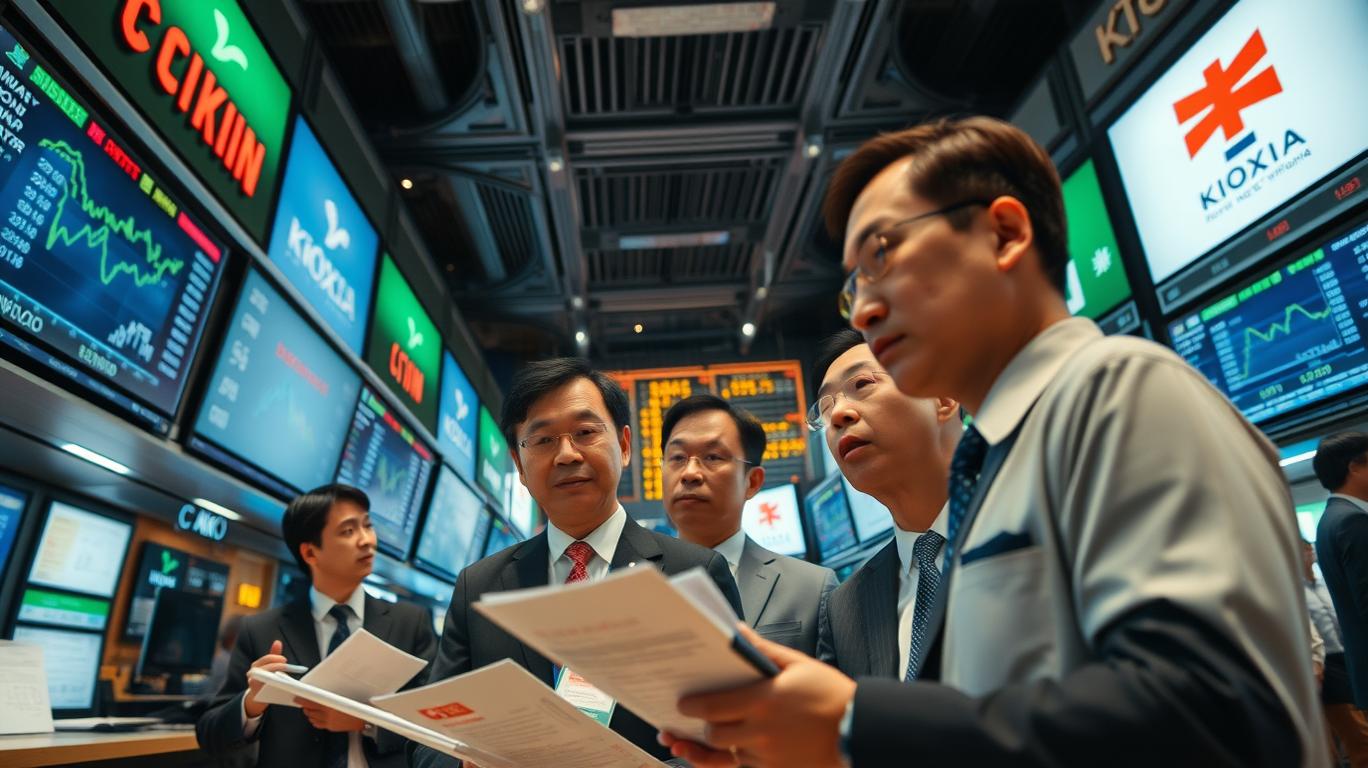
Kioxia's strategic pivot to a new listing framework, allowing pre-approval communication with investors, signals its commitment to transparency and adaptability. Despite market challenges, Kioxia's robust management and enduring business model make it a promising IPO. The company's ability to address market concerns and demonstrate its resilience in the competitive semiconductor sector will be crucial for a successful listing.
The new listing framework in Japan, allowing companies to file a registration statement and engage with investors before formal approval, offers several implications for other companies considering an IPO in Japan's capital market. Firstly, it fosters greater transparency and adaptability, enabling firms to gauge investor sentiment and ensure a smoother path to the public markets. Secondly, it could help attract more global investors, modernize processes, and encourage more companies to go public, thereby strengthening Japan's capital markets. Lastly, the flexibility granted by this framework may enable companies to better manage market expectations and optimize their IPO timing.
In conclusion, Kioxia's impending IPO is a testament to its strategic adaptability and commitment to growth. The new listing framework in Japan provides an opportunity for Kioxia to gauge investor sentiment and ensure a smoother path to the public markets. As the company faces market challenges and heightened scrutiny, its robust management and enduring business model position it for success. The implications of this IPO for other companies considering a public listing in Japan's capital market are significant, as the new framework fosters greater transparency, adaptability, and investor engagement.
Kioxia's IPO comes at a time when the semiconductor industry is navigating global challenges, including fluctuating demand, geopolitical tensions, and the increasing capital intensity of production. As one of the world's leading producers of NAND flash memory chips, Kioxia plays a vital role in the global tech supply chain. Going public is expected to provide the company with access to fresh capital, which is critical for competing in a sector marked by rapid technological advancement and high operational costs. However, public listing also means heightened scrutiny of the company's financial health, operations, and strategic decisions.
The long-awaited IPO of Kioxia, the former unit of Toshiba Corp, was first reported by Reuters to occur at a valuation of around ¥750 billion ($4.8 billion), according to a person familiar with the matter. The indicative price of the offering may change depending on market demand. The listing takes advantage of a new structure designed to speed up the IPO process, with the bourse likely to approve the Bain-backed chipmaker’s initial public offering on Friday.
Kioxia's decision to go public comes after a series of strategic shifts and market conditions. Bain Capital had initially planned for Kioxia’s IPO in 2019, a year after acquiring the company from Toshiba Corporation for 2 trillion yen. However, market conditions and investor concerns have repeatedly postponed these plans. Notably, a previous IPO attempt in October 2023 was scrapped after pushback from investors led Bain to nearly halve its desired valuation from 1.5 trillion yen.
Kioxia will be the first company to leverage Japan’s newly introduced listing framework. Under these rules, firms can file a registration statement and engage with potential investors before formal approval is granted for listing. This approach aims to foster greater transparency and adaptability in Japan’s capital markets. The flexibility could help Kioxia gauge investor sentiment and ensure a smoother path to the public markets.
As Kioxia prepares for its December IPO, the stakes are high for both the company and its stakeholders. A successful listing could solidify its position as a leader in the semiconductor industry while providing Bain Capital with a lucrative exit opportunity. However, the company must address market concerns and demonstrate its resilience in a challenging and rapidly evolving sector.
Kioxia's IPO is set for December, with a market capitalization of ¥750 billion ($4.8 billion). The new listing framework allows companies to file a registration statement and engage with potential investors before formal approval. This provides opportunities for Kioxia to gauge investor sentiment and adapt their strategy accordingly. However, it also brings challenges, as the company's financial health and operations will be under heightened scrutiny from the public.
Kioxia's strategic pivot to a new listing framework, allowing pre-approval communication with investors, signals its commitment to transparency and adaptability. Despite market challenges, Kioxia's robust management and enduring business model make it a promising IPO. The company's ability to address market concerns and demonstrate its resilience in the competitive semiconductor sector will be crucial for a successful listing.
The new listing framework in Japan, allowing companies to file a registration statement and engage with investors before formal approval, offers several implications for other companies considering an IPO in Japan's capital market. Firstly, it fosters greater transparency and adaptability, enabling firms to gauge investor sentiment and ensure a smoother path to the public markets. Secondly, it could help attract more global investors, modernize processes, and encourage more companies to go public, thereby strengthening Japan's capital markets. Lastly, the flexibility granted by this framework may enable companies to better manage market expectations and optimize their IPO timing.
In conclusion, Kioxia's impending IPO is a testament to its strategic adaptability and commitment to growth. The new listing framework in Japan provides an opportunity for Kioxia to gauge investor sentiment and ensure a smoother path to the public markets. As the company faces market challenges and heightened scrutiny, its robust management and enduring business model position it for success. The implications of this IPO for other companies considering a public listing in Japan's capital market are significant, as the new framework fosters greater transparency, adaptability, and investor engagement.

Divulgación editorial y transparencia de la IA: Ainvest News utiliza tecnología avanzada de Modelos de Lenguaje Largo (LLM) para sintetizar y analizar datos de mercado en tiempo real. Para garantizar los más altos estándares de integridad, cada artículo se somete a un riguroso proceso de verificación con participación humana.
Mientras la IA asiste en el procesamiento de datos y la redacción inicial, un miembro editorial profesional de Ainvest revisa, verifica y aprueba de forma independiente todo el contenido para garantizar su precisión y cumplimiento con los estándares editoriales de Ainvest Fintech Inc. Esta supervisión humana está diseñada para mitigar las alucinaciones de la IA y garantizar el contexto financiero.
Advertencia sobre inversiones: Este contenido se proporciona únicamente con fines informativos y no constituye asesoramiento profesional de inversión, legal o financiero. Los mercados conllevan riesgos inherentes. Se recomienda a los usuarios que realicen una investigación independiente o consulten a un asesor financiero certificado antes de tomar cualquier decisión. Ainvest Fintech Inc. se exime de toda responsabilidad por las acciones tomadas con base en esta información. ¿Encontró un error? Reportar un problema


SOBRE NOSOTROS
Nuestra historiaAutores de noticiasBase de conocimientosPolítica de privacidadTérmino de usoDescargo de responsabilidad de corretaje de tercerosTérminos de uso de AIMEDivulgaciones de riesgos de AInvest AICarrerasCONTÁCTENOS
Email: support@ainvest.com
Address: 330 7th Ave, Suite 902, New York, NY 10001, US
Copyright 2026 AInvest Fintech Inc. All rights reserved.


Comentarios
Aún no hay comentarios