
Baidu, Alibaba, Tencent Execs Join Forces on China AI Standards
Generado por agente de IAEli Grant
sábado, 14 de diciembre de 2024, 4:36 am ET1 min de lectura
BABA--
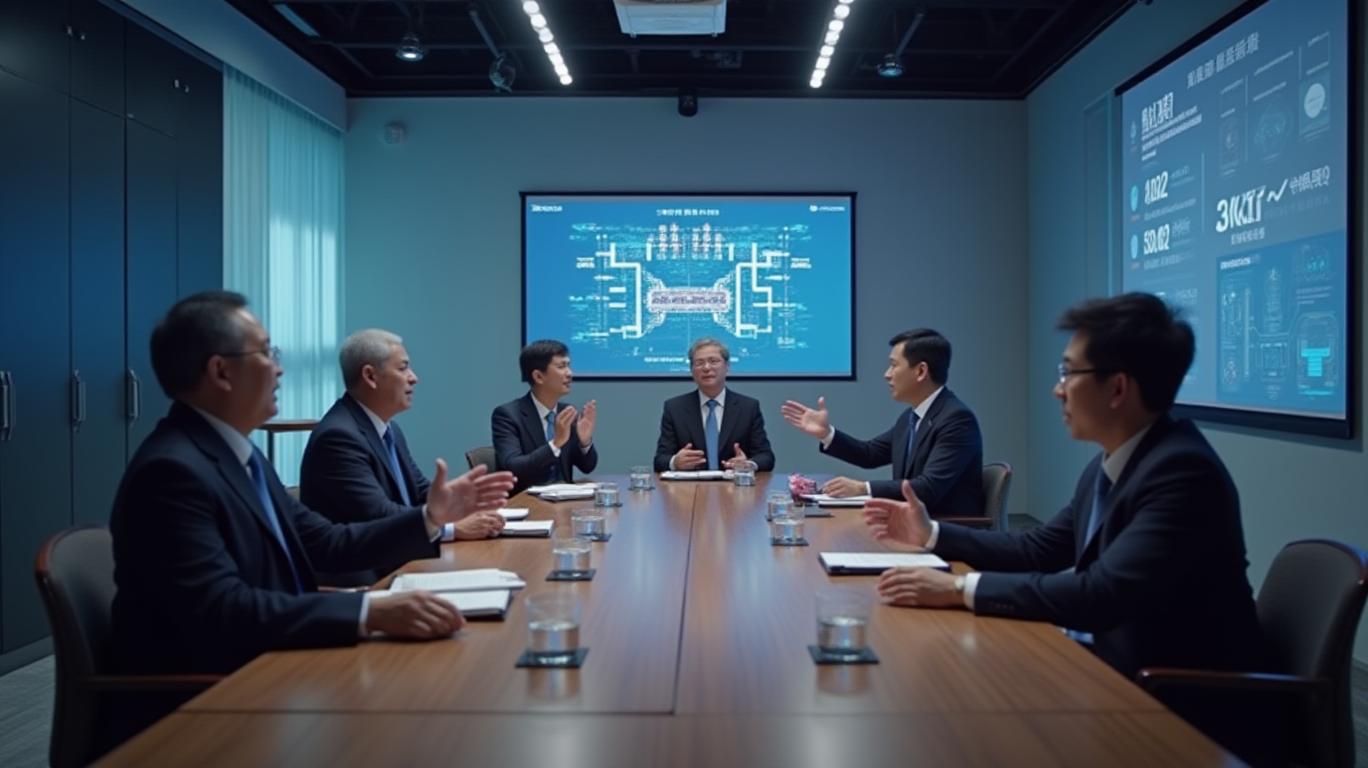
The tech industry in China is witnessing a significant shift as executives from Baidu, Alibaba, and Tencent (BAT) join forces to establish a new AI standards committee. This collaboration signals a strategic move to shape the global AI market and enhance the competitiveness of Chinese AI companies. The National New Generation Artificial Intelligence Governance Standards Committee, launched by the Ministry of Industry and Information Technology, aims to create a unified framework for AI development and application.
The involvement of BAT executives in this committee is expected to have a substantial impact on the development of AI standards in China. Baidu, with its strength in AI research, Alibaba's prowess in AI applications, and Tencent's leadership in AI-driven social platforms, will likely contribute to a balanced and innovative set of AI standards. However, their influence may also raise concerns about potential conflicts of interest, as these companies could prioritize regulations that benefit their businesses. To mitigate this, the committee should ensure transparency and diverse representation, including input from academia, government, and other stakeholders.
The potential impacts of these new AI standards on the competitive landscape of the global AI market are significant. Firstly, these standards could enhance the competitiveness of Chinese AI companies by providing a clear framework for innovation and regulation. Secondly, they may create barriers to entry for foreign competitors, as they would need to comply with these standards to operate in the Chinese market. Lastly, the collaboration among Baidu, Alibaba, and Tencent could foster a more cohesive AI ecosystem in China, potentially leading to technological advancements and market dominance. However, the success of these standards depends on their fairness, adaptability, and international recognition.
The specific AI technologies or applications that might benefit from this committee's work include autonomous driving, natural language processing, and computer vision. Baidu's Apollo autonomous driving platform could see enhanced market positioning through standardized AI technologies. Alibaba's AI-powered e-commerce platforms and Tencent's WeChat AI capabilities could also gain traction, as the committee's work may lead to improved AI integration and user experiences.
In conclusion, the formation of the new AI standards committee in China, featuring executives from Baidu, Alibaba, and Tencent, signals a strategic move to shape the global AI market. This collaboration could enhance the competitiveness of Chinese AI companies, create barriers to entry for foreign competitors, and foster a more cohesive AI ecosystem in China. However, the success of these standards depends on their fairness, adaptability, and international recognition. As the committee works to establish unified AI standards, investors should monitor the progress and assess the potential impacts on the competitive landscape of the global AI market.
BIDU--
The tech industry in China is witnessing a significant shift as executives from Baidu, Alibaba, and Tencent (BAT) join forces to establish a new AI standards committee. This collaboration signals a strategic move to shape the global AI market and enhance the competitiveness of Chinese AI companies. The National New Generation Artificial Intelligence Governance Standards Committee, launched by the Ministry of Industry and Information Technology, aims to create a unified framework for AI development and application.
The involvement of BAT executives in this committee is expected to have a substantial impact on the development of AI standards in China. Baidu, with its strength in AI research, Alibaba's prowess in AI applications, and Tencent's leadership in AI-driven social platforms, will likely contribute to a balanced and innovative set of AI standards. However, their influence may also raise concerns about potential conflicts of interest, as these companies could prioritize regulations that benefit their businesses. To mitigate this, the committee should ensure transparency and diverse representation, including input from academia, government, and other stakeholders.
The potential impacts of these new AI standards on the competitive landscape of the global AI market are significant. Firstly, these standards could enhance the competitiveness of Chinese AI companies by providing a clear framework for innovation and regulation. Secondly, they may create barriers to entry for foreign competitors, as they would need to comply with these standards to operate in the Chinese market. Lastly, the collaboration among Baidu, Alibaba, and Tencent could foster a more cohesive AI ecosystem in China, potentially leading to technological advancements and market dominance. However, the success of these standards depends on their fairness, adaptability, and international recognition.
The specific AI technologies or applications that might benefit from this committee's work include autonomous driving, natural language processing, and computer vision. Baidu's Apollo autonomous driving platform could see enhanced market positioning through standardized AI technologies. Alibaba's AI-powered e-commerce platforms and Tencent's WeChat AI capabilities could also gain traction, as the committee's work may lead to improved AI integration and user experiences.
In conclusion, the formation of the new AI standards committee in China, featuring executives from Baidu, Alibaba, and Tencent, signals a strategic move to shape the global AI market. This collaboration could enhance the competitiveness of Chinese AI companies, create barriers to entry for foreign competitors, and foster a more cohesive AI ecosystem in China. However, the success of these standards depends on their fairness, adaptability, and international recognition. As the committee works to establish unified AI standards, investors should monitor the progress and assess the potential impacts on the competitive landscape of the global AI market.

Divulgación editorial y transparencia de la IA: Ainvest News utiliza tecnología avanzada de Modelos de Lenguaje Largo (LLM) para sintetizar y analizar datos de mercado en tiempo real. Para garantizar los más altos estándares de integridad, cada artículo se somete a un riguroso proceso de verificación con participación humana.
Mientras la IA asiste en el procesamiento de datos y la redacción inicial, un miembro editorial profesional de Ainvest revisa, verifica y aprueba de forma independiente todo el contenido para garantizar su precisión y cumplimiento con los estándares editoriales de Ainvest Fintech Inc. Esta supervisión humana está diseñada para mitigar las alucinaciones de la IA y garantizar el contexto financiero.
Advertencia sobre inversiones: Este contenido se proporciona únicamente con fines informativos y no constituye asesoramiento profesional de inversión, legal o financiero. Los mercados conllevan riesgos inherentes. Se recomienda a los usuarios que realicen una investigación independiente o consulten a un asesor financiero certificado antes de tomar cualquier decisión. Ainvest Fintech Inc. se exime de toda responsabilidad por las acciones tomadas con base en esta información. ¿Encontró un error? Reportar un problema


SOBRE NOSOTROS
Nuestra historiaAutores de noticiasBase de conocimientosPolítica de privacidadTérmino de usoDescargo de responsabilidad de corretaje de tercerosTérminos de uso de AIMEDivulgaciones de riesgos de AInvest AICarrerasCONTÁCTENOS
Email: support@ainvest.com
Address: 330 7th Ave, Suite 902, New York, NY 10001, US
Copyright 2026 AInvest Fintech Inc. All rights reserved.


Comentarios
Aún no hay comentarios