
Bahrain's Strategic Fintech Alliance with Ripple: A Catalyst for Regional Financial Infrastructure Growth
The Middle East's fintech landscape is undergoing a seismic shift, driven by regulatory innovation, cross-border payment advancements, and the strategic entry of global blockchain leaders like Ripple. At the heart of this transformation is Bahrain, a nation leveraging its progressive regulatory environment and cost advantages to position itself as a fintech and blockchain hub. The recent partnership between Ripple and Bahrain Fintech Bay (BFB) has amplified this momentum, offering a blueprint for how regional collaboration can catalyze financial infrastructure growth. This analysis explores the investment potential of Bahrain's fintech ecosystem through Ripple's expansion, contextualized within the broader Gulf market.
Ripple's Strategic Expansion: A Cornerstone for Bahrain's Fintech Ambitions
Ripple's October 2025 partnership with BFB marks a pivotal step in the company's regional strategy. By introducing its Ripple USD (RLUSD) stablecoin and digital asset custody solutions to Bahrain's financial institutions, Ripple is directly addressing the demand for scalable, compliant blockchain infrastructure in the Gulf, as described in a Ripple press release. The collaboration includes pilot projects in cross-border payments, tokenization, and educational programs, aligning with Bahrain's vision to become a blockchain innovation leader, according to a Zawya press release.
This partnership builds on Ripple's existing regulatory license from the Dubai Financial Services Authority (DFSA), secured in March 2025, and underscores the company's commitment to the Middle East, as noted in a Blockonomi article. Notably, the Central Bank of Bahrain introduced a stablecoin regulatory framework in July 2025, creating a legal pathway for RLUSD integration, according to The Cryptocurrency Post. Ripple's involvement is expected to attract over $500 million in fintech investment into Bahrain over five years, according to industry analysts cited by Coinfomania.
Regional Fintech Dynamics: Growth, Regulation, and Competitive Positioning
Bahrain's fintech ecosystem is uniquely positioned to capitalize on these developments. A 2025 report highlighted that Bahrain offers a 48% cost advantage over other Gulf Cooperation Council (GCC) countries for operating fintech firms, with lower office space costs, licensing fees, and competitive labor expenses, according to GCC Business Watch. This cost efficiency, combined with a forward-looking regulatory environment, has attracted global financial institutions like Citi and JP Morgan, which are establishing major operations in the country.
In comparison, the UAE has focused on digital transformation through initiatives like the Financial Infrastructure Transformation (FIT) program, while Saudi Arabia has advanced open banking frameworks, as outlined in a Mordor Intelligence report. Despite these efforts, Bahrain's agility and cost competitiveness make it a compelling destination for blockchain-driven innovation. For instance, the UAE's fintech sector raised $1.1 billion in 2024, but Bahrain's regulatory clarity and early adoption of blockchain technology give it an edge in attracting niche, high-growth fintechs, according to Forbes Middle East.
Investment Trends: A Booming Market with Ripple's Catalyst
The Middle Eastern fintech market is projected to reach $2.4 billion in funding by 2029, driven by GCC countries like the UAE, Saudi Arabia, and Bahrain, per Fintech Galaxy. In H1 2025 alone, GCC fintechs secured $598 million across 93 deals, nearly matching the 2024 full-year total, according to a Magnitt report. Ripple's entry into Bahrain is expected to accelerate this trend, particularly in cross-border payments and stablecoin adoption.
For example, Ripple's global network already supports transactions in 90+ markets and 55+ currencies, enabling institutions to settle via fiat, stablecoins, or XRPXRP--, as noted in a Forbes analysis. In the Gulf, where remittance corridors to India and Pakistan are critical, Ripple's blockchain solutions could reduce transaction fees from 6–8% to 1–2%, creating immediate value for banks and users, according to the Khaleej Times. The introduction of RLUSD in Bahrain further strengthens this proposition, offering a regulated stablecoin that bridges traditional and digital finance, as covered in a CoinDesk article.
Risks and Considerations
While the outlook is optimistic, challenges remain. Regulatory compliance costs for fintechs in the Gulf remain high, with firms spending up to 35% of operational budgets on adherence, according to a McKinsey analysis. Additionally, geopolitical uncertainties and global macroeconomic shifts could impact investor sentiment. However, Bahrain's proactive approach-such as its stablecoin framework and cost advantages-positions it to mitigate these risks more effectively than its peers.
Conclusion: A Strategic Investment Opportunity
Bahrain's partnership with Ripple represents more than a corporate collaboration; it is a strategic investment in the future of regional financial infrastructure. By leveraging Ripple's blockchain expertise and regulatory agility, Bahrain is poised to become a linchpin for cross-border payments and digital asset innovation in the Gulf. For investors, this ecosystem offers a unique confluence of regulatory clarity, cost efficiency, and technological leadership-a rare trifecta in the rapidly evolving fintech landscape.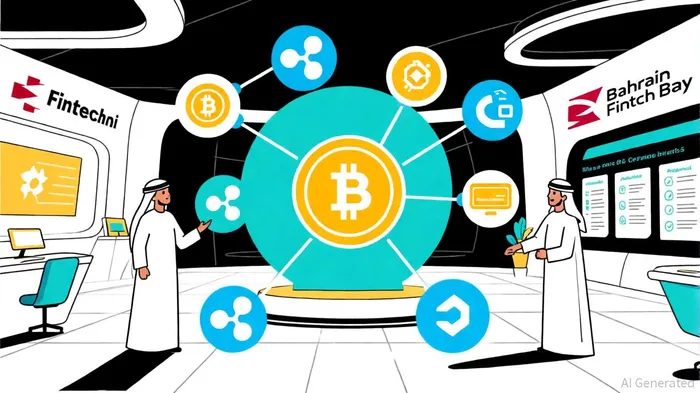






Comentarios
Aún no hay comentarios