
Backpack Launches BP Token With Milestone-Based Unlocking and Staking Mechanism
Backpack, a Solana-based wallet and exchange, has launched its BPBP-- token with a total supply of 1 billion tokens, unlocking 25% at the TGE and distributing the remainder over time based on business milestones and regulatory progress.
The token design prohibits direct allocations to the team, founders, or investors until after a company listing or equity exit, aiming to align user and company incentives while minimizing insider dumping risks.
Users who stake BP for at least one year can convert their tokens into company equity, with 20% of company shares allocated to eligible stakers.
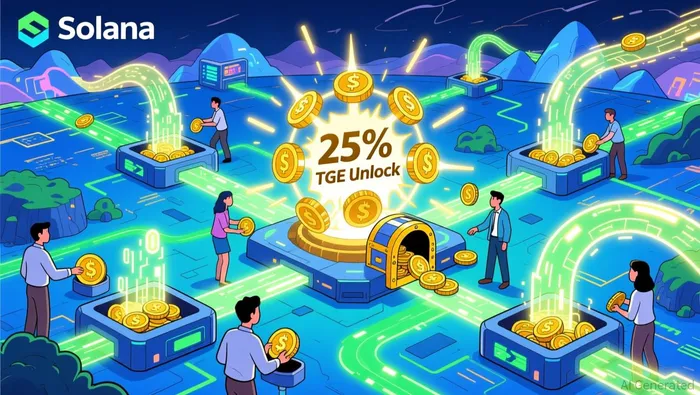
Backpack's BP token is being distributed to existing users as part of a 25% airdrop, bypassing traditional centralized listings in favor of onchain trading platforms like JupiterJUP-- and MeteoraMET-- . This approach is designed to leverage Solana's DeFi infrastructure for liquidity and price discovery . The token's supply is structured to unlock progressively, with 37.5% allocated pre-IPO and 37.5% post-IPO, tied to corporate treasury assets for long-term value creation .
Founder Armani Ferrante emphasized that team members and investors will gain exposure through the corporate treasury rather than direct token allocations, ensuring no early insider profits . The token's roadmap includes regulatory expansion across the UAE, UK, and European countries, with an IPO planned for the future .
What is the structure of the token unlocking mechanism?
The BP token's unlocking is tied to key milestones such as regulatory progress, product expansion, and market access. At the TGE, 25% of the token supply is unlocked and distributed to users, with the remaining 750 million tokens to be released over time. These tokens are held in a corporate treasury and unlocked gradually based on the company's progress .
The token supply is divided into three phases: 25% at the TGE, 37.5% pre-IPO, and 37.5% post-IPO. This milestone-based model is designed to create positive feedback loops as Backpack achieves business objectives and aligns long-term incentives between users and the company .
How does the staking-to-equity conversion work?
Users who stake BP for at least one year can convert their tokens into company equity. This mechanism allows long-term holders to become partial owners of the company and benefit from its growth . The company has allocated 20% of its shares to eligible stakers, reinforcing the alignment between token value and business performance .
The staking-to-equity conversion is intended to foster engagement and ensure that users have a vested interest in the company's success . It also adds a layer of governance and accountability, as token holders can influence key business decisions once they become equity holders .
What are the implications for investors and the broader market?
The milestone-based unlocking mechanism and structured token release are designed to prevent insider dumping and encourage long-term value creation. This approach may appeal to investors seeking projects with aligned incentives and transparent tokenomics .
Backpack's strategy of bypassing traditional listings in favor of onchain trading via platforms like Jupiter and Meteora aims to provide liquidity and price discovery through decentralized infrastructure . This model reflects a growing trend in the crypto space toward onchain governance and decentralized market access .
Market predictions suggest a post-listing fully diluted valuation between $100 million and $200 million, aligning with previous funding valuations . This projection highlights the potential for value appreciation as the company progresses toward its regulatory and business milestones .
Overall, Backpack's BP token model represents a structured and incentive-aligned approach to token distribution and governance, emphasizing transparency and long-term sustainability.





Comentarios
Aún no hay comentarios