
AWS and SAP's Strategic Alliance and Its Implications for European Cloud Infrastructure Markets
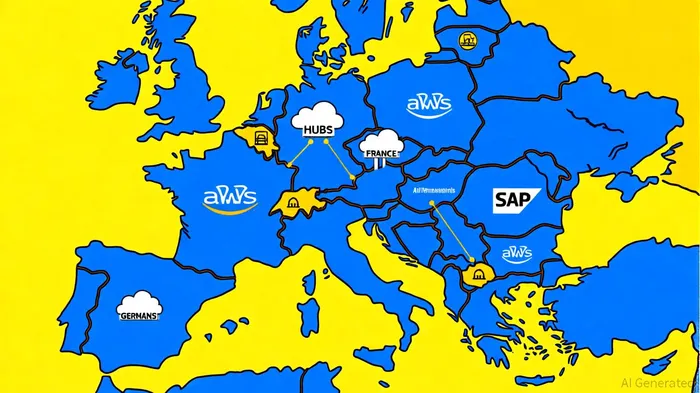
In 2025, AmazonAMZN-- Web Services (AWS) and SAPSAP-- announced a landmark strategic alliance to advance digital sovereignty and AI innovation in Europe, a move that signals a pivotal shift in the region's cloud infrastructure landscape. This collaboration, underpinned by a €7.8 billion investment from AWS and over €20 billion from SAP, aims to address the growing demand for secure, compliant, and locally controlled cloud solutions in highly regulated sectors such as finance, healthcare, and public administration[1]. The partnership's focus on the AWS European Sovereign Cloud and SAP Sovereign Cloud capabilities aligns with Europe's urgent need to balance technological innovation with data localization and regulatory compliance.
Regulatory Frameworks as Catalysts for Sovereign Cloud Demand
Europe's evolving regulatory environment, particularly the Digital Operational Resilience Act (DORA) and the General Data Protection Regulation (GDPR), is reshaping how cloud infrastructure is designed and deployed. Effective January 17, 2025, DORA mandates that financial institutions and third-party ICT providers implement robust risk management frameworks to ensure resilience against cyber threats and operational disruptions[3]. This includes requirements for decentralized vendor ecosystems and stringent incident reporting protocols, which directly influence the architecture of sovereign cloud solutions.
Meanwhile, GDPR's 72-hour data breach notification rule continues to pressure organizations to adopt infrastructure that minimizes cross-border data flows and ensures real-time compliance[4]. AWS and SAP's joint initiative, which includes the AWS European Sovereign Cloud's first region in Brandenburg, Germany, and SAP's Delos Cloud in Germany, explicitly addresses these regulatory demands by offering data residency within EU borders and modular deployment options[1]. For investors, this alignment with regulatory frameworks represents a critical competitive advantage, as non-compliance risks could deter enterprises from adopting non-EU cloud providers.
Market Growth and Strategic Alliances: A Booming Opportunity
The European sovereign cloud infrastructure market is projected to grow at a compound annual growth rate (CAGR) of 16.20% between 2025 and 2030, expanding from an estimated USD 220.90 billion to USD 467.97 billion[2]. This growth is driven by government incentives for cloud-first digital agendas, particularly in Germany, France, and Spain, where fiscal backing and regulatory frameworks are accelerating digital transformation[2]. Additionally, the FLAP-D corridor (Frankfurt, London, Amsterdam, Paris, and Dublin) has become a focal point for hyperscaler investments, with AWS's EUR 7.8 billion commitment underscoring the region's strategic importance[2].
Hybrid cloud adoption is also surging at a CAGR of 19.2%, as enterprises seek to balance data sovereignty with scalability by combining private and public cloud solutions[2]. SAP's Sovereign Cloud On-Site and AWS's sovereign cloud offerings exemplify this trend, enabling organizations to retain control over sensitive data while leveraging advanced AI and analytics capabilities[1]. For investors, the hybrid model presents a dual opportunity: capitalizing on the scalability of public cloud infrastructure while addressing the security and compliance needs of private deployments.
Strategic Implications for Investors
The AWS-SAP alliance is not merely a technological partnership but a strategic response to Europe's quest for digital autonomy. By integrating AWS's global cloud expertise with SAP's enterprise application solutions, the collaboration creates a secure foundation for AI-driven innovation while adhering to EU regulations. This synergy is particularly relevant for investors targeting sectors where data sovereignty is non-negotiable, such as public sector services, financial services, and healthcare.
However, challenges remain. Rising cybersecurity threats and the complexity of navigating divergent national regulations across EU member states could slow adoption. For instance, while the European Cybersecurity Certification Scheme for Cloud Services (EUCS) aims to standardize security benchmarks, its implementation is still fragmented[4]. Investors must also weigh the long-term viability of sovereign cloud models against the cost of compliance and the potential for regulatory overreach.
Conclusion: A New Era of Sovereign-Driven Innovation
AWS and SAP's strategic alliance underscores a broader trend: the convergence of technological innovation and regulatory compliance in Europe's cloud infrastructure market. As the region seeks to reduce reliance on non-European providers and foster homegrown digital ecosystems, sovereign cloud solutions are becoming essential for both public and private sector organizations. For investors, this represents a compelling opportunity to support infrastructure that not only meets current regulatory demands but also positions Europe as a global leader in secure, AI-driven innovation.





Comentarios
Aún no hay comentarios