
AWS Develops Custom Trainium AI Chips for Cloud Computing to Meet Growing Demands
PorAinvest
martes, 9 de septiembre de 2025, 5:51 am ET2 min de lectura
AMZN--
OpenAI’s new chip is expected to focus on optimizing performance for its internal operations, potentially reducing costs associated with renting cloud-based GPUs. Speculation suggests the chip will emphasize matrix multiplication and parallel processing tailored for neural networks, similar to Google’s Tensor Processing Units (TPUs), which Broadcom has helped develop in the past. The chip might also integrate advanced features like high-bandwidth memory interfaces to handle the massive data throughput required for generative AI tasks [1].
The partnership has already boosted Broadcom’s stock, with shares rising over 9% following the announcement [1]. OpenAI’s $10 billion order with Broadcom represents a bold bet on vertical integration, challenging Nvidia’s near-monopoly in AI accelerators. However, designing custom silicon is capital-intensive and time-consuming, with risks of delays in fabrication [1].
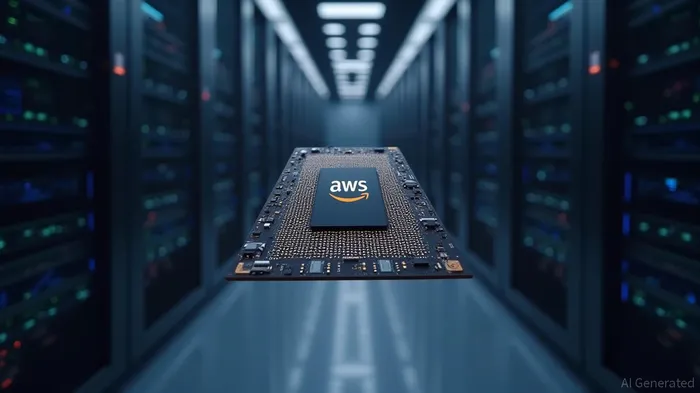
Meanwhile, Amazon Web Services (AWS) is developing custom Trainium AI chips for cloud computing, targeting AI training workloads with systolic array design and dedicated data buses. The chip's memory architecture stores training data and evolving parameters, while an interposer component coordinates power distribution and data flow. This vertical integration approach allows AWS to optimize hardware for its own data centers and customer requirements, addressing industry tensions over semiconductor supply chains and growing AI computational demands [2].
The global semiconductor supply chain is undergoing a seismic shift as India and Singapore deepen their collaboration in AI and semiconductor research. This partnership, driven by geopolitical diversification and supply chain resilience, is positioning the Indo-Pacific as a critical hub for next-generation technology. The collaboration aligns with global trends of localization and reshoring, aiming to reduce reliance on concentrated manufacturing hubs [2].
Industry experts anticipate that OpenAI’s and AWS’s custom chips could set a precedent for other AI startups to pursue hardware independence. If successful, these chips could redefine computational efficiency for years to come. As AI and semiconductor demands surge, strategic alliances like these exemplify how nations and corporations can enhance technological sovereignty and challenge the status quo of global supply chains [2].
References:
[1] https://www.webpronews.com/openai-partners-with-broadcom-for-custom-ai-chips-to-rival-nvidia/
[2] https://www.ainvest.com/news/india-singapore-forge-strategic-semiconductor-ai-alliances-reshape-global-supply-chains-2509/
AVGO--
NVDA--
TSM--
Amazon Web Services (AWS) is developing custom Trainium AI chips for cloud computing, targeting AI training workloads with systolic array design and dedicated data buses. The chip's memory architecture stores training data and evolving parameters, and an interposer component coordinates power distribution and data flow. This vertical integration approach allows AWS to optimize hardware for its own data centers and customer requirements, addressing industry tensions over semiconductor supply chains and growing AI computational demands.
In a strategic move to reduce dependency on dominant players like Nvidia, OpenAI has partnered with semiconductor giant Broadcom to develop custom AI-specific processors. The collaboration, which involves Broadcom providing expertise in chip design and Taiwan Semiconductor Manufacturing Co. (TSMC) handling fabrication, aims to address surging demands for computing power in AI model training and execution [1].OpenAI’s new chip is expected to focus on optimizing performance for its internal operations, potentially reducing costs associated with renting cloud-based GPUs. Speculation suggests the chip will emphasize matrix multiplication and parallel processing tailored for neural networks, similar to Google’s Tensor Processing Units (TPUs), which Broadcom has helped develop in the past. The chip might also integrate advanced features like high-bandwidth memory interfaces to handle the massive data throughput required for generative AI tasks [1].
The partnership has already boosted Broadcom’s stock, with shares rising over 9% following the announcement [1]. OpenAI’s $10 billion order with Broadcom represents a bold bet on vertical integration, challenging Nvidia’s near-monopoly in AI accelerators. However, designing custom silicon is capital-intensive and time-consuming, with risks of delays in fabrication [1].
Meanwhile, Amazon Web Services (AWS) is developing custom Trainium AI chips for cloud computing, targeting AI training workloads with systolic array design and dedicated data buses. The chip's memory architecture stores training data and evolving parameters, while an interposer component coordinates power distribution and data flow. This vertical integration approach allows AWS to optimize hardware for its own data centers and customer requirements, addressing industry tensions over semiconductor supply chains and growing AI computational demands [2].
The global semiconductor supply chain is undergoing a seismic shift as India and Singapore deepen their collaboration in AI and semiconductor research. This partnership, driven by geopolitical diversification and supply chain resilience, is positioning the Indo-Pacific as a critical hub for next-generation technology. The collaboration aligns with global trends of localization and reshoring, aiming to reduce reliance on concentrated manufacturing hubs [2].
Industry experts anticipate that OpenAI’s and AWS’s custom chips could set a precedent for other AI startups to pursue hardware independence. If successful, these chips could redefine computational efficiency for years to come. As AI and semiconductor demands surge, strategic alliances like these exemplify how nations and corporations can enhance technological sovereignty and challenge the status quo of global supply chains [2].
References:
[1] https://www.webpronews.com/openai-partners-with-broadcom-for-custom-ai-chips-to-rival-nvidia/
[2] https://www.ainvest.com/news/india-singapore-forge-strategic-semiconductor-ai-alliances-reshape-global-supply-chains-2509/


Divulgación editorial y transparencia de la IA: Ainvest News utiliza tecnología avanzada de Modelos de Lenguaje Largo (LLM) para sintetizar y analizar datos de mercado en tiempo real. Para garantizar los más altos estándares de integridad, cada artículo se somete a un riguroso proceso de verificación con participación humana.
Mientras la IA asiste en el procesamiento de datos y la redacción inicial, un miembro editorial profesional de Ainvest revisa, verifica y aprueba de forma independiente todo el contenido para garantizar su precisión y cumplimiento con los estándares editoriales de Ainvest Fintech Inc. Esta supervisión humana está diseñada para mitigar las alucinaciones de la IA y garantizar el contexto financiero.
Advertencia sobre inversiones: Este contenido se proporciona únicamente con fines informativos y no constituye asesoramiento profesional de inversión, legal o financiero. Los mercados conllevan riesgos inherentes. Se recomienda a los usuarios que realicen una investigación independiente o consulten a un asesor financiero certificado antes de tomar cualquier decisión. Ainvest Fintech Inc. se exime de toda responsabilidad por las acciones tomadas con base en esta información. ¿Encontró un error? Reportar un problema


SOBRE NOSOTROS
Nuestra historiaAutores de noticiasBase de conocimientosPolítica de privacidadTérmino de usoDescargo de responsabilidad de corretaje de tercerosTérminos de uso de AIMEDivulgaciones de riesgos de AInvest AICarrerasCONTÁCTENOS
Email: support@ainvest.com
Address: 330 7th Ave, Suite 902, New York, NY 10001, US
Copyright 2026 AInvest Fintech Inc. All rights reserved.


Comentarios
Aún no hay comentarios