
Awaze's Deteriorating Credit Profile and Its Implications for the Holiday Rental Sector
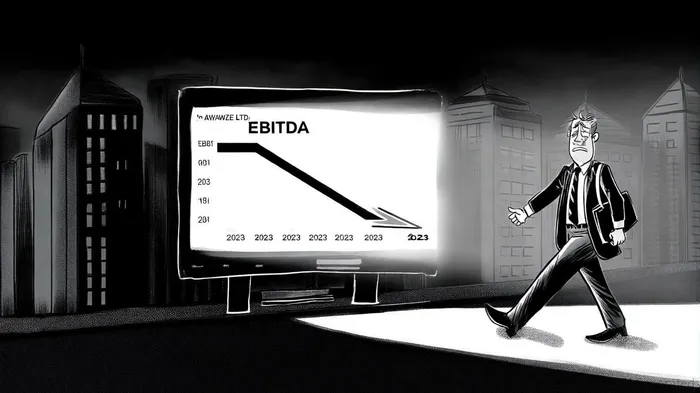
The holiday rental sector, increasingly adopting asset-light business models to scale operations without heavy capital outlays, faces a critical juncture as Awaze Ltd. navigates a deteriorating credit profile. Recent developments at Awaze—a transport and logistics firm with a growing footprint in hospitality—highlight the vulnerabilities inherent in asset-light strategies when liquidity pressures and structural debt challenges collide. This analysis examines Awaze's financial trajectory, contextualizes its struggles within the broader sector, and evaluates the implications for credit risk management in asset-light hospitality firms.
Awaze's Credit Profile: A Cautionary Tale of Liquidity and Refinancing
Awaze's credit rating saga began in August 2023, when S&P Global Ratings placed its debt on CreditWatch negative due to “upcoming maturities and liquidity pressures.” This downgrade followed the divestiture of Landal, its Dutch holiday park operator, which accounted for 60% of EBITDA in 2022. The loss of this revenue stream, coupled with a 33% decline in adjusted EBITDA to €63 million in 2023, exposed Awaze's reduced diversification and operational resilience, as noted in an S&P tear sheet. However, the company's swift action to refinance its debt in September 2023—through an amend-and-extend plan—allowed it to stabilize its liquidity and retain its 'B-' rating with a stable outlook.
Despite this short-term success, Awaze's 2025 financials remain opaque. While the company reported Rs. 278 crore in revenue for FY2022, no detailed 2025 data is available, leaving investors to infer its trajectory from broader market trends. Moody's 2025 sector outlook notes cautiously stable conditions for global corporates but warns of risks from trade protectionism and geopolitical tensions. For Awaze, these macroeconomic headwinds compound its structural challenges, particularly as its debt-heavy capital structure—evidenced by loans from Axis Bank and HDFC Bank—leaves it vulnerable to refinancing shocks, per its company profile.
Asset-Light Models: Flexibility vs. Fragility in Hospitality
The asset-light model, which dominates modern hospitality, allows firms to transfer capital risks to owners while earning management or franchise fees, as discussed in a LinkedIn post. This approach, exemplified by brands like Marriott and Airbnb, enables rapid expansion without balance-sheet strain. However, as Awaze's case illustrates, the model's benefits are contingent on robust liquidity and operational efficiency.
For asset-light firms, credit risk management hinges on balancing fee structures with owner incentives. For instance, management agreements often tie fees to GOPPAR (Gross Operating Profit per Available Room), aligning operator and owner interests, as noted by Hospitality Investor. Yet, rising operating costs—such as labor and insurance—can erode margins, particularly in seasonal sectors like holiday rentals, a point underscored in a Skift analysis. Awaze's reliance on debt to fund growth further amplifies its exposure: while debt offers tax advantages (per the Trade-Off Theory), excessive leverage increases distress risk during downturns.
Sector-Wide Implications: Credit Risk in a Fragmented Market
Awaze's struggles reflect broader challenges in the holiday rental sector, where asset-light operators face dual pressures:
1. Seasonal Demand Volatility: Short-term utilization patterns require dynamic credit risk frameworks to manage cash flow gaps, as outlined in Credit Risk Management.
2. Complex Financial Reporting: The separation of ownership, management, and licensing under asset-light models increases audit complexity and the risk of accounting misrepresentation, according to a ScienceDirect study.
Regulatory scrutiny is intensifying, with institutions like the Federal Reserve emphasizing stress testing and transparent risk ratings, per Federal Reserve guidance. For Awaze and peers, this means adopting advanced risk models (e.g., PD, LGD, EAD) and segmenting credit portfolios to isolate high-risk segments, as highlighted in an Abrigo outlook.
Strategic Recommendations for Investors
- Monitor Liquidity Buffers: Awaze's 2023 refinancing success was a temporary fix. Investors should track its debt maturities and cash flow coverage ratios in 2025 via its filing history.
- Assess Hybrid Models: A blend of asset-light flexibility and selective asset ownership could mitigate Awaze's fragility while preserving scalability, as suggested in a Reed Smith perspective.
- Evaluate Sector Resilience: The holiday rental sector's reliance on brand-driven demand makes it sensitive to macroeconomic shifts. Diversification into non-seasonal markets may be critical, as explored in a FasterCapital piece.
Conclusion
Awaze's credit profile serves as a microcosm of the holiday rental sector's evolving risks and opportunities. While asset-light strategies offer agility, they demand disciplined capital structure management and proactive credit risk mitigation. For investors, the key lies in balancing optimism about Awaze's refinancing capabilities with caution regarding its debt load and sector-specific vulnerabilities. As 2025 unfolds, the company's ability to adapt its capital structure to macroeconomic headwinds will determine its long-term viability—and set a precedent for peers in the asset-light hospitality space.







Comentarios
Aún no hay comentarios