
Avoiding Lifestyle Inflation: How Early Debt Choices Shape Long-Term Wealth
In the pursuit of financial independence, the decisions made in early career years often serve as the foundation for long-term wealth accumulation. One of the most critical choices involves managing debt-particularly high-interest obligations that can erode financial progress. Recent data underscores the growing emphasis on debt reduction as a priority for Americans, with 42% identifying it as their top financial goal for 2025. This shift reflects a broader recognition that early debt habits, such as financing large purchases like cars, can either accelerate or derail wealth-building trajectories.
The Hidden Cost of Lifestyle Inflation
Lifestyle inflation-the tendency to increase spending as income rises-often manifests in high-interest debt, particularly in vehicle purchases. Consider the case of Simone, a young professional with a $30,000 car loan. While this may seem manageable in the short term, the long-term implications are significant. High-interest auto loans lock individuals into monthly payments that could otherwise be directed toward investments, emergency funds, or debt repayment. According to Dave Ramsey, a leading voice in personal finance, financing a car is a strategic misstep: "Cars are depreciating assets. You don't drive a $30,000 car with a $60,000 income." His philosophy emphasizes that vehicles should be tools, not status symbols, and that cash purchases eliminate the burden of interest and the temptation to overspend. His advice on cars reinforces this principle.
The Compounding Power of Debt Avoidance
Ramsey's advice aligns with broader financial research. A 2025 survey revealed that 56% of Americans who purchased cars in the past year paid in cash, with 89% expressing satisfaction compared to just 55% of loan recipients. This data highlights a growing trend toward debt-free living, where individuals prioritize liquidity and avoid the compounding costs of interest. For example, a Reddit user who followed Ramsey's principles paid off a $35,000 car loan in 14 months by drastically cutting expenses and focusing on essentials. Such strategies not only accelerate debt elimination but also free up capital for wealth-building opportunities.
Strategic Debt Management: Snowball vs. Avalanche
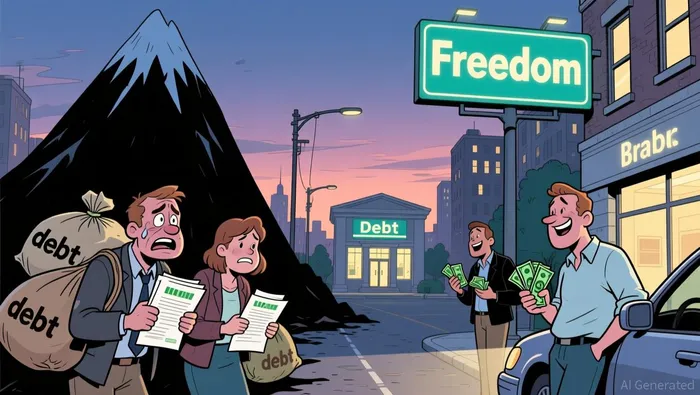
For those already burdened by high-interest debt, structured repayment methods are essential. The "debt snowball" method, popularized by Ramsey, involves paying off smaller debts first to build momentum. Conversely, the "debt avalanche" approach prioritizes debts with the highest interest rates to minimize total repayment costs. Both strategies underscore the importance of prioritizing high-interest obligations, which can otherwise drain resources and delay financial independence. Regional banks and financial advisors also play a role by offering personalized solutions, such as debt consolidation loans, to simplify repayment and reduce borrowing costs.
The Role of Financial Literacy and Planning
Proactive financial planning is another cornerstone of debt management. Creating a realistic budget, maintaining an emergency fund, and leveraging low-interest debt for wealth-building opportunities are critical steps. For instance, consolidating high-interest credit card debt into a lower-rate loan can reduce monthly payments and free up capital for investments. Additionally, working with a CERTIFIED FINANCIAL PLANNER® professional has become increasingly valuable for crafting structured debt reduction plans. These strategies align with the broader redefinition of financial success around resilience and long-term planning, as noted in a 2025 KeyBank survey.
Conclusion: Building Wealth Through Discipline
The path to financial independence is paved with disciplined choices. Avoiding high-interest debt early in one's career-particularly through cash purchases for depreciating assets like cars-creates a compounding effect that accelerates wealth accumulation. By prioritizing liquidity, adopting strategic repayment methods, and seeking professional guidance, individuals can transform debt from a barrier into a stepping stone. As Ramsey often emphasizes, "You work too hard to get to the end of your life and have nothing to show for it". The lessons from Simone's dilemma and the broader data on debt management underscore a simple truth: financial freedom begins with the courage to say no to lifestyle inflation and the discipline to invest in the future.







Comentarios
Aún no hay comentarios