
Avio's 400-Million-Euro Capital Raise: A Strategic Catalyst for Growth in the Aerospace and Defense Sectors
The aerospace and defense sectors are undergoing a transformative phase, driven by global demand for strategic autonomy, satellite constellations, and defense modernization. Italian aerospace giant Avio S.p.A. is positioning itself at the center of this evolution through a 400-million-euro capital raise announced in September 2025, a move designed to accelerate its growth in propulsion systems, space launchers, and defense technologies[1]. This analysis evaluates Avio's market positioning and production scalability, assessing whether the capital raise aligns with the company's ambitions in a high-growth industry.
Strategic Positioning: A Linchpin in European and Transatlantic Aerospace
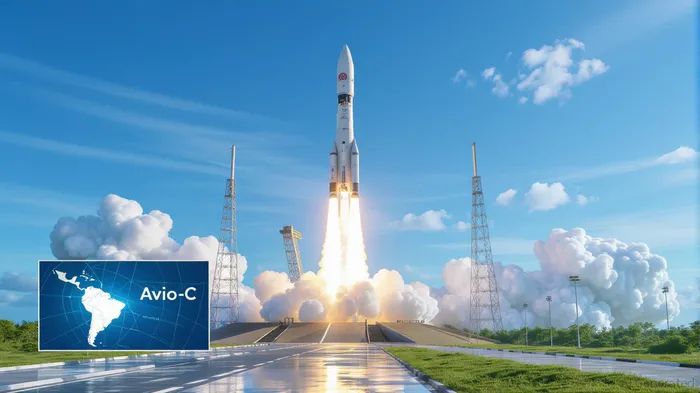
Avio's role in Europe's push for strategic autonomy is unparalleled. As a key supplier for the Vega and Ariane 6 programs, the company provides critical propulsion components, including the P120 and P160 solid-fuel boosters, which are foundational to the European Space Agency's (ESA) and European Union's (EU) goals of independent space access[4]. The Vega-C rocket, which completed its VV27 mission in July 2025, has already demonstrated Avio's operational reliability, while the upcoming Vega E platform—optimized for sustainability and reusability—positions the company to capture a growing share of the satellite launch market[2].
The company's expansion into the U.S. defense sector further strengthens its competitive edge. By establishing a “tariff-insulated” manufacturing facility in the United States, operational by 2028, Avio is diversifying its revenue streams and tapping into a market projected to grow alongside the Inflation Reduction Act's (IRA) incentives for advanced manufacturing[1]. This move is particularly significant as European defense spending surges: the EU's 800-billion-euro European Defence Industrial Strategy (EDIS) through 2030 ensures robust demand for domestic suppliers like Avio[5].
Production Scalability: Capital Raise as a Catalyst
Avio's capital raise is a direct response to the need for scalable production capacity. The company plans to increase Vega-C launch frequency and scale up P120/P160 booster production to meet demand from mega-constellation projects like Amazon's Kuiper[4]. According to its half-year 2025 financial report, Avio achieved 30% revenue growth in H1 2025, driven by Vega-C operations and new defense contracts[2]. This growth trajectory underscores the company's ability to translate strategic investments into tangible output.
The 400-million-euro infusion will also fund the U.S. facility, which is expected to reduce lead times for defense propulsion systems and enhance Avio's competitiveness against global rivals like SpaceX. While the company faces risks such as program delays or technological bottlenecks, its alignment with multi-year public funding (e.g., ESA and EDIS contracts) provides a buffer against market volatility[1].
Risks and Considerations
Despite its strengths, Avio's success hinges on the performance of the Vega and Ariane 6 programs. Delays in these initiatives, or shifts in European defense priorities, could disrupt its growth. Additionally, competition from U.S. players like SpaceX—whose reusable rocket technology reduces launch costs—poses a long-term challenge[4]. However, Avio's focus on solid-fuel propulsion and its strategic partnerships (e.g., with MBDA and the U.S. Armed Forces) mitigate these risks[2].
Conclusion: A High-Conviction Play in Strategic Sectors
Avio's capital raise is more than a funding event—it is a strategic pivot to capitalize on Europe's and the U.S.'s dual imperatives of space sovereignty and defense modernization. With a clear roadmap for production scalability, strong investor confidence (reflected in its 164% annual stock surge[3]), and a portfolio aligned with global megatrends, Avio is well-positioned to outperform in a sector poised for sustained growth. For investors, the company represents a compelling opportunity to participate in the next phase of aerospace and defense innovation.







Comentarios
Aún no hay comentarios