
Avidity Biosciences' $40 IPO: A Strategic Move in a Shifting Biotech Landscape
Avidity Biosciences has priced its upsized initial public offering (IPO) at $40 per share, raising $600 million in gross proceeds before underwriting costs. This move, announced on September 10, 2025, reflects both the company's strategic ambitions and the broader dynamics of the biotech sector in a year marked by cautious optimism and selective capital flows. With the offering set to close on or around September 15, the question remains: Does this IPO position AvidityRNA-- for long-term success in a market demanding de-risked assets and clear commercial pathways?
Market-Readiness and Capital Allocation
Avidity's decision to raise $600 million—well above its initial target—signals strong investor confidence. The offering includes an underwriters' option to purchase an additional 2.25 million shares, a feature often reserved for companies with robust demand[1]. The funds will be allocated to advance three late-stage clinical programs, build commercial inventory, expand infrastructure, and continue research on its AOC (Antibody-Oligonucleotide Conjugate) platform[2]. This focus on commercial readiness is critical in a sector where investors increasingly prioritize near-term milestones over speculative science.
The biotech industry in 2025 is characterized by a shift toward strategic capital allocation. According to the EY 2025 Biotech Beyond Borders Report, investors are favoring companies with de-risked pipelines and clear paths to profitability[3]. Avidity's emphasis on late-stage trials and infrastructure expansion aligns with this trend, suggesting a calculated effort to meet investor expectations. However, the company's success will depend on its ability to translate these funds into regulatory approvals and market access—a challenge underscored by the sector's recent struggles with pricing pressures and regulatory scrutiny[3].
Sector Trends and Competitive Positioning
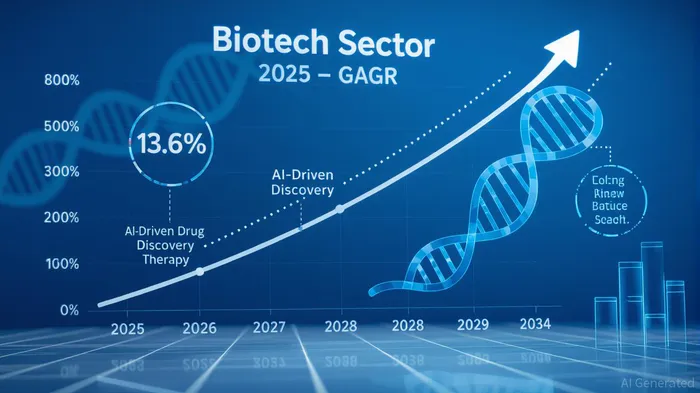
The biotech sector's growth trajectory remains intact, albeit with structural shifts. The global biotech market is projected to reach $5.85 trillion by 2034, driven by innovations in gene therapy, AI-driven drug discovery, and synthetic biology[4]. Avidity's AOC platform, which combines antibody-drug conjugate (ADC) technology with oligonucleotide therapeutics, positions it at the intersection of two high-growth areas. Yet, competition is fierce. Startups like Odyssey Therapeutics and CHARM Therapeutics have recently secured significant funding for novel therapies, intensifying the race to commercialize next-generation treatments[5].
Avidity's IPO also reflects broader fundraising trends. With venture capital funding becoming more selective, biotech firms are increasingly relying on public markets and partnerships with Big Pharma to bridge capital gaps[3]. The company's collaboration with major underwriters, including Leerink Partners and J.P. Morgan, underscores its credibility in accessing these capital sources. However, the IPO's success must be measured against the sector's mixed performance: while AI-driven platforms and rare disease therapies attract attention, oncology and gene therapy face higher hurdles due to cost and regulatory complexity[4].
Long-Term Capital-Raising Potential
Avidity's long-term prospects hinge on its ability to leverage this IPO as a springboard for further growth. The $600 million raised will provide a buffer to navigate clinical and commercial risks, but sustainability will require additional milestones. According to a report by Excedr, biotech startups are increasingly prioritizing partnerships and non-dilutive funding to avoid over-reliance on equity markets[3]. Avidity's AOC platform, if validated in trials, could attract Big Pharma interest, offering a dual path for capital—either through licensing deals or follow-on public offerings.
Yet, the company must also contend with macroeconomic headwinds. Regulatory uncertainties, pricing pressures, and potential tariff implications remain unresolved challenges[3]. Avidity's focus on commercial inventory and infrastructure suggests an awareness of these risks, but its ability to scale efficiently will be critical. The sector's projected CAGR of 13.6% from 2025 to 2034[4] offers a favorable backdrop, but only for companies that can demonstrate consistent progress.
Conclusion
Avidity Biosciences' $40 IPO represents a calculated bet on the biotech sector's long-term potential. By securing a substantial capital raise and aligning with investor priorities, the company has positioned itself to advance its pipeline and build commercial capabilities. However, the path to profitability remains fraught with challenges, from regulatory hurdles to competitive pressures. In a market demanding both scientific rigor and financial prudence, Avidity's success will depend on its ability to deliver on its clinical promises while navigating the evolving landscape of biotech capital allocation.





Comentarios
Aún no hay comentarios