
Aviation Safety Technology: A Lucrative Investment Horizon Post-UPS Crash and Regulatory Shifts
Regulatory Reckonings and Systemic Risks
The UPS Flight 2976 crash, involving a 34-year-old McDonnell Douglas MD-11F, exposed vulnerabilities in maintenance protocols and aircraft aging management. The National Transportation Safety Board (NTSB) and Federal Aviation Administration (FAA) have since launched investigations, with the latter temporarily reducing flight capacity at 40 U.S. airports to mitigate risks amid staffing challenges, according to a GuruFocus report. This incident mirrors the 1979 American AirlinesAAL-- DC-10 crash, where maintenance oversights were pivotal, underscoring the need for stricter oversight of aging aircraft.
The Haneda collision in 2024 further highlighted systemic risks, prompting the FAA to prioritize runway incursion prevention. According to a Reuters report, the agency is now conducting a comprehensive study to address underinvestment in the National Airspace System, which has exacerbated fatigue-related errors, a Reuters report. These regulatory shifts signal a broader push for modernization, with implications for firms offering runway safety systems and predictive maintenance solutions.
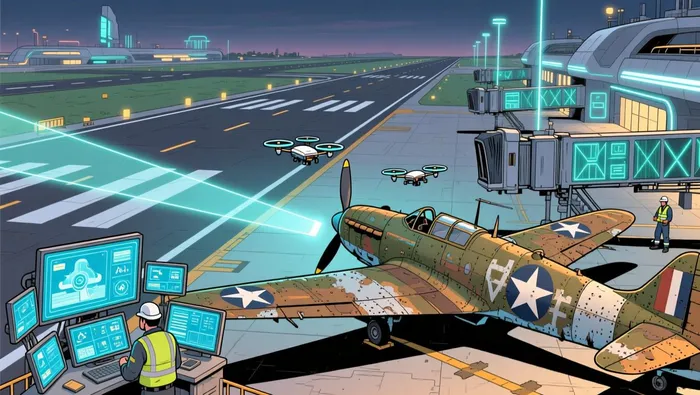
Technological Innovations: From RegTech to AI-Driven Safety
The integration of Regulatory Technology (RegTech) is reshaping compliance in air freight. IATA's ONE Record and eAWBs (electronic air waybills) are streamlining operations, reducing errors, and enabling real-time compliance tracking, according to a IATA article. Meanwhile, partnerships like Air Cargo Green Capabilities (ACGC) and SF Express are leveraging digital tools to enhance sustainability and route efficiency, a Delano article.
Technological advancements in collision avoidance systems are equally transformative. The FAA's Traffic Collision Avoidance System Resolution Advisory Measurement Enhancement (TCAS RA Method B) is being tested to improve pilot responses during critical maneuvers, a Reuters report. Honeywell International and BoeingBA--, key players in this domain, are likely to see increased demand for their systems as regulators mandate upgrades, a Yahoo article.
Investment Opportunities in Aviation Safety Tech
While specific stock performance data for safety tech firms post-2023 is sparse, the sector's fundamentals are robust. Market research projects the airport runway safety systems market to expand significantly through 2030, driven by military and civilian demand, a Yahoo article. Companies like Aviation Safety Technologies (AST) and Honeywell (HON) are positioned to capitalize on this growth.
The UPS crash has also accelerated interest in predictive maintenance solutions. For instance, firms offering IoT-enabled structural health monitoring systems could see increased adoption as airlines seek to preempt failures in aging fleets. Similarly, RegTech providers like SITA and IBM, which offer blockchain-based compliance platforms, are well-placed to benefit from IATA's push for paperless operations, a IATA article.
Risks and Considerations
Investors must remain cautious. The UPS incident revealed operational risks tied to high leverage and revenue declines in logistics giants like UPS itself, a GuruFocus report. Additionally, geopolitical tensions-such as the targeting of civil aircraft in conflict zones-could disrupt trade routes and necessitate further investment in security technologies, a Reuters report.
Conclusion
The confluence of regulatory urgency and technological innovation presents a compelling case for aviation safety tech. As the FAA and NTSB continue to probe systemic risks, companies offering advanced safety systems, RegTech solutions, and predictive maintenance tools are likely to see sustained demand. While stock performance data remains limited, the sector's long-term trajectory is undeniably upward, making it a strategic investment opportunity for forward-looking portfolios.







Comentarios
Aún no hay comentarios