
Aviation Safety and Military Modernization in Bangladesh: Navigating Risks and Opportunities in a Post-Crash Era
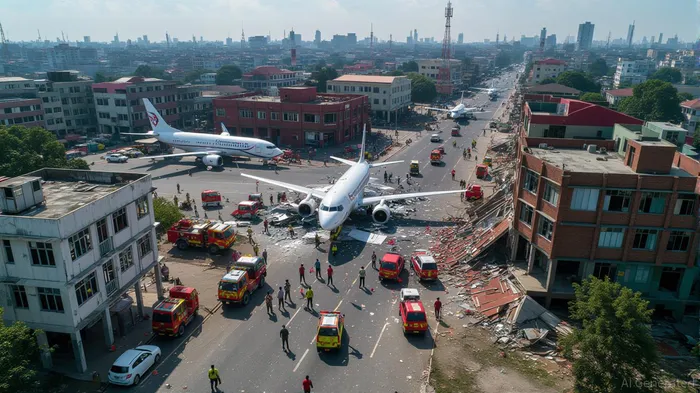
The tragic July 2025 Dhaka air force jet crash, which claimed 27 lives—including 25 children—has cast a long shadow over Bangladesh's defense and aerospace sector. The incident, involving a Chinese-made F-7 BGI jet, exposed critical vulnerabilities in aviation safety protocols, urban planning, and the operational readiness of an aging fleet. For investors, this tragedy underscores both the urgent need for modernization and the complex risks embedded in emerging markets' military infrastructure.
The Catalyst for Change
The crash, attributed to a “technical malfunction” during a routine training mission, has forced Bangladesh to confront systemic issues. The F-7 BGI, part of a 2011–2013 procurement of 16 aircraft, is now under scrutiny for maintenance lapses and design limitations. With seven of the past 11 air force crashes involving Chinese-made jets, concerns about the reliability of aging platforms are acute. The government's Forces Goal 2030 initiative, which seeks to modernize all three military branches by 2030, has gained renewed urgency.
A key component of this plan is the procurement of 32 Chengdu J-10CE multi-role combat aircraft, set to replace the F-7 fleet. These advanced fighters, equipped with modern avionics and radar systems, signal Bangladesh's pivot toward 21st-century capabilities. However, the reliance on Chinese technology—already evident in the F-7 saga—raises questions about supply chain vulnerabilities and geopolitical dependencies.
Investment Risks: Fiscal Constraints and Urban Encroachment
Bangladesh's defense budget, while expanding in nominal terms, remains constrained. In 2025–2026, only 2.4% of the $3.34 billion defense allocation—$916 million—was earmarked for modernization, compared to 22% in India. This imbalance reflects broader fiscal challenges: defense spending as a percentage of GDP (1.02%) lags behind regional peers like Pakistan (3%) and Myanmar (nearly 4%).
Urban encroachment around military bases further complicates safety. The Dhaka crash site, once an empty canal, is now a densely populated area. This trend—common in fast-growing cities—poses a recurring risk for training missions. Investors must weigh the likelihood of future accidents against the costs of infrastructure adjustments, such as acquiring buffer zones or upgrading emergency response systems.
Opportunities in Modernization and Partnerships
Despite these risks, Bangladesh's modernization drive presents compelling opportunities. The Forces Goal 2030 program includes not just aircraft but also advanced air defense systems, transport planes, and radar technology. For example, the Italian Selex RAT-31DL radar and Turkish FM-90 short-range air defense systems highlight a diversification of defense partnerships.
International defense contractors stand to benefit from Bangladesh's procurement pipeline. Chinese firms like Chengdu Aircraft Industry Group (CAIG) and Russian companies supplying SU-30SME and MiG-35 aircraft are already engaged. Meanwhile, U.S. firms such as Lockheed MartinLMT-- and Boeing—though not directly involved in Bangladesh's current contracts—could gain traction if the country expands its Western defense ties.
Strategic Considerations for Investors
- Technology Transfer and Local Production: Bangladesh's emphasis on local manufacturing partnerships—such as the integration of Turkish drones and Chinese trainers—could attract foreign investors seeking emerging market footholds.
- Geopolitical Exposure: While China dominates current contracts, shifts in regional dynamics (e.g., India's strategic interests in Bangladesh) may diversify procurement sources.
- Safety Infrastructure Upgrades: Investments in airfield safety systems, such as obstacle-free zones and advanced navigation tools, could mitigate risks and enhance operational efficiency.
Conclusion: Balancing Caution and Potential
The Dhaka crash is a sobering reminder of the stakes in emerging market defense sectors. For investors, the path forward lies in balancing the risks of fiscal constraints and operational challenges with the opportunities in modernization contracts and strategic partnerships. Bangladesh's Forces Goal 2030, if executed effectively, could transform its air force into a regional power. However, success will depend on transparent governance, sustained funding, and a willingness to address systemic issues.
In the long term, the sector offers a mix of volatility and growth. Investors with a high-risk tolerance and a focus on infrastructure resilience may find value in early-stage opportunities tied to aviation safety upgrades and military modernization. For others, the lessons of Dhaka serve as a cautionary tale: in emerging markets, even the most ambitious plans require a foundation of accountability and adaptability.





Comentarios
Aún no hay comentarios