
Avalon Labs: Pioneering the On-Chain AI and RWA Economy
The CRT Framework: Tokenizing Commercial Rights for DeFi Synergy
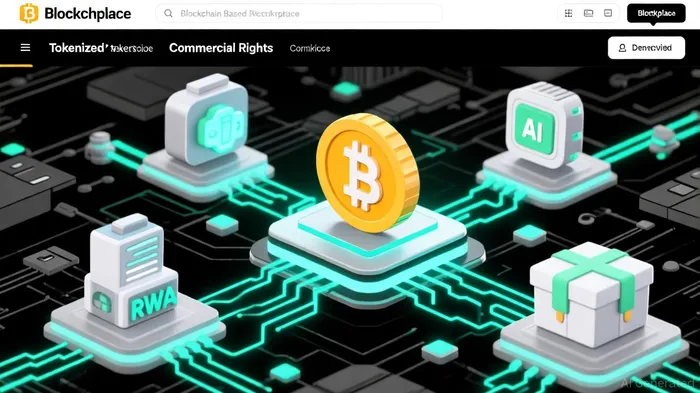
Avalon's CRT Framework represents a paradigm shift in asset tokenization by extending beyond physical or financial assets to encompass commercial rights-such as usage, rental, or access rights-to goods, services, and commodities, as noted in a Cryptotimes report. This innovation is underpinned by U.S. commercial law (UCC Articles 7, 9, and 12), ensuring legal enforceability of tokenized rights on-chain, according to a TradingView article. For instance, a business could tokenize the right to future sales of a product, enabling investors to trade these rights as digital assets while maintaining regulatory compliance.
The framework's structured allocation model further enhances its DeFi compatibility. By dividing AI compute resources into Senior Allocation (sAI) for stable, low-risk access and Junior Allocation (jAI) for demand-driven flexibility, Avalon creates a tiered system that balances resource volatility while catering to both enterprise and retail participants, as the Cryptotimes report explains. This dual-tier approach mirrors DeFi's liquidity pools, where users can stake or lend resources for yield, but with the added layer of AI compute utility.
AI-MaaS: Democratizing High-Performance AI with DeFi Principles
Avalon's AI-MaaS platform eliminates the barriers to high-performance AI by offering pre-trained models optimized for H200 GPU infrastructure. This removes the need for users to manage hardware or training pipelines, democratizing access to cutting-edge AI tools. For GPU owners, the platform tokenizes compute access, allowing them to monetize idle resources through DeFi-style staking or lending.
The integration of reinforcement learning models further amplifies scalability. By enabling plug-and-play AI systems for developers and institutions, Avalon reduces the time and cost associated with deploying AI solutions, a point also highlighted in the Cryptotimes coverage. This is particularly critical in DeFi, where real-time data processing and predictive analytics are becoming essential for risk management and yield optimization.
DeFi Integration: Bridging BitcoinBTC-- Liquidity and AI Compute
Avalon's DeFi initiatives extend beyond AI compute to include a Bitcoin-backed lending platform that issues USDa, a stablecoin pegged 1:1 to USDTUSDT-- with a fixed borrow rate of 8%, according to the Avalon Labs website. This allows Bitcoin holders to access liquidity without selling their assets, a feature that aligns with the growing demand for non-custodial, multi-chain DeFi solutions. The platform's omnichain compatibility via LayerZeroZRO-- and support for assets like WBTCWBTC-- and SolvBTC are also noted on the Avalon Labs website.
The synergy between Avalon's AI-MaaS and DeFi protocols is evident in its TVL (Total Value Locked) metrics. As of December 2024, the platform achieved a TVL of over $2 billion, a figure highlighted in a Medium post, a testament to its ability to attract institutional and retail capital. This growth is driven by the dual appeal of AI-driven yield generation and the tokenization of real-world commercial rights, which together create a flywheel effect of liquidity and utility.
Scalability and the Future of AI-DeFi Synergy
Avalon's scalability is underpinned by three key factors:
1. Legal and Technical Robustness: The CRT Framework's alignment with U.S. commercial law ensures regulatory clarity, a critical factor for mainstream adoption, as discussed in the TradingView article.
2. GPU Infrastructure: The use of H200 GPUs in AI-MaaS provides a performance edge, enabling high-throughput AI model execution that rivals traditional cloud providers, a point emphasized by Cryptotimes.
3. DeFi Flexibility: The structured allocation model and USDa stablecoin create a dynamic ecosystem where compute resources and financial instruments are interchangeable, fostering innovation in AI-driven DeFi applications, according to the Avalon Labs website.
However, challenges remain. The integration of AI and DeFi introduces novel risks, such as model bias in algorithmic lending or over-reliance on GPU availability. Avalon's proactive approach-multiple code audits and 24/7 on-chain security monitoring-mitigates these risks, as outlined on the Avalon Labs website, but investors must remain vigilant about the evolving regulatory landscape for AI and tokenized assets.
Conclusion: A Scalable Investment Opportunity
Avalon Labs is not merely building a platform; it is constructing a bridge between AI, DeFi, and real-world commerce. By tokenizing commercial rights and democratizing AI compute access, the company addresses two of the most pressing challenges in decentralized finance: liquidity and scalability. For investors, the CRT Framework and AI-MaaS represent a dual opportunity to capitalize on the AI boom while participating in the next phase of DeFi's evolution.
As the TVL data and market developments suggest, Avalon's ecosystem is gaining traction. Yet, its long-term success will depend on its ability to maintain technical innovation, regulatory alignment, and user adoption. For those willing to navigate the complexities of AI-DeFi integration, Avalon Labs offers a compelling case study in the future of on-chain economies.






Comentarios
Aún no hay comentarios