
Avacta's Faridoxorubicin: A Game-Changer in Targeted Chemotherapy for Salivary Gland Cancer?
The oncology landscape is witnessing a paradigm shift with the emergence of (PDCs), a class of therapeutics that combines the precision of targeted delivery with the potency of traditional chemotherapeutics. Avacta Therapeutics' faridoxorubicin (AVA6000), a doxorubicin-based PDC developed via its , has recently generated significant buzz in the biotech sector. With preliminary Phase 1b trial data in salivary gland cancer (SGC) demonstrating clinically meaningful tumor shrinkage and a favorable safety profile, investors are scrutinizing whether this innovation could redefine treatment paradigms-and, more importantly, whether Avacta's platform holds long-term investment potential.
Phase 1b Trial Results: A Promising Start
The Phase 1b trial of faridoxorubicin in SGC, which concluded in December 2025, , . Specifically, two confirmed partial responses . These results are particularly striking given the lack of established standard-of-care therapies for advanced SGC, where conventional chemotherapy often yields suboptimal outcomes.
Safety data further bolster the case for faridoxorubicin. Adverse events were consistent with those observed in Phase 1a, , which is notorious for cardiotoxicity. According to Avacta, , suggesting durability of response. These findings position faridoxorubicin as a potential first-in-class therapy for SGC, a rare and aggressive malignancy with unmet medical needs.
Mechanism of Action: Precision Meets Potency
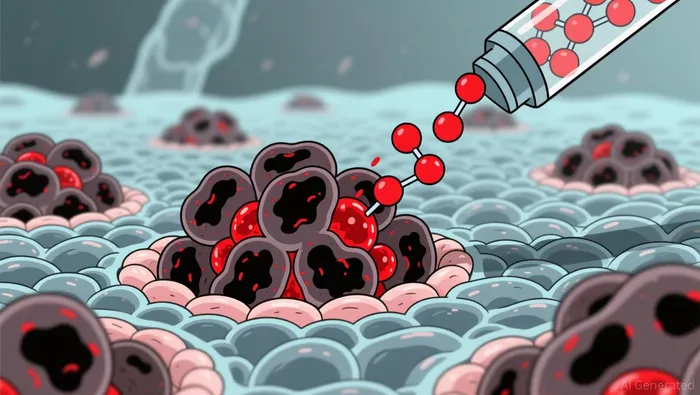
Avacta's pre|CISION® platform leverages (FAP), a protease overexpressed in cancer-associated fibroblasts within the . Faridoxorubicin is designed to release doxorubicin selectively upon FAP cleavage, minimizing systemic toxicity while maximizing therapeutic concentration at the tumor site. This mechanism not only enhances efficacy but also mitigates the off-target effects that have historically limited the use of anthracyclines like doxorubicin.
Notably, the observed antitumor activity in SGC-despite the absence of FAP on tumor cells-suggests a "bystander effect," where the drug exerts activity beyond FAP-expressing cells. This phenomenon could broaden the platform's applicability to other FAP-positive tumors, including and soft tissue sarcoma, where Avacta is currently expanding its trials.
Market Potential and Competitive Landscape
The global PDC market is projected , . Avacta's focus on repurposing well-established chemotherapeutics via targeted delivery differentiates it from competitors developing novel payloads. For instance, while many PDC developers rely on (ADCs) or radioligand therapies, .
The competitive landscape for FAP-targeted therapies remains fragmented but dynamic. Pipeline candidates such as Illuccix and BT5528 are in various stages of development, but Avacta's pre|CISION® platform has demonstrated early clinical validation in SGC, a niche indication with limited therapeutic options. Moreover, the company's recent foray into dual payload PDCs-combining microtubule inhibitors with DNA damage response agents-positions it to address resistance mechanisms and expand its therapeutic footprint.
Investment Considerations
While the Phase 1b data is encouraging, investors must weigh several factors. First, , randomized trials to confirm these findings. Second, , particularly with repeated dosing. Third, regulatory hurdles, including the need for biomarker validation (e.g., FAP expression levels), could delay approvals.
However, the growing demand for targeted therapies in oncology, coupled with Avacta's robust intellectual property portfolio and strategic partnerships, suggests a favorable risk-reward profile. The company's upcoming investor webinar on December 17, 2025, will provide further clarity on trial outcomes and future plans.
Conclusion
Avacta's faridoxorubicin represents a compelling case study in the evolution of targeted chemotherapy. By combining the proven efficacy of doxorubicin with the precision of FAP-targeted delivery, the pre|CISION® platform addresses a critical gap in SGC treatment while laying the groundwork for broader oncology applications. While challenges remain, the Phase 1b results-coupled with the expanding PDC market-underscore Avacta's potential to become a key player in the next generation of cancer therapeutics. For investors, the question is no longer whether faridoxorubicin is a game-changer, but whether the company can scale its innovation to realize its full market potential.







Comentarios
Aún no hay comentarios