
Autonomous Vehicle Regulation and Safety Scrutiny: Navigating Risks and Opportunities for Waymo and the AV Industry
The autonomous vehicle (AV) industry stands at a pivotal crossroads in 2025, as regulatory scrutiny intensifies and safety concerns-particularly around school bus applications-reshape investor sentiment and valuation dynamics. For firms like Waymo, the interplay between innovation, compliance, and public trust will define long-term success. This analysis examines how recent regulatory actions, such as the U.S. National Highway Traffic Safety Administration's (NHTSA) investigations into Waymo's operations, signal broader industry challenges and opportunities.
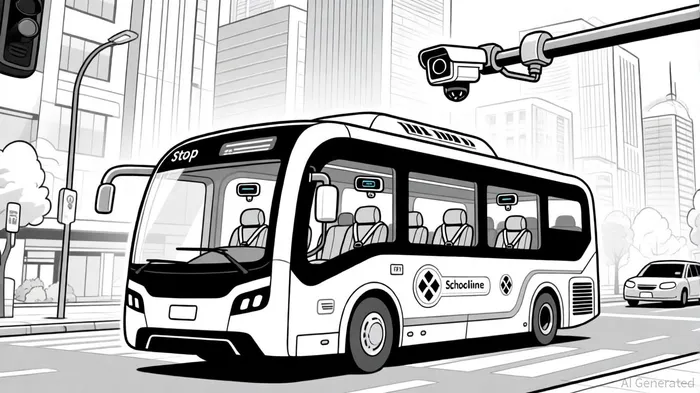
Regulatory Scrutiny and Safety Concerns: A Double-Edged Sword
NHTSA's 14-month probe into Waymo's self-driving vehicles, which reviewed 22 incidents involving 440 units, concluded in July 2025 with no systemic safety violations identified. The agency credited Waymo's proactive measures, including two major software recalls addressing barrier detection flaws and a collision with a utility pole, as key to closing the investigation, according to a Husch Blackwell analysis. However, this regulatory clearance was followed by a separate October 2025 probe into 2,000 Waymo robotaxis for unsafe behavior near stopped school buses, including an incident where a vehicle illegally passed a bus with its stop arm extended, as reported in a US News report.
These events highlight the dual nature of regulatory engagement: while NHTSA's closure of the initial probe reinforced confidence in Waymo's safety protocols, the school bus incident underscored lingering public and political concerns. As one Georgia lawmaker noted, "The stakes are too high when children are involved. Autonomous systems must prove they can navigate these scenarios flawlessly," the lawmaker said in a Yahoo News article. Such scrutiny could delay widespread adoption, particularly in high-risk applications like school transportation.
The School Bus Safety Act of 2025: A Catalyst for Industry-Wide Standards
The School Bus Safety Act of 2025, reintroduced by Congressman Steve Cohen and Senator Tammy Duckworth, mandates advanced safety features such as 3-point seat belts, automatic emergency braking, and fire suppression systems in H.R.1828. While the bill does not explicitly address AVs, its emphasis on technologies like event data recorders and electronic stability control aligns with broader AV safety standards. For firms like Waymo, this legislation signals a potential shift toward integrating autonomous systems into school bus fleets, provided they meet stringent regulatory benchmarks.
The North American school bus industry, valued at $2.41 billion in 2025, is projected to grow at a compound annual rate of 4.74% through 2033, according to a Data Insights Market report. This growth, driven by electrification and safety mandates, creates a lucrative market for AV firms capable of adapting their technology to school bus applications. However, compliance costs-such as retrofitting buses with stop-arm cameras and enhanced lighting-could strain smaller players, favoring well-capitalized firms like Waymo.
Investor Sentiment and Valuation Implications
Waymo's valuation surged to over $45 billion in 2025 following a $5.6 billion Series C funding round led by Alphabet, according to a PitchBook profile. This growth reflects investor optimism about the company's safety record-Waymo's vehicles demonstrated 88% fewer serious injury or worse crashes compared to human drivers, per Waymo's safety page-and its strategic expansion into urban markets like New York and Washington, D.C. However, recent incidents have introduced volatility.
Post-NHTSA clearance, the AV industry saw a 14% increase in funding, with global investments reaching $54 billion in 2024, according to an Oliver Wyman analysis. Yet, challenges persist. Tariffs on imported AV components and inconsistent state-level regulations (e.g., California's 2025 overhaul) could inflate costs and slow deployment. For Waymo, the key to sustaining its valuation lies in balancing rapid expansion with transparent safety management.
Strategic Responses and Long-Term Outlook
Waymo's response to regulatory scrutiny-proactive recalls, data transparency, and collaboration with NHTSA-has set a benchmark for the industry, as detailed in a Reuters report. The company's emphasis on a "Safety Framework" and rigorous acceptance criteria for new environments, outlined in a LinkedIn post, positions it to navigate evolving regulations. However, the school bus incident in Georgia illustrates the need for enhanced situational awareness in complex urban environments, where interactions with pedestrians and school buses demand near-perfect decision-making.
For the broader AV industry, the School Bus Safety Act and NHTSA's Automated Vehicle Framework signal a regulatory environment that prioritizes innovation while enforcing accountability. Firms that invest in AI-driven detection systems, real-time monitoring, and public education campaigns will likely outperform peers. Conversely, those unable to address safety concerns or adapt to regulatory shifts may face declining valuations.
Conclusion: Balancing Risk and Reward
The AV industry's long-term trajectory hinges on its ability to reconcile technological ambition with regulatory and public safety demands. For Waymo, the path forward involves leveraging its safety-first culture to dominate high-growth segments like school transportation while addressing gaps in urban navigation. Investors must weigh the company's proactive strategies against risks such as regulatory delays and public skepticism. As the School Bus Safety Act and NHTSA's evolving framework take shape, the firms that thrive will be those that treat safety not as a compliance burden but as a competitive advantage.







Comentarios
Aún no hay comentarios