
Autonomous Ambitions Take Flight: Pony AI and Uber’s Middle East Venture Signals a New Era in Ride-Hailing
The partnership between Pony AIPONY-- and Uber, announced in May 2025, represents a pivotal moment in the evolution of autonomous mobility. By integrating Pony’s advanced autonomous driving systems with Uber’s global platform, the collaboration aims to transform how millions access transportation. This strategic alliance not only underscores the commercial viability of self-driving technology but also positions both companies to capitalize on a rapidly growing market. At the heart of this venture lies a carefully orchestrated plan to deploy Pony’s Robotaxis in the Middle East—a region chosen for its regulatory flexibility and diverse operational conditions—before scaling to other markets.
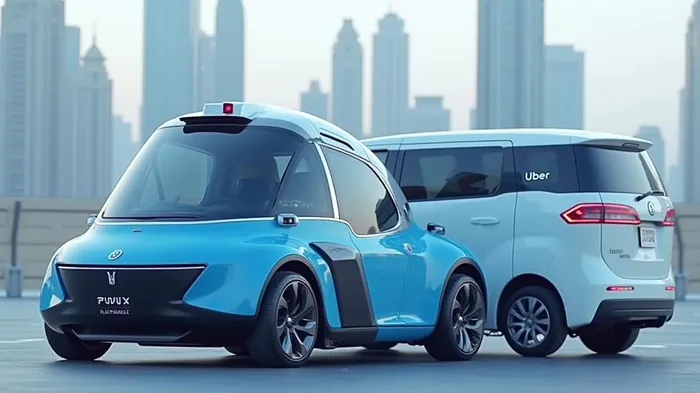
The Strategic Rationale: A Match Made in Autonomous Heaven
For Pony AI, the partnership offers a shortcut to global scalability. Instead of building its own consumer acquisition infrastructure—a costly and time-consuming endeavor—the company gains instant access to Uber’s vast user base. This is a critical advantage in a market where brand recognition and trust are paramount. Meanwhile, Uber secures a proven autonomous technology partner at a time when it seeks to future-proof its platform against competitors like Waymo and Cruise.
The Middle East serves as an ideal testing ground. With fewer regulatory hurdles compared to regions like the U.S. or Europe, the area allows Pony to refine its systems under real-world conditions, from desert climates to urban congestion. This phased approach—starting with safety operators onboard—prioritizes public confidence and compliance while minimizing deployment risks.
Technology Meets Market: The Power of Pony’s Seventh-Gen System
Central to the partnership is Pony’s seventh-generation autonomous driving system, a full-stack solution dubbed the “vehicle-agnostic Virtual Driver.” This technology enables seamless operation across diverse vehicles and environments, a capability that distinguishes Pony from rivals like Tesla, whose systems are often vehicle-specific. The system’s readiness for mass production and cost-effectiveness are key to scaling operations, which could reduce per-ride costs and improve profitability over time.
Investors should monitor Uber’s stock as a barometer of market confidence in autonomous ventures. A sustained upward trend post-announcement could signal optimism about the partnership’s long-term value. Conversely, any dips might reflect lingering concerns about regulatory or technical hurdles.
The Prize: A $1.5 Trillion Autonomous Mobility Market
By 2030, the global autonomous mobility market is projected to exceed $1.5 trillion, driven by urbanization, aging populations, and the need for sustainable transportation. Pony and Uber’s Middle East initiative positions them to capture a significant slice of this pie. The region’s youthful population and tech-savvy consumers are ideal early adopters, while cities like Dubai and Riyadh have already invested heavily in smart infrastructure.
Risks and Considerations
Despite the promise, challenges remain. Public acceptance of autonomous vehicles is still evolving, and accidents—even during pilot phases—could deter ridership. Regulatory variability across markets poses another hurdle; while the Middle East offers a forgiving environment, scaling to stricter regions like the EU will require robust compliance strategies. Additionally, Pony faces competition from local players like Aramco-backed startups and Waymo’s own partnerships.
Conclusion: A Blueprint for Dominance
The Pony-Uber alliance is more than a partnership—it’s a blueprint for how autonomous technology can achieve mass adoption. By leveraging Pony’s cutting-edge systems and Uber’s platform, the duo addresses two critical barriers to success: technical readiness and market access. The Middle East pilot, with its focus on safety and scalability, sets a precedent for global deployment.
Crucially, the collaboration aligns with broader trends. Autonomous vehicle adoption is accelerating, with 75% of consumers in the Middle East expressing interest in self-driving services, according to a 2024 McKinsey report. For investors, the partnership offers exposure to both companies’ growth trajectories. Pony’s valuation, while undisclosed, is likely to appreciate as it gains validation through Uber’s network. Meanwhile, Uber’s move into autonomous tech could counterbalance its reliance on human drivers, potentially improving margins by 15-20% once fully autonomous fleets operate at scale.
In sum, this venture isn’t just about cars; it’s about redefining transportation for the next decade. For investors watching the horizon, Pony and Uber’s Middle East gambit is a signal that the autonomous future is no longer distant—it’s arriving, one ride at a time.





Comentarios
Aún no hay comentarios