
Automotive Trade Policy Shifts: Navigating Geopolitical Risks and Investment Opportunities in a Fragmented World
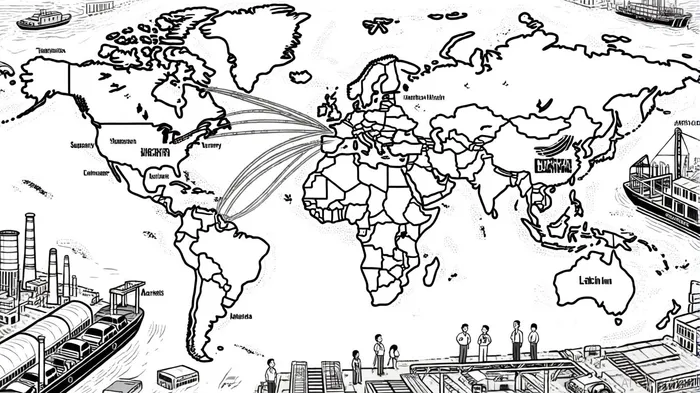
The automotive sector in 2025 is at a crossroads, shaped by a tectonic shift in cross-border trade policies and the urgent need to mitigate geopolitical risks. The U.S.-EU trade deal, finalized in July 2025, and China's evolving industrial strategies are redefining global supply chains, investment flows, and competitive dynamics. For investors, understanding these shifts—and their implications for sectoral positioning—is critical to navigating a landscape marked by both volatility and opportunity.
U.S.-EU Trade Deal: A Mixed Bag for Automakers
The U.S.-EU trade agreement, which reduced U.S. tariffs on EU auto imports from 27.5% to 15% while eliminating the EU's 10% Most-Favored-Nation (MFN) duty on U.S. passenger vehicles, has been hailed as a short-term stabilizer for transatlantic relations[1]. However, the deal's long-term benefits remain contested. The German Association of the Automotive Industry (VDA) estimates that the 15% U.S. tariff will cost European automakers billions annually, with Volkswagen and Mercedes-Benz particularly exposed[2]. Meanwhile, the Trump administration's emphasis on addressing non-tariff barriers and unresolved steel/aluminum disputes suggests lingering tensions[3].
For investors, the deal underscores the fragility of trade agreements in a polarized geopolitical environment. While the reduction in tariffs provides immediate relief, the retained 15% rate—coupled with unresolved sectoral disputes—creates a risk of retaliatory measures. This dynamic favors companies with diversified production footprints and robust cost controls, such as Porsche and BMW, which have already shifted manufacturing to lower-cost EU regions[4].
China's Overcapacity Crisis and Global Supply Chain Rebalancing
China's automotive sector, once a beacon of growth, now faces a paradox: domestic overproduction and aggressive global expansion. Government-driven policies have led to automakers producing twice the capacity needed to meet domestic demand, forcing Chinese EVs into international markets at discounted prices[5]. This strategy, while boosting China's global market share, risks triggering trade wars, as the U.S. and EU impose tariffs on Chinese EVs to protect domestic industries[6].
Yet, China's dominance in the EV supply chain—particularly in battery production and critical minerals—remains a strategic asset. Companies like BYD and CATL are leveraging their cost advantages to expand into Europe and Southeast Asia, bypassing U.S. and EU tariffs through localized production[7]. For investors, this highlights the duality of China's role: a disruptive force in global trade but also an indispensable node in the EV value chain.
Emerging Markets: The New Frontier for Geopolitical Resilience
As the U.S. and EU seek to insulate their industries from Chinese overcapacity, emerging markets are emerging as critical corridors for supply chain diversification. India, Thailand, and Brazil, for instance, are becoming hubs for EV production and battery material sourcing, driven by government incentives and abundant natural resources[8]. Chinese automakers like BYD and Chery are capitalizing on this trend, establishing manufacturing facilities in Hungary, Turkey, and Russia to circumvent Western tariffs[9].
The Belt and Road Initiative (BRI) further amplifies China's influence in these regions, with infrastructure investments in lithium and cobalt-rich areas of Africa and Southeast Asia[10]. For investors, this signals a shift toward regionalized supply chains, where proximity to raw materials and lower labor costs outweigh traditional trade route dependencies.
Investment Strategies: Diversification, Localization, and Technology
To mitigate geopolitical risks, automotive companies are adopting three core strategies:
1. Supplier Diversification: Automakers like ToyotaTM-- and FordF-- are sourcing components from multiple regions, including Southeast Asia and Mexico, to avoid overreliance on China[11].
2. Near-Shoring: The U.S. Inflation Reduction Act (IRA) has spurred $115 billion in domestic clean energy investments, including battery production, as companies like Stellantis and Ford shift manufacturing closer to North American markets[12].
3. Technology Leverage: Innovations in sodium-ion and solid-state batteries, led by Chinese firms, are reshaping cost structures and reducing dependency on traditional lithium supply chains[13].
For investors, these strategies highlight the importance of portfolio diversification. Firms with exposure to emerging markets, advanced battery technologies, and flexible manufacturing capabilities—such as Rivian and VinFast—are well-positioned to capitalize on fragmented global demand[14].
Geopolitical Risks and the Path Forward
The automotive sector's vulnerability to geopolitical shocks—from U.S.-China trade tensions to EU-U.S. tariff disputes—demands a proactive approach. Companies are increasingly investing in cybersecurity, predictive analytics, and collaborative risk management with suppliers to preempt disruptions[15]. Meanwhile, regulatory frameworks like the EU's Action Plan for the Automotive Industry are incentivizing domestic battery production and EV infrastructure, creating new investment corridors[16].
Conclusion
The automotive sector's transformation in 2025 is defined by a delicate balance between geopolitical risk and strategic opportunity. While trade policy shifts and supply chain reconfigurations introduce uncertainty, they also create openings for investors who prioritize resilience and adaptability. By focusing on diversified supply chains, emerging markets, and technological innovation, the sector can navigate a fragmented global landscape—and emerge stronger in the decade ahead.





Comentarios
Aún no hay comentarios