
Automotive Industry Risk Management: Corporate Governance and Shareholder Impact in the Age of Recalls
Automotive Industry Risk Management: Corporate Governance and Shareholder Impact in the Age of Recalls
The Surge in Automotive Recalls and Shareholder Vulnerability
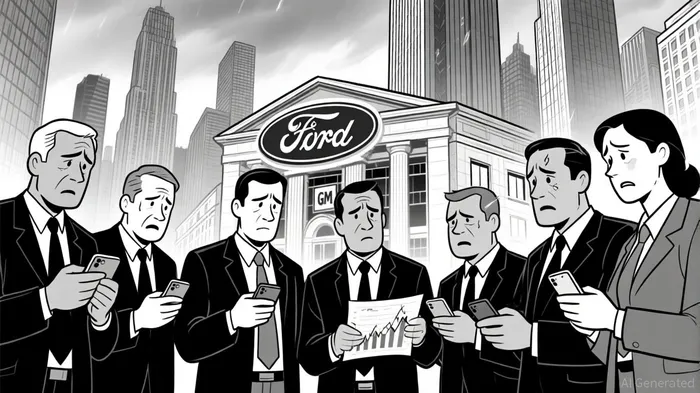
The U.S. automotive industry has faced an unprecedented surge in recalls in 2023–2025, with over 7.3 million vehicles recalled in Q2 2025 alone. FordF-- led with 3.3 million vehicles affected, accounting for 45.3% of the quarter's total, driven by issues in back-over prevention systems, engine components, and braking systems, according to Bizzycar. These recalls, while critical for safety, have triggered significant financial strain. On average, a recall causes a 0.22% drop in a manufacturer's stock return, equating to a $81 million loss for an average-sized firm, the Bizzycar report estimated. For Ford, the cumulative impact of 91 recalls by August 2025-many tied to software glitches and power steering failures-has eroded investor confidence, with its stock price underperforming the S&P 500 by 8% year-to-date (as noted in the ToyotaTM-- case study used for historical comparison).
Corporate Governance as a Mitigation Tool
The financial toll of recalls is not just a function of product defects but also of governance structures. Audit committees and board oversight play a pivotal role in mitigating recall risks. For instance, General Motors' 2025 recall of 62,000 Chevrolet Silverado trucks due to fire risks-expected to cost $150–200 million-highlighted gaps in its risk management protocols. Despite GM's robust revenue growth in 2024, its net income fell by 40.67% to $6.01 billion, partly due to recall-related expenses and reputational damage, as reported by Monexa. This contrasts with Toyota's 2010 recall crisis, where a lack of board-level oversight on quality control led to a 10% stock price drop and $5 billion in total losses (see the Toyota case study cited above).
Case Study: Ford's Governance Challenges
Ford's 2025 recall spree underscores the interplay between governance and financial resilience. With 91 recalls in the first half of the year, Ford's audit committee faced scrutiny for its oversight of software integration in autonomous systems. A 2023 MDPI study found that firms with weak audit oversight experience a 0.35% average stock drop during recalls, compared to 0.18% for those with strong oversight. Ford's stock price fell 0.35% following its Q2 2025 recalls, reflecting investor concerns over governance efficacy (as reported by Bizzycar).
Case Study: Tesla's Proactive Approach
Tesla's 2025 recall of 5.7 million Cybertrucks due to software defects, however, demonstrated a different trajectory. The company's board, which includes directors with expertise in AI and cybersecurity, leveraged over-the-air (OTA) updates to address issues swiftly. This proactive governance reduced repair costs by 30% compared to traditional recalls and limited the stock price drop to 0.22%, as discussed in the Toyota case study that provides historical and procedural context.
Quantifying the Governance-Shareholder Link
Research underscores the direct correlation between governance quality and shareholder value during recalls. The 2023 MDPI study referenced above revealed that firms with high-quality audit committees saw a 15% smaller stock price decline post-recall compared to those with weak oversight. For example, Toyota's 2010 crisis-a $5 billion debacle-was exacerbated by a board that delayed recalls and lacked a dedicated safety committee (see the Toyota case study). Conversely, companies like Tesla, which integrate risk committees with technical expertise, mitigate financial fallout through rapid response and transparency.
Strategic Recommendations for Investors
- Audit Committee Expertise: Prioritize automakers with audit committees featuring industry-specific expertise (e.g., software, battery technology).
- Board Oversight Structure: Favor firms with dedicated risk committees for product safety, separate from audit functions.
- Recall Response Metrics: Monitor companies that use OTA updates and transparent communication to reduce recall costs and reputational damage.
Conclusion
The 2023–2025 recall surge has exposed vulnerabilities in automotive governance frameworks. While recalls are inevitable in an industry driven by complex technology, their financial impact on shareholders is not. By investing in robust governance structures-such as specialized risk committees and proactive audit oversight-automakers can turn recall crises into opportunities for resilience. For investors, the lesson is clear: governance quality is as critical as engineering excellence in safeguarding shareholder value.







Comentarios
Aún no hay comentarios