
Autoliv (ALV): A 25% YTD Rally-Fundamentals Justify the Surge or a Cautionary Signal?
Fundamentals: A Tale of Resilience and Strategic Execution
Autoliv's Q3 2025 results underscore its operational strength. , , driven by strong demand in Asia (excluding China) and the Americas, according to Autoliv's earnings release. , , per Autoliv's financial report. , reflecting disciplined cost management and tariff compensation strategies, as noted in the same report. These figures suggest that Autoliv's strategic initiatives, including cost reductions and new product launches, are paying off in a sector where margin preservation is critical, a point highlighted by coverage in The Globe and Mail.
However, the absence of explicit EBITDA figures in the latest report raises questions about the sustainability of these gains. While management attributes the improvement to "operational efficiency," investors should monitor future reports for clarity on cash flow generation and reinvestment needs.
Valuation Ratios: A Discounted P/E, but Missing PEG Clarity
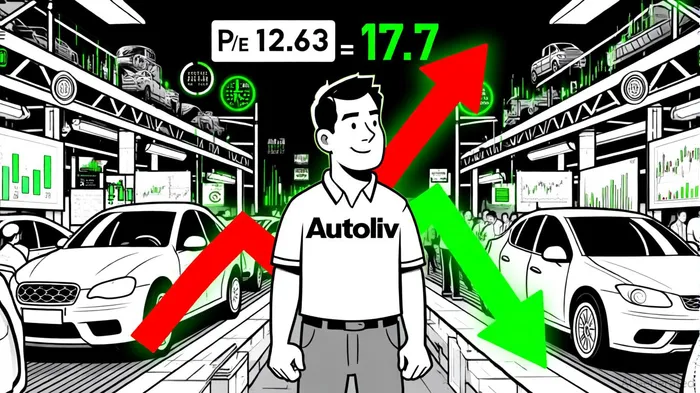
As of October 2025, , according to FinancialModelingPrep, significantly below the auto parts industry's average P/E of 17.7 reported by FullRatio. This 29% discount implies that the market is pricing in either lower growth expectations for AutolivALV-- or a higher risk premium compared to its peers. Meanwhile, , a common trait for capital-intensive manufacturers, as reported by FinancialModelingPrep.
The lack of a price-to-earnings-to-growth (PEG) ratio for Autoliv complicates a full valuation assessment. However, , according to Eqvista,. If Autoliv's growth trajectory aligns with or exceeds industry averages, .
Industry Context: Mixed Signals and Structural Challenges
The auto parts sector is navigating a dual narrative. On one hand, companies like AutoZone and O'Reilly Automotive face headwinds from rising tariffs and shifting consumer behavior toward deferred maintenance, according to an Investorempires report. On the other, expansion plans and cost-effective solutions are creating pockets of optimism. For Autoliv, the key differentiator is its focus on safety and innovation-areas less susceptible to DIY trends than parts for routine maintenance, a dynamic discussed by Simply Wall St.
Yet, the sector's average PEG of 0.88 (Eqvista) suggests that investors are demanding a premium for growth, even as traditional metrics like P/E remain elevated. This dynamic raises a critical question: Is Autoliv's 25% YTD rally a reflection of its outperformance in a stagnant sector, or is it a sign that the market is overestimating its ability to sustain these gains?
Conclusion: A Cautionary Bull Case
Autoliv's fundamentals are undeniably strong, with revenue, margin, and EPS growth outpacing many peers. Its valuation ratios, particularly the P/E, appear attractive relative to the sector. However, the absence of a PEG ratio and the structural challenges facing the auto parts industry-such as inflationary pressures and margin compression-introduce uncertainty.
For investors, . The stock's current valuation assumes continued margin expansion and successful navigation of macroeconomic risks. If these assumptions hold, the rally could be a prudent bet. If not, the discount to the sector average may reflect a justified risk premium.





Comentarios
Aún no hay comentarios