
Autodesk's AI-Driven Transformation and Its Implications for Long-Term Growth
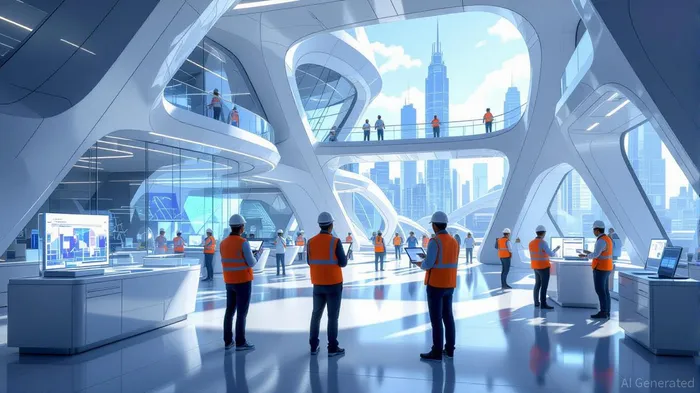
Autodesk’s strategic pivot toward AI-driven solutions has positioned it as a linchpin in the rapidly expanding AECO (Architecture, Engineering, Construction, and Operations) sector. With Q2 2025 revenue surging 17% to $1.76 billion, the company’s AI-powered tools—such as Fusion’s Sketch Auto Constraint (60% adoption rate) and AI-driven features in AutodeskADSK-- Construction Cloud (40% reduction in manual labor)—are reshaping industry workflows [3]. The AECO segment, now accounting for 50% of Autodesk’s total revenue, grew 23% year-over-year, driven by cloud-native platforms and generative design tools [2]. This momentum is underpinned by a 92% customer retention rate and 85% cloud-native tool adoption among AECO clients, creating a “sticky” ecosystem that enhances long-term value [2].
The AI-AECO sector itself is poised for explosive growth. The global AI market is projected to expand at a 35.9% CAGR from 2025 to 2030, reaching $1.81 trillion by 2030 [1]. Within this, the AECO segment benefits from AI’s ability to automate repetitive tasks, optimize resource allocation, and enable real-time decision-making. For instance, 39% of Autodesk customers now use AI to enhance sustainability, up from 34% in 2024 [2]. Tools like Forma’s real-time environmental analysis and generative design workflows for manufacturing geometries align with broader industry trends toward decarbonization and efficiency [3].
Autodesk’s innovation pipeline further solidifies its leadership. Recent launches—such as Flow Generative Scheduling for construction teams and NLP-integrated tools in AutoCAD and Maya—lower barriers to entry for non-technical users while boosting productivity [3]. These advancements are part of a broader democratization of AI, with 36% year-over-year billings growth in the AECO segment reflecting strong demand for cloud-native, AI-enhanced solutions [2]. The company’s full-year revenue guidance of $7.025–$7.075 billion underscores confidence in the $12 billion AI-AECO market opportunity by 2030 [2].
While challenges persist—such as talent shortages and AI’s potential to destabilize traditional workflows—Autodesk’s embedded AI capabilities and ecosystem stickiness provide a durable moat. The company’s focus on sustainability, modular construction, and generative AI (projected to grow at 46.47% CAGR) positions it to capitalize on multi-decade tailwinds [4]. For investors, Autodesk’s combination of revenue growth, market alignment with AI-AECO trends, and high customer retention makes it a compelling long-term buy.
**Source:[1] Artificial Intelligence - Worldwide | Market Forecast [https://www.statista.com/outlook/tmo/artificial-intelligence/worldwide][2] AECO, D&M, M&E Insights [https://www.autodesk.com/design-make/research/state-of-design-and-make-2025/industry][3] Autodesk's AI-Driven Growth Strategy and Its Implications ... [https://www.ainvest.com/news/autodesk-ai-driven-growth-strategy-implications-long-term-shareholder-2508-24/][4] AI Statistics 2025: Key Trends and Insights Shaping the Future [https://ventionteams.com/solutions/ai/report]







Comentarios
Aún no hay comentarios