
The Auto Industry's Reshoring Revolution: Why Tesla and Domestic Suppliers are the Next Big Plays
The U.S. auto industry is undergoing a seismic shift as President Trump's "America First" policies force automakers to reshore manufacturing or face crippling tariffs. With a 25% tariff now applied to imported vehicles and parts, the pressure is on to localize supply chains. This isn't just about avoiding penalties—it's a goldmine for investors in companies positioned to capitalize on the reshoring boom. Let's break down the winners and the risks.
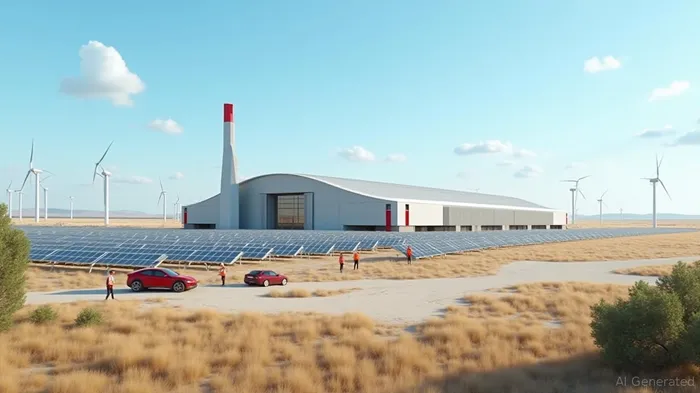
The Policy Shift: Tariffs and Incentives Driving Reshoring
Starting in April 2025, automakers face a 25% tariff on imported vehicles and parts unless they meet stringent "U.S. or USMCA-compliant" content thresholds. To qualify for tariff relief, vehicles must have 85% domestic content in the first year, dropping to 90% by 2027. Meanwhile, manufacturers get rebates—3.75% of a vehicle's MSRP in 2025—when they assemble cars stateside.
This creates a stark choice: restructure supply chains in the U.S. or pay through the nose. The result? A tidal wave of investment in domestic manufacturing.
Tesla's Strategic Position
Tesla is uniquely poised to dominate this new landscape. Already the leader in U.S. EV production, its Texas and Nevada Gigafactories are key to its 40–50% domestic content today. With tariffs pushing competitors to localize parts, TeslaTSLA-- can leverage its scale to lock in U.S. suppliers, avoiding the 25% tax.
But here's the catch: Tesla's global supply chain for batteries and semiconductors remains vulnerable. If it can accelerate U.S. production of cells (as planned with its new Nevada facility) and source more locally, its margins will skyrocket. The stock, currently trading at $220, has room to surge as investors price in reshoring tailwinds.
Domestic Suppliers to Watch
While Tesla grabs headlines, the real gold is in parts suppliers racing to meet U.S. content requirements.
- Livent Corporation (LVNT): A lithium supplier with U.S. operations, it's critical for battery makers. With EV demand surging, Livent's domestic lithium brine reserves could see 300% capacity growth by 2026.
- BorgWarner (BWA): This engine and e-motor supplier is expanding its Michigan plant to serve U.S. automakers. Its stock has risen 18% since Q1 2025 as reshoring bets pay off.
- Rivian (RIVN): Unlike Tesla, Rivian is 100% U.S.-focused, with all vehicles assembled in Illinois. Its domestic supply chain gives it a natural edge—watch for a rebound from its post-IPO slump.
Risks and Considerations
This isn't all smooth sailing. Automakers like Ford and GM, which rely on Mexican parts for 55–60% of their vehicles, face a multi-year scramble to restructure. Cost overruns could lead to price hikes—Wedbush analysts warn of $5,000+ increases per vehicle.
Investors must also navigate legislative chaos. While Trump's tariffs are here to stay, House Republicans are pushing to gut EV tax credits—a move that could undermine the entire reshoring narrative. Stay agile: monitor bipartisan cooperation on the Advanced Manufacturing Production Credit and watch for tariff exemptions on critical components.
Investment Strategy: The Playbook
- Buy Tesla (TSLA) for scale and innovation, but set a stop-loss at $190 to guard against supply chain hiccups.
- Diversify into suppliers: Livent (LVNT) for lithium, BorgWarner (BWA) for engines, and Rivian (RIVN) for pure-play U.S. exposure.
- Avoid automakers like Toyota or Honda that rely heavily on Asian supply chains—they'll struggle to meet U.S. content rules.
The reshoring revolution isn't just about tariffs—it's about who controls the future of EVs, batteries, and national security. Now is the time to act: the companies that dominate this shift will be the giants of the next decade.
Don't miss the train. The reshoring revolution is here.







Comentarios
Aún no hay comentarios