
Auto Carrier's $70 Million Port Fee Dilemma: A Crucible for U.S. Maritime Policy
The U.S. Trade Representative’s (USTR) new port fee regime targeting foreign-built ships and Chinese-linked vessels has thrust logistics firm Hoegh Autoliners ASA into a financial crosshairs. The Norwegian-based auto carrier estimates potential costs of $60–$70 million annually under the rules, which take effect in late 2025. This stark figure underscores the broader tension between U.S. trade protectionism and global shipping economics—a clash with implications for investors, consumers, and maritime industries worldwide.
The Fee Structure: A Double-Edged Sword for Carriers
The USTR’s tiered fees are designed to punish reliance on foreign-built vessels while incentivizing U.S. shipbuilding. For Hoegh, the most immediate threat comes from Car Equivalent Unit (CEU) fees of $150 per unit post a 180-day grace period (starting October 14, 2025). A single 6,000 CEU vessel—a standard size for auto carriers—would face $900,000 per port call, compounding across multiple voyages.
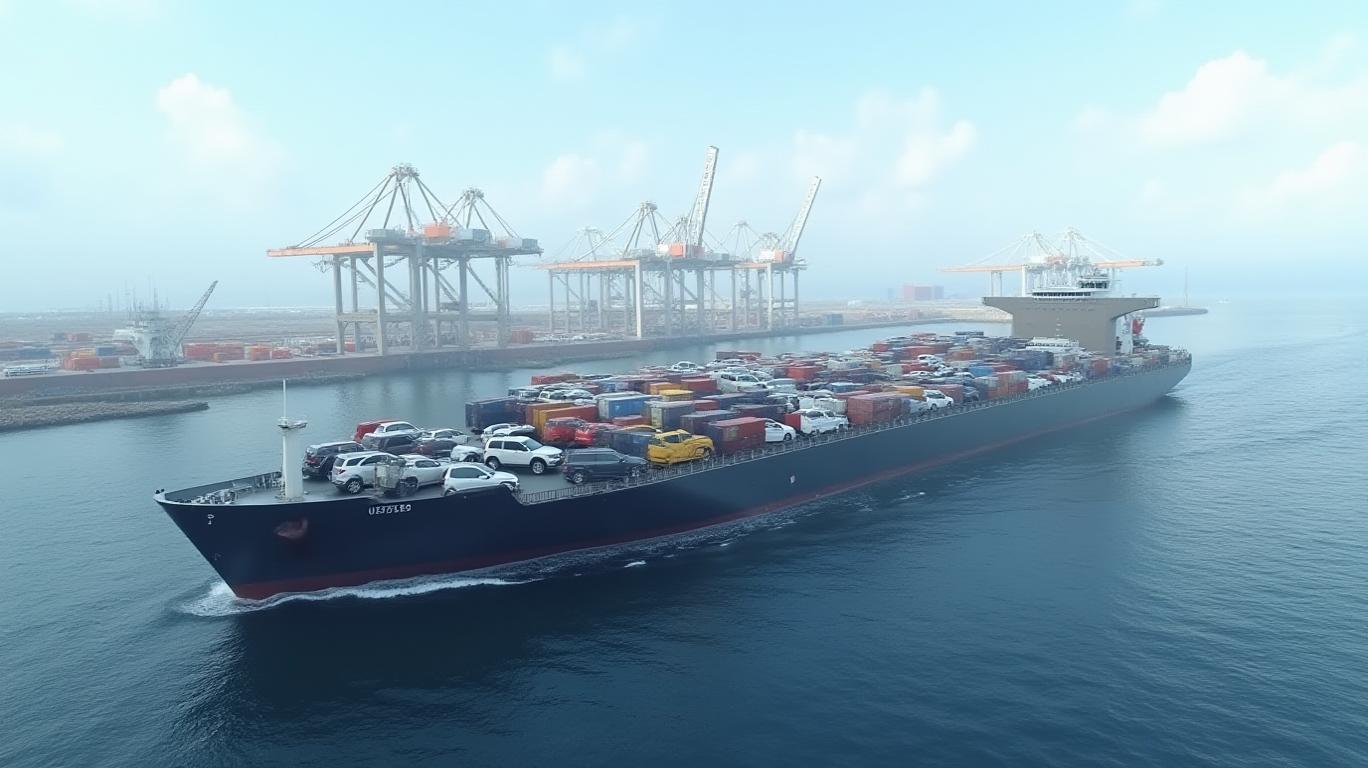
The rules also impose escalating net tonnage fees on Chinese-owned vessels, rising from $50/ton to $140/ton by 2028. While exemptions exist for smaller ships and short-sea routes, the largest carriers—critical for transporting vehicles and machinery—bear the brunt. For Hoegh, which operates Europe-to-U.S. East Coast routes and Caribbean/Mexico services, this could mean $1 million+ per vessel annually, eroding profit margins.
Hoegh’s Playbook: Mitigation or Retreat?
Hoegh has two paths to soften the blow:
1. Operational Adjustments: Rerouting cargo to avoid high-cost ports or consolidating shipments to reduce port calls.
2. Fee Remission: Ordering U.S.-built vessels within three years to qualify for exemptions.
However, the latter is fraught with challenges. U.S. shipyards lack capacity to build car carriers at scale—their output is negligible compared to rivals in China, Japan, and South Korea. Even if Hoegh secures a U.S. order, the timeline risks creating a liquidity gap before exemptions kick in.
Industry Backlash: Costs, Chaos, and China
The World Shipping Council (WSC) and American Association of Port Authorities (AAPA) warn of dire consequences. Roll-on/roll-off (ro-ro) ports—key for auto imports—face disproportionate fees, potentially raising vehicle prices by $1,000+ for U.S. consumers. Meanwhile, the WSC argues the fees fail to boost domestic shipbuilding, as U.S. yards lack expertise in specialized vessels like LNG carriers or car carriers.
Geopolitically, the rules risk retaliation. China could mirror U.S. measures, disrupting global supply chains. The AAPA also highlights risks from proposed 100% tariffs on Chinese-made cargo equipment (e.g., ship-to-shore cranes), which lack domestic U.S. alternatives.
The Timeline of Pain
- October 2025: Fees go into effect, with costs hitting Hoegh’s 2026 earnings.
- 2028: Phase 2 mandates begin, requiring 1% of LNG exports to use U.S.-built vessels—rising to 15% by 2047. Compliance could strain energy logistics firms.
Investing Through the Fog
For investors, the calculus hinges on three variables:
1. Fee Remission Feasibility: Can Hoegh secure U.S. vessel orders? The answer could halve its worst-case scenario.
2. Market Pass-Through: Will shipping cost increases translate to higher freight rates, offsetting fees? Auto manufacturers like Toyota or General Motors might absorb some costs, but price-sensitive consumers could push back.
3. Geopolitical Fallout: Retaliatory tariffs from China or logistical bottlenecks could disrupt global trade flows, impacting sectors from autos to energy.
Conclusion: A High-Risk, High-Return Crossroads
The $70 million figure is more than a cost—it’s a litmus test for U.S. maritime policy. If Hoegh navigates operational adjustments and secures exemptions, its shares (HGHL:OSE) could rebound. However, if the fees exacerbate supply chain inefficiencies or trigger trade wars, the broader shipping sector—and U.S. consumers—will pay the price.
Investors should monitor two key metrics:
1. U.S. Shipbuilding Capacity: Track orders for car/LNG carriers. If negligible, Hoegh’s costs—and risks—remain elevated.
2. Freight Rate Trends: Rising rates could offset fees, but prolonged inflation may spook markets.
The USTR’s experiment is a gamble with global supply chains. For now, Hoegh’s $70 million dilemma is a canary in the coal mine—one that could either justify protectionist bravado or expose its vulnerabilities.
Data sources: USTR determinations, World Shipping Council reports, Hoegh Autoliners investor presentations.







Comentarios
Aún no hay comentarios