
Austria's Koralmtunnel Spurs Economic Shifts, Boosts Rail Ambitions
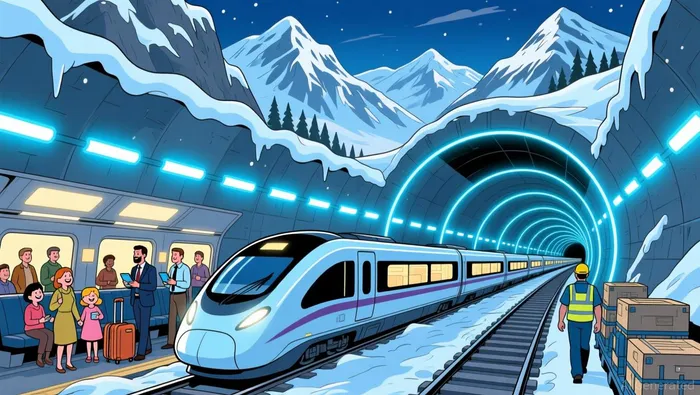
Austrian officials are celebrating a milestone in infrastructure as the Koralmtunnel, a €5.9 billion railway tunnel, is set to open this Sunday. The tunnel, part of a broader rail network linking Europe's Baltic coast to the Adriatic, is being hailed as a transformative investment for the Alpine nation. Experts predict the project will reduce travel times, stimulate regional economic integration, and position Austria as a key logistics hub.
The Koralmtunnel is the first of three planned rail mega-projects expected to be completed within the next decade. Stretching 33 kilometers through the Alps, the tunnel will cut the travel time between Graz and Klagenfurt by two hours. The broader network includes over 260 kilometers of new tracks and 23 train stations.
For residents in southeastern Austria, the project represents a potential shift in mobility and economic dynamics. Housing markets near new stations have already seen price surges, driven by speculation that nearby villages could become commuter towns. Families are returning to areas they once left due to demographic decline, signaling a reversal of long-standing rural depopulation trends according to researchers.
A Model for European Infrastructure
Austria's investment strategy stands out in a region where infrastructure projects often face political and fiscal hurdles. Unlike its neighbors, Austria has maintained consistent funding for large-scale rail development. The government employs a financing model based on six-year contracts with annuity-style repayments, allowing it to spread costs over decades. This approach has enabled Austria to outpace Germany and Italy in per capita infrastructure spending.
Economist Eric Kirschner from Graz-based Joanneum Research described the Koralmtunnel as "Austria's biggest socio-economic experiment in over a century." He anticipates the tunnel will help stem rural flight and boost industrial activity in Styria and Carinthia. The project is expected to foster new urban agglomerations, with Kirschner estimating a 40% rise in labor-market interconnections.
Risks and Challenges
Despite the optimism, Austria's ambitious infrastructure push comes with risks. The country's sovereign credit rating was downgraded in June to a record low by Fitch, reflecting years of recession and rising government debt. Analysts like Klaus Weyerstrass have warned that some projects could be postponed or scaled back as fiscal pressure mounts.
Still, Weyerstrass argues that the cost of inaction is higher. He points to Germany as a cautionary example, where years of infrastructure neglect have led to mounting repair costs. For now, railway investment remains one of the few areas that unites Austrians across the political spectrum. The Koralmtunnel, though less than a week old, is already regarded as a symbol of national pride and strategic foresight.
A Broader Vision
Austria's success with the Koralmtunnel is part of a broader vision to become a central node in Europe's north-south logistics corridor. The country has pledged nearly €20 billion to develop 100 kilometers of high-speed rail lines under the Alps. Additional projects, including the Semmering Base Tunnel and Brenner Base Tunnel, will further solidify Austria's role as a bridge between Eastern and Western Europe.
The economic and demographic impacts of the Koralmtunnel are already becoming apparent. Austrian researchers estimate that municipalities with new train stations could see population growth of nearly three percentage points above average. This is particularly significant in regions that have experienced decades of decline. As communities adapt, local governments are preparing for new challenges and opportunities, including expanded public transport and increased tourism according to local officials.







Comentarios
Aún no hay comentarios