
Austria's Fiscal Blueprint and the Future of Eurozone Debt Coordination
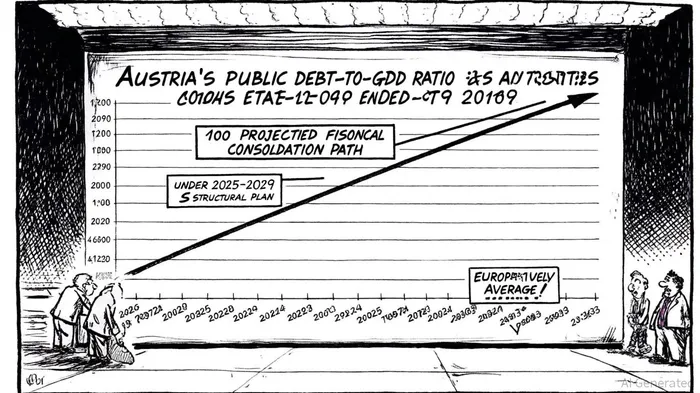
The European Union's quest for fiscal coordination has long been a balancing act between fiscal discipline and economic growth. With the revised Stability and Growth Pact (SGP) now in force, Eurozone members are recalibrating their strategies to align with stricter debt sustainability rules. Austria, a nation with a public debt ratio of 63% of GDP in 2024, has emerged as a pivotal player in this evolving landscape. Its recently submitted National Medium-Term Fiscal-Structural Plan for 2025–2029—approved by the European Commission in May 2025—offers a blueprint for how smaller Eurozone economies can navigate the new fiscal framework while addressing domestic challenges[1].
Austria's Strategic Alignment with EU Fiscal Rules
Austria's plan hinges on a seven-year net expenditure path, a flexibility granted under the reformed SGP to countries that commit to structural reforms and investments. This approach allows Austria to extend its adjustment period beyond the traditional four-year horizon, provided it meets criteria such as improving labor market participation, modernizing healthcare, and accelerating the green transition[2]. By tying fiscal flexibility to long-term growth, Austria is signaling a shift from austerity-driven consolidation to a model that prioritizes productivity-enhancing investments.
The government's 2025–2026 savings measures, which aim to reduce the budget deficit to near 3% of GDP, further underscore its commitment to EU fiscal rules[3]. These efforts have been endorsed by rating agencies like Fitch, which notes that Austria's fiscal consolidation could support debt reduction over the medium term, assuming reforms in pensions and public administration are implemented effectively[4].
Implications for Eurozone Fiscal Coordination
Austria's approach highlights a broader tension within the Eurozone: how to harmonize national fiscal strategies with collective debt sustainability goals. By submitting its plan early and securing an extended adjustment period, Austria has demonstrated that proactive engagement with the European Commission can yield tailored solutions. This sets a precedent for other Eurozone members, particularly those with high debt levels, to negotiate similar flexibility if they align their reforms with EU priorities[5].
However, the success of this model depends on the EU's ability to enforce compliance. Austria's progress report for 2023–2025, which details its implementation of reforms, will be critical in proving whether its strategy can serve as a template for others. If the European Commission approves Austria's trajectory without triggering excessive deficit procedures, it could embolden other member states to adopt similar multi-year plans, fostering greater fiscal coordination[6].
Sovereign Bond Market Reactions and Risks
For investors, Austria's fiscal strategy has already influenced sovereign bond markets. The country's 10-year bond yield has fallen to 2.1% in early 2025, reflecting improved confidence in its fiscal trajectory. This contrasts with nations like Italy or Spain, where political uncertainty and slower reform progress have kept yields elevated. Austria's experience suggests that Eurozone bond spreads may narrow further if more countries adopt credible, growth-oriented fiscal plans.
Yet risks remain. Structural reforms in pensions and healthcare are politically contentious in Austria, and delays could trigger a reassessment by rating agencies. Additionally, the EU's fiscal framework relies heavily on self-reporting by member states, creating potential for misalignment between national and EU-level goals. If Austria falters, it could undermine the credibility of the reformed SGP and widen bond spreads across the bloc[8].
Conclusion
Austria's fiscal strategy exemplifies the delicate balance required to navigate the reformed SGP. By extending its adjustment period while committing to growth-enhancing reforms, it has positioned itself as a model for Eurozone fiscal coordination. For investors, this signals a potential shift toward more stable sovereign bond markets, provided other member states follow suit. However, the long-term success of this approach will depend on Austria's ability to deliver on its reform promises and the EU's capacity to enforce accountability. In a fragmented Eurozone, Austria's path may yet prove to be a critical test case for the future of shared fiscal governance.







Comentarios
Aún no hay comentarios