
Australian Miners and the Critical Minerals Tightrope: Strategic Positioning Amid U.S.-China Trade Tensions
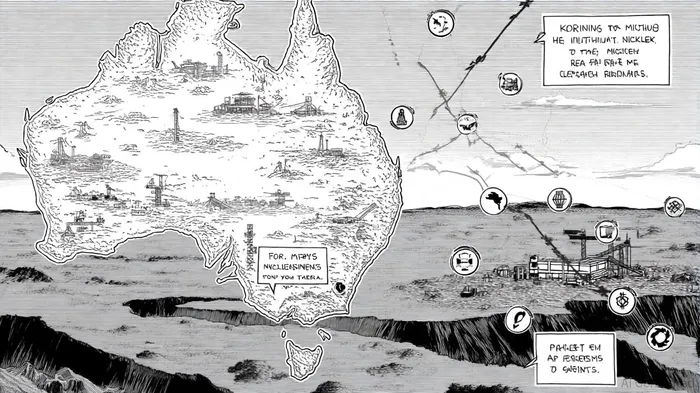
The U.S.-China trade war has reshaped global commodity markets in 2025, creating both turbulence and opportunity for Australian mining companies. As China imposes export restrictions on critical minerals like gallium, germanium, and rare earth elements, Australia's strategic reserves—second-largest lithium and nickel deposits and fourth-largest rare earths—position it as a pivotal player in the global supply chain[1]. However, navigating this geopolitical tightrope requires balancing U.S. demand for decarbonization materials with China's lingering market influence. For investors, the question is whether Australian miners can leverage these dynamics to secure long-term value.
Strategic Positioning: Critical Minerals as a Geopolitical Lifeline
Australia's critical minerals sector is no longer a niche market but a geopolitical linchpin. The U.S. has fast-tracked mining approvals and established a sovereign wealth fund to secure non-Chinese supply chains[2], while Australia's government has introduced a $17 billion production tax credit to incentivize onshore processing[3]. Companies like Lynas Rare Earths and Iluka Resources are central to this strategy.
Lynas, the world's largest non-Chinese rare earths producer, is advancing heavy rare earth separation capabilities, with first commercial dysprosium expected in May 2025[4]. This aligns with U.S. demand for materials critical to defense and renewable energy technologies. Meanwhile, Iluka Resources is expanding its rare earths portfolio through the Eneabba refinery, set to produce separated light and heavy rare earth oxides by 2027[5]. These projects underscore Australia's ambition to dominate the “Western supply chain” as China's export controls intensify[6].
Valuation Metrics: Contrasts and Opportunities
Financial data from Q3 2025 reveals divergent trajectories for these firms. Lynas Rare Earths reported a 22% year-over-year revenue increase to A$123 million but missed market estimates of A$155.7 million, reflecting volatile pricing and cash reserves halved to A$268.9 million[7]. Its trailing P/E ratio of 342x[8] suggests high investor optimism, albeit amid operational risks. Conversely, Iluka Resources demonstrated resilience, with a 39% EBITDA margin and net profit of $92 million in H1 2025[9]. Its trailing P/E of 14.48 and forward P/E of 49.88[10] indicate a more balanced valuation, supported by a 30% global market share in zircon and robust capital expenditures on the Balranald project[11].
Risks and Resilience: Navigating a Fragile Landscape
Despite these opportunities, challenges persist. China's market manipulation—such as oversupply tactics—has depressed lithium prices and led to mine closures in Western Australia[12]. Additionally, high domestic processing costs and regulatory delays hinder Australia's ability to compete with U.S. and European markets[13]. For instance, Lynas' cash reserves have dwindled amid capital expenditures, while Iluka's net debt of $730.30 million[14] raises questions about leverage.
Yet, both companies are adapting. Lynas is prioritizing strategic partnerships with U.S. entities, while Iluka's focus on automation and ESG criteria aligns with global decarbonization trends[15]. The Australian government's push for a federal critical minerals reserve further aims to stabilize supply chains[16].
Conclusion: A Calculated Bet on Geopolitical Resilience
For investors, the key lies in balancing short-term volatility with long-term geopolitical tailwinds. Lynas' high P/E reflects speculative bets on its rare earths dominance, while Iluka's disciplined capital structure and diversified projects offer a more conservative play. As U.S.-China trade talks ebb and flow, Australian miners with robust processing capabilities and strategic partnerships—like those advancing onshore refining—will likely outperform. The critical minerals race is far from over, but for those who navigate the tightrope wisely, the rewards could be substantial.







Comentarios
Aún no hay comentarios