
Australia's Strategic Move in Rare-Earths and U.S. Alliances: Geopolitical Supply-Chain Realignment and Investment Opportunities
In 2025, Australia's rare-earths industry has emerged as a linchpin in the U.S.-led effort to decouple from China's dominance in critical mineral supply chains. This strategic realignment, driven by geopolitical tensions and the energy transition, is reshaping global markets and unlocking investment opportunities for forward-thinking stakeholders.
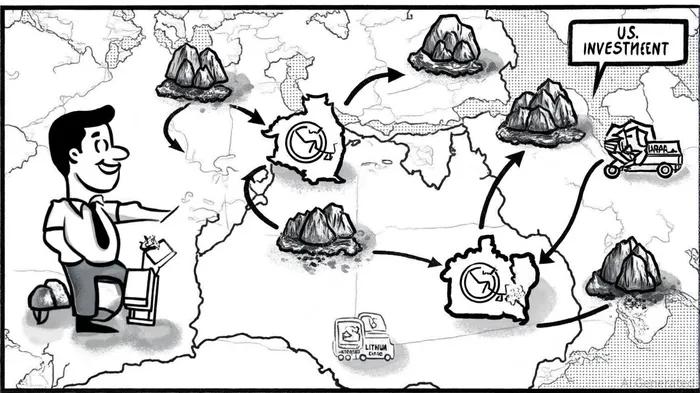
Strategic Partnerships and Policy Shifts
The U.S.-Australia alliance has entered a new phase, characterized by government-led initiatives to secure end-to-end supply chains for rare earths, lithium, and nickel. Australia's creation of a national critical minerals reserve and its policy framework-featuring offtake agreements and downstream processing incentives-signal a deliberate pivot toward becoming a trusted partner for the U.S. and its allies, according to a Rare Earth Exchanges article. This shift is not merely economic but deeply geopolitical, as frameworks like the Quad and AUKUS prioritize diversifying supply chains to counter China's near-monopoly on rare-earth processing, which accounts for over 80% of global refining, according to a Business News Today analysis.
The U.S. government has taken a proactive role, offering equity stakes in Australian companies such as International Graphite and Cobalt Blue to accelerate project development, Business News Today reports. These moves align with broader U.S. strategies like the Inflation Reduction Act, which incentivizes domestic production of critical minerals while indirectly supporting allied nations like Australia, Business News Today adds.
U.S. Investments in Australian Projects
Specific projects are now attracting substantial U.S. capital. The U.S. Export-Import Bank (EXIM) has pledged up to $200 million for VHM's Goschen project, a rare-earth and zirconium deposit in Western Australia, under the Supply Chain Resiliency Initiative (SCRI), Rare Earth Exchanges reports. Similarly, Victory Metals' North Stanmore project is set to receive a $190 million funding package to extract heavy rare earth elements (HREEs) like terbium and dysprosium, critical for high-performance magnets in defense and EV technologies, according to a Raw Materials report.
These investments highlight a strategic shift toward "friend-shoring," where the U.S. and Australia collaborate to reduce reliance on adversarial supply chains. For instance, Lynas Rare Earths-Australia's largest rare-earth producer-has begun operating its first domestic processing plant, a milestone that reduces exposure to Chinese refining bottlenecks, Rare Earth Exchanges notes.
Geopolitical Frameworks and Market Projections
The Quad Critical Minerals Initiative, launched in 2025, underscores the urgency of this realignment. By pooling resources with India, Japan, and the U.S., Australia aims to create a diversified supply chain for materials like lithium (52% of global production in Australia) and rare earths, Rare Earth Exchanges reports. This initiative is bolstered by the AUKUS pact, which has established a joint Taskforce on Critical Minerals to address defense and clean energy needs, Rare Earth Exchanges adds.
Market dynamics further validate this strategy. Argus Media forecasts that dysprosium prices, a key HREE used in EV motors, could surge to $1,100 per kilogram of rare earth oxide (REO) by 2034-a 340% increase from current levels, according to a Canadian Mining Journal outlook. This is driven by a projected 2,823-tonne shortfall by 2034, as demand outpaces supply, the same outlook projects. Meanwhile, lithium demand is expected to grow fivefold by 2040, with the U.S. and Australia positioned to capture a larger share of this market, Business News Today projects.
Investment Opportunities and Risks
For investors, the U.S.-Australia alliance presents actionable opportunities in three areas:
1. Upstream Producers: Companies like Arafura Rare Earths (Nolans project) and Iluka Resources are expanding non-Chinese processing capabilities.
2. Downstream Innovators: Firms involved in magnet production and recycling, such as MP Materials (U.S.) and Lynas (Australia), are set to benefit from government subsidies, Business News Today reports.
3. Equity Partnerships: U.S. equity stakes in Australian projects (e.g., EXIM's Goschen investment) offer a hedge against geopolitical risks, Rare Earth Exchanges reports.
However, risks remain. Environmental regulations, community opposition, and technical challenges in refining could delay projects. Additionally, China's potential retaliatory measures-such as export restrictions-may create short-term volatility, Business News Today notes.
Conclusion
Australia's rare-earths sector is no longer a peripheral player but a cornerstone of U.S. and allied strategies to secure critical minerals. With U.S. funding, geopolitical frameworks like the Quad and AUKUS, and a clear market-driven need for diversification, the region offers compelling long-term investment potential. For stakeholders, the key lies in aligning with projects that combine strategic value with robust financial backing-ensuring resilience in an era of supply-chain uncertainty.





Comentarios
Aún no hay comentarios