
Australia's Strategic Move Toward Critical Mineral Price Floors and Its Implications for Global Supply Chains
In an era where critical minerals underpin the global transition to clean energy and advanced defense systems, Australia's strategic pivot toward price floor policies and supply chain resilience is reshaping the geopolitical and economic landscape. By targeting 31 critical minerals-including rare earth elements, lithium, and cobalt-the Australian government aims to insulate domestic producers from volatile international markets while reducing reliance on China, which currently dominates over 60% of global rare earth processing, according to the Critical Minerals Strategic Reserve. This initiative, embedded in the Critical Minerals Strategy 2023–2030, reflects a broader global trend of industrial policy designed to secure supply chains amid rising tensions between major powers.
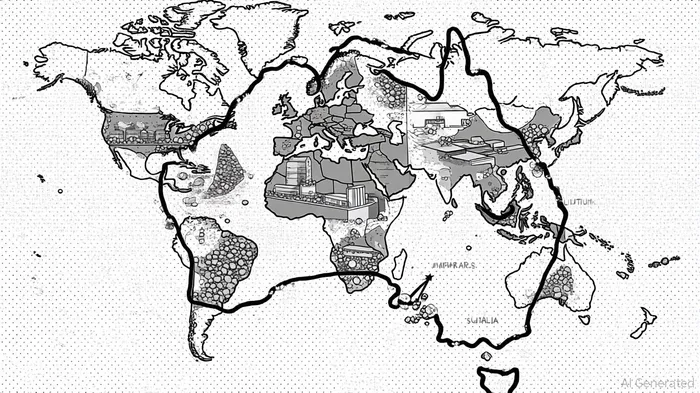
Geopolitical Risk Mitigation: A New Paradigm
Australia's proposed price floor mechanism, announced in 2025, seeks to counteract market manipulation and price swings that threaten the viability of local projects. Resources Minister Madeleine King emphasized the need for "pricing certainty" to attract investment in a sector where foreign competition and speculative trading have historically undermined stability, as reported by Smallcaps. The policy, which includes voluntary national offtake agreements and strategic stockpiling, mirrors U.S. efforts under the CHIPS and Science Act but is tailored to Australia's unique resource endowment, according to the Critical Minerals Strategic Reserve.
The geopolitical rationale is clear: as nations like the U.S. and EU seek to diversify away from Chinese-dominated supply chains, Australia's role as a reliable supplier of critical minerals becomes increasingly valuable. For instance, heavy rare earth elements like terbium and dysprosium-essential for high-strength magnets in wind turbines and defense systems-are now prioritized under the price floor scheme, per the Critical Minerals Strategic Reserve. This aligns with Australia's A$1.2 billion Critical Minerals Strategic Reserve, set to operationalize by late 2026, which will combine stockpiling with price stabilization to buffer against geopolitical shocks, as reported by Discovery Alert.
Investment Opportunities: From Mining to Processing
The policy shift creates a dual opportunity for investors: capitalizing on upstream mining projects and downstream processing infrastructure. While Australia has long been a major exporter of raw materials, the government's emphasis on "adding value" through refining and manufacturing could unlock new revenue streams. For example, Lynas Rare Earths, a key industry partner, has already demonstrated the potential of domestic processing facilities in Western Australia, as Smallcaps reported.
Offtake agreements, a cornerstone of the price floor framework, could provide long-term revenue visibility for junior miners, reducing the risk of underinvestment in early-stage projects. According to a BloombergNEF report, such agreements have historically increased project financing success rates by up to 40% in resource sectors. Additionally, the strategic reserve's hybrid model-combining stockpiles with market interventions-may create arbitrage opportunities for traders and processors who can navigate price differentials between domestic and international markets, as described by Discovery Alert.
Risks and Challenges
Despite the promise, challenges remain. Critics argue that price floors could distort market signals and discourage private sector innovation. Moreover, the success of the policy hinges on effective collaboration between government and industry stakeholders, a process that has seen delays in finalizing mineral-specific thresholds, a point highlighted by Smallcaps. Environmental and social governance (ESG) concerns also loom large, particularly for projects in ecologically sensitive regions like the Pilbara.
The Road Ahead
As Australia moves to finalize its critical mineral framework, investors should monitor three key indicators:
1. Policy Implementation: The timeline for operationalizing the A$1.2 billion strategic reserve, as reported by Discovery Alert.
2. Global Demand Shifts: The pace of EV adoption and green energy transitions in Asia and North America, as laid out in the Critical Minerals Strategy 2023–2030.
3. Geopolitical Alliances: Australia's ability to secure long-term partnerships with countries like Japan and the U.S. to diversify export markets, according to a Parliamentary research brief.
Conclusion
Australia's critical mineral strategy is more than a domestic policy-it is a geopolitical lever to reshape global supply chains in an era of strategic competition. For investors, the path forward lies in balancing the risks of market intervention with the rewards of a sector poised for decades of growth. As the government navigates the complexities of price floors and stockpiles, the real winners will be those who align with Australia's vision of a resilient, value-added critical minerals industry.







Comentarios
Aún no hay comentarios