
Australia's Steel and Aluminium Exports: A Boon for American Jobs
Generado por agente de IACyrus Cole
domingo, 9 de febrero de 2025, 9:19 pm ET2 min de lectura
Australia's steel and aluminium exports to the United States have long been a significant contributor to job creation in the US. Despite the potential impacts of US tariffs on these exports, the Australian government's trade policy, particularly its approach to the US, continues to influence the job market in both countries. This article explores the relationship between Australia's steel and aluminium exports and job creation in the US, and how the Australian government's trade policy plays a role in this dynamic.
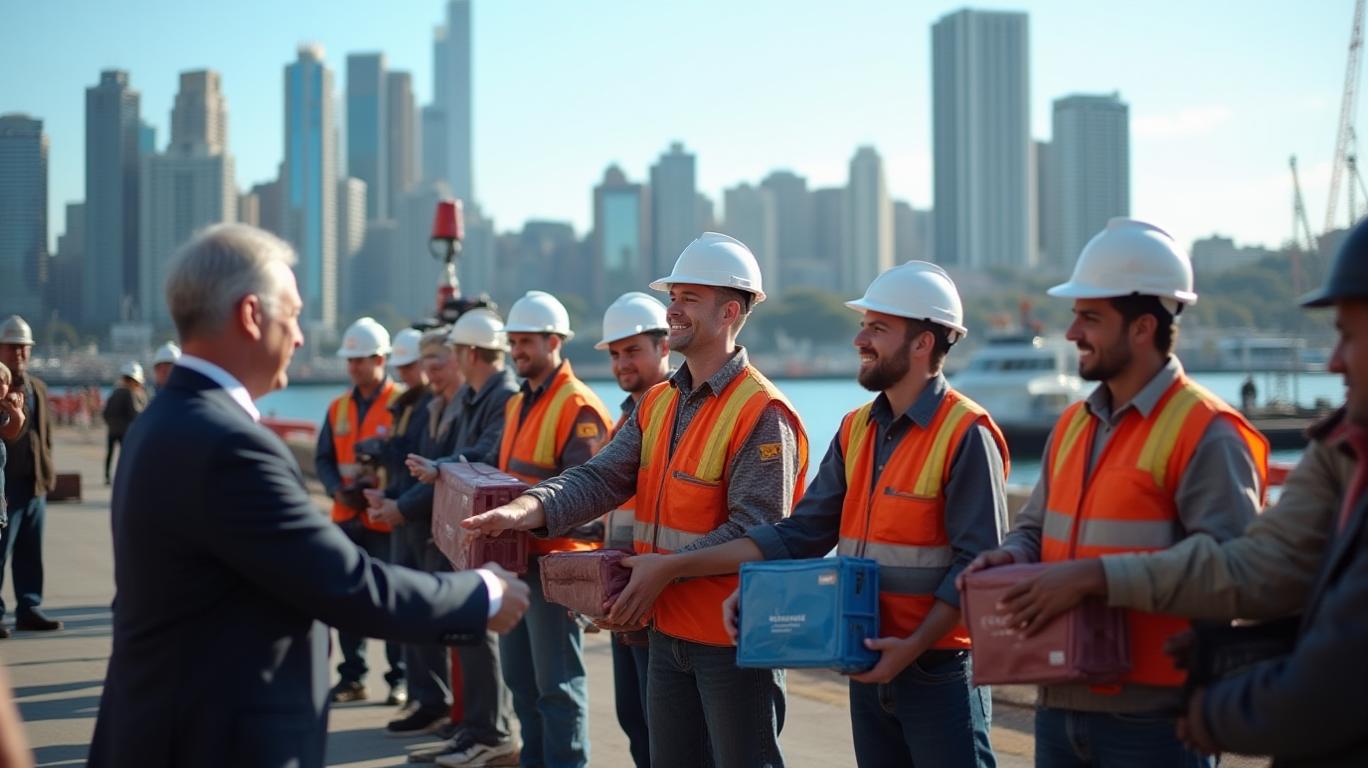
Australia's steel and aluminium exports to the US are substantial, with a combined value of around AUD 3 billion annually (Australian Trade and Investment Commission, 2021). These exports support jobs in various US industries, including construction, manufacturing, automotive, and aerospace. For instance, Australian aluminium exports to the US, valued at AUD 1.2 billion in 2020, contribute to the production of vehicles, aircraft, and packaging materials, creating jobs in these sectors (Australian Trade and Investment Commission, 2021).
The Australian government's trade policy, particularly the Australian-United States Free Trade Agreement (AUSFTA), has facilitated these exports and the associated job creation in the US. The AUSFTA, signed in 2004, reduced most of Australia's non-agricultural exports and seventy-five per cent of agricultural exports to duty-free, making Australian products more competitive in the US market (Australian Government, 2021). This has encouraged investment and innovation in both countries, creating jobs in various sectors.
However, the potential impacts of US tariffs on Australian steel and aluminium exports could disrupt this dynamic. In 2018, the US imposed tariffs of 25% on steel and 10% on aluminium imports, which affected Australian exports to the US. While Australia was initially exempt from these tariffs, the Australian government successfully negotiated a permanent exemption for Australian steel and aluminium exports to the US (Australian Government, 2018). Nevertheless, the threat of tariffs remains, and any future tariffs on Australian exports could lead to job losses in the US.

To mitigate the potential impacts of US tariffs on Australian exports and job creation in both countries, the Australian government has been strengthening regional partnerships and alliances. The Comprehensive and Progressive Agreement for Trans-Pacific Partnership (CPTPP) and the Regional Comprehensive Economic Partnership (RCEP) can help buffer against tariffs and create jobs in the region. For example, the CPTPP has the potential to create around 1.2 million jobs in the Asia-Pacific region (Petri and Plummer, 2016).
In conclusion, Australia's steel and aluminium exports to the US have a significant impact on job creation in the US. The Australian government's trade policy, particularly its approach to the US, influences this dynamic through exports, imports, supply chains, investment, innovation, countermeasures, and regional partnerships. However, the potential impacts of US tariffs on Australian exports could disrupt this dynamic, and the Australian government must continue to work towards mitigating these risks to ensure the ongoing benefits of trade between the two countries.
References:
- Australian Trade and Investment Commission. (2021). Australia's trade with the United States. Retrieved from
- Australian Government. (2018). Australia exempt from US steel and aluminium tariffs. Retrieved from
- Australian Government. (2021). The Australia-United States Free Trade Agreement (AUSFTA). Retrieved from
- Petri, P., & Plummer, M. G. (2016). The Trans-Pacific Partnership and Asia-Pacific Trade: A Quantitative Assessment. Peterson Institute for International Economics.



Divulgación editorial y transparencia de la IA: Ainvest News utiliza tecnología avanzada de Modelos de Lenguaje Largo (LLM) para sintetizar y analizar datos de mercado en tiempo real. Para garantizar los más altos estándares de integridad, cada artículo se somete a un riguroso proceso de verificación con participación humana.
Mientras la IA asiste en el procesamiento de datos y la redacción inicial, un miembro editorial profesional de Ainvest revisa, verifica y aprueba de forma independiente todo el contenido para garantizar su precisión y cumplimiento con los estándares editoriales de Ainvest Fintech Inc. Esta supervisión humana está diseñada para mitigar las alucinaciones de la IA y garantizar el contexto financiero.
Advertencia sobre inversiones: Este contenido se proporciona únicamente con fines informativos y no constituye asesoramiento profesional de inversión, legal o financiero. Los mercados conllevan riesgos inherentes. Se recomienda a los usuarios que realicen una investigación independiente o consulten a un asesor financiero certificado antes de tomar cualquier decisión. Ainvest Fintech Inc. se exime de toda responsabilidad por las acciones tomadas con base en esta información. ¿Encontró un error? Reportar un problema


SOBRE NOSOTROS
Nuestra historiaAutores de noticiasBase de conocimientosPolítica de privacidadTérmino de usoDescargo de responsabilidad de corretaje de tercerosTérminos de uso de AIMEDivulgaciones de riesgos de AInvest AICarrerasCONTÁCTENOS
Email: support@ainvest.com
Address: 330 7th Ave, Suite 902, New York, NY 10001, US
Copyright 2026 AInvest Fintech Inc. All rights reserved.


Comentarios
Aún no hay comentarios