
Australia's Rural Reckoning: How the Nationals' Policy Push Spells Opportunity in Agribusiness, Energy, and Infrastructure
Australia’s political landscape is undergoing a seismic shift, with the Nationals leveraging their electoral clout to prioritize rural-focused policies that clash with the Liberal Party’s urban-centric agenda. This divide—over nuclear energy, supermarket breakup, and regional funding—creates both short-term volatility and long-term tailwinds for sectors tied to Australia’s rural economy. For investors, this is a clarion call to rebalance portfolios toward agribusiness logistics, energy diversification, and regional infrastructure plays.
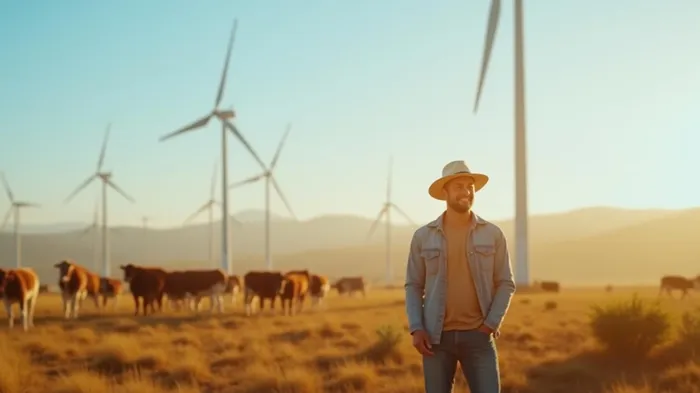
Agribusiness: Riding the Supermarket Split
The Nationals’ demand to break up supermarket giants like Woolworths and Coles—positioned as a condition for Coalition unity—signals a pro-rural pivot that could reshape Australia’s agricultural supply chain. Smaller farmers and logistics firms stand to benefit as market power decentralizes.
Investors should target companies enabling efficient agribusiness operations:
- Brambles (BXF): Its CHEP pallet and container networks reduce transportation costs for farmers.
- Ridley (RDC): A global leader in animal nutrition and logistics, poised to gain as regional producers thrive.
Energy: The Nuclear Divide and Renewables’ Resilience
The Nationals’ push for seven nuclear reactors by mid-century clashes with Liberal pragmatism, creating a policy battleground. While nuclear’s timeline remains distant, the Coalition’s 2025 pivot toward it—paired with Labor’s renewables push—creates a mixed bag of opportunities.
- Nuclear Enablers:
- Inpex (INPX): Uranium miner benefiting from energy diversification.
Energy Resources of Australia (ERA): A play on uranium demand.
Renewables’ Steady Growth:
- Sol Systems (SOL): Solar infrastructure firm capitalizing on bipartisan support for grid stability.
- Windlab (WLAB): Wind energy developer aligned with Labor’s 82% renewables target.
Regional Infrastructure: The $20B Fund’s Hidden Gems
The Nationals’ proposed $20 billion Regional Future Fund targets rural infrastructure—from irrigation systems to healthcare—creating a pipeline of projects for construction and utilities firms.
- Downer EDI (DOW): A leading contractor for roads, railways, and energy networks.
- Transurban Group (TCL): Expanding into regional toll roads and smart infrastructure.
Navigating Volatility for Long-Term Gain
The immediate risk? Political instability. If the Nationals exit the Coalition, markets could react harshly. Yet the structural tailwinds—regional funding, energy diversification—are too powerful to ignore.
Investment Playbook:
1. Aggressively overweight agribusiness logistics (e.g., BXF, RDC) as the supermarket breakup debate heats up.
2. Diversify energy exposure to both nuclear enablers (INPX) and renewables (SOL, WLAB).
3. Lock in regional infrastructure plays (DOW, TCL) ahead of the Fund’s potential rollout.
Conclusion: A Rural Renaissance is Coming
The Nationals’ policy push is more than a political squabble—it’s a blueprint for reallocating capital toward Australia’s rural economy. While near-term uncertainty looms, the long-term trajectory favors agribusiness, energy hybrids, and regional infrastructure. Investors who pivot now will capture a multi-year cycle of growth. As the Coalition’s fate hangs in the balance, the smart money is betting on the bush.







Comentarios
Aún no hay comentarios