
Australia’s Rising Housing Market: Opportunities and Risks for Investors in a Supply-Constrained Environment
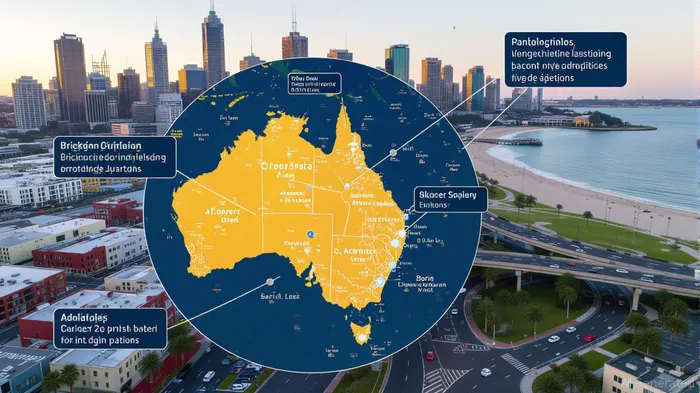
Australia’s housing market in 2025 is a study in paradox: constrained supply and rising demand are fueling price growth, yet affordability challenges and macroeconomic risks loom large. For investors, this environment demands a nuanced approach that balances opportunism with caution. The key lies in leveraging structural supply shortages while mitigating risks tied to policy shifts, interest rate volatility, and regional oversupply.
The Supply-Demand Imbalance: A Double-Edged Sword
National dwelling values rose 0.6% in July 2025, marking six consecutive months of growth, with Darwin leading at 2.2% [1]. This momentum is driven by a five-year housing shortfall of 262,000 dwellings, exacerbated by labor shortages, high construction costs, and complex planning systems [3]. Outer suburbs and regional areas like Brisbane, Adelaide, and Perth are seeing the most aggressive price gains, as population growth and infrastructure investments outpace supply [3].
However, affordability remains dire. The national value-to-income ratio of 7.9 [1] and a 10.6-year savings horizon for a median home deposit [3] suggest demand is being artificially suppressed. This creates a tension: while constrained supply supports price growth, affordability constraints could limit long-term demand sustainability.
Strategic Investment Opportunities
Investors are capitalizing on this imbalance through targeted strategies. The “Buy and Hold” model is gaining traction in high-growth areas like the Gold Coast and Sunshine Coast, where long-term capital growth and rental yields remain robust [6]. Outer suburbs and regional markets, such as Brisbane’s northern corridors and Perth’s coastal regions, are also attracting attention due to population inflows and infrastructure projects [1].
Diversification is another key tactic. Spreading investments across states and property types—residential, industrial, and logistics—buffers against localized oversupply risks [2]. For example, the logistics and industrial sector is seeing a surge in offshore capital, driven by rate cuts and improved liquidity [1]. Meanwhile, alternative assets like data centers and student accommodation have drawn over $12 billion in 2024, with momentum expected to continue [1].
Risk Mitigation: Navigating the Tightening Market
Despite the opportunities, risks are significant. Affordability challenges could delay entry for first-time buyers, while policy reforms—such as rental reforms or tax adjustments—may erode rental yields [2]. To mitigate these, investors are prioritizing properties with stable cash flow and conducting rigorous cash flow analyses [2].
Interest rate volatility adds another layer of complexity. While the RBA’s projected rate cuts to 2.6% by early 2026 [4] may ease borrowing costs, sudden rate hikes could trigger mortgage stress. Investors are using interest-only loans and leveraging government initiatives like the National Housing Accord (1.2 million homes by 2029) to align with long-term supply-side reforms [1].
The Path Forward: Balancing Optimism and Caution
The 2025 outlook is one of moderate but sustained gains, supported by falling rates, improved buyer confidence, and structural supply shortages [1]. However, risks such as trade conflicts and slower population growth remain [1]. Investors must remain agile, focusing on regions with strong fundamentals and aligning with infrastructure-driven growth.
In this tightening market, success hinges on a dual focus: exploiting supply constraints where they exist while hedging against macroeconomic and policy-driven uncertainties. As the RBA’s rate cuts and policy reforms take shape, the most prudent investors will be those who combine data-driven analysis with strategic diversification.
Source:
[1] Australia's Housing Market Q3 2025: Trends And Outlook, [https://www.investorkit.com.au/blog/australias-housing-market-q3-2025-trends-and-outlook/]
[2] Potential Risks in 2025: What Property Investors Should Know, [https://www.adviseable.com.au/potential-risks-in-2025-what-property-investors-should-know/]
[3] Australia's Housing Market in 2025: Rate Cuts, Affordability ..., [https://www.ainvest.com/news/australia-housing-market-2025-rate-cuts-affordability-constraints-case-strategic-property-investment-2508/]
[4] Property Market Forecast Australia 2025 — House Prices ..., [https://propertyupdate.com.au/australian-property-market-predictions/]







Comentarios
Aún no hay comentarios