
Australia's Rising CPI and Its Implications for Equity and Commodity Sectors
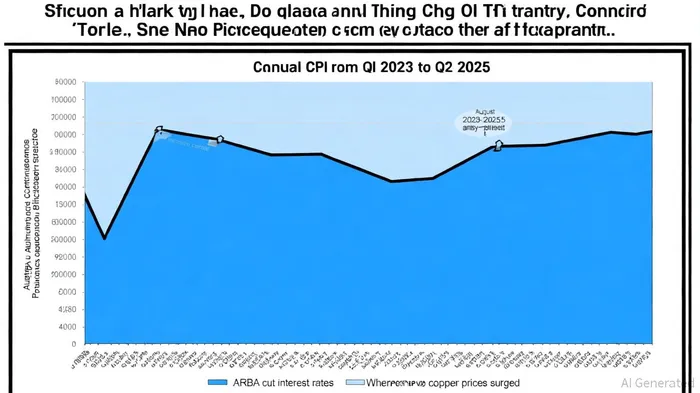
Australia's inflationary environment in 2025 remains a focal point for investors, with the Reserve Bank of Australia (RBA) navigating a delicate balance between cooling price pressures and supporting economic growth. As of Q2 2025, the annual CPI stands at 2.09%, within the RBA's 2-3% target range, while consumer inflation expectations have eased to 3.9% in August 2025, reflecting a softening labor market and moderating demand[1]. However, structural trends in commodities and equity sectors suggest that certain industries are uniquely positioned to capitalize on higher inflation and interest rate dynamics.
Financials: Insurers and Diversified Financials as Inflation Winners
The insurance sector has emerged as a standout performer amid rising inflation. General insurance revenue in the December 2024 quarter reached $19.2 billion, with net profits climbing to $2.08 billion, driven by robust investment returns and operational efficiency[2]. Insurers have offset inflationary pressures by passing on higher costs to policyholders—home insurance premiums, for instance, have risen by at least 10% annually due to increased reinsurance costs and inflation[3]. Analysts anticipate that as inflation normalizes, insurers will moderate premium hikes while maintaining profitability through strong investment returns and risk management[4].
Diversified financials, including asset managers and mortgage insurers, also benefit from rising bond yields. With the RBA's cash rate at 3.6% in August 2025, yields on government bonds have climbed, enhancing returns for financial institutions with significant fixed-income portfolios[5]. However, banks face a more nuanced outlook. While large banks like Commonwealth Bank of Australia have seen share price gains, their earnings growth remains modest, creating a valuation disconnect in a high-interest-rate environment[6].
Travel: Resilience Amid a Two-Speed Economy
The travel sector has defied conventional wisdom, thriving despite high interest rates. International visitor arrivals in 2024 reached 8.3 million, or 88% of pre-pandemic levels, with markets like Vietnam and South Korea outperforming historical benchmarks[7]. Hotel occupancy rates in Australia hit 72.6% in Q1 2025, with average daily rates rising to $250.65, supported by limited new supply and strong demand[8].
This resilience is partly attributed to a two-speed economy: older, wealthier demographics continue to prioritize discretionary spending on travel, while younger households face financial strain from high debt servicing costs[9]. Additionally, Australia's red meat exports to key markets like the U.S. and China indirectly bolster tourism by strengthening the country's economic fundamentals[10].
Commodities: Base Metals and Structural Demand
The resources sector, particularly base metals, is poised to benefit from long-term structural trends. Copper prices are projected to average $9,477 per tonne in 2025, driven by constrained global supply and growing demand from electrification and renewable energy projects[11]. While Chinese property sector weakness has dampened near-term demand, investments in advanced manufacturing and green infrastructure are expected to offset these headwinds[12].
Aluminium, another critical base metal, faces upward price pressures due to bauxite supply concerns and geopolitical uncertainties in key producing regions like Chile and Peru[13]. However, the sector's exposure to cyclical demand fluctuations and production bottlenecks remains a risk.
Conclusion: Strategic Allocation in a High-Inflation Environment
Investors seeking to capitalize on Australia's inflationary backdrop should prioritize sectors with pricing power, structural demand, and operational flexibility. Insurers and diversified financials offer defensive characteristics in a rising rate environment, while travel stocks benefit from resilient consumer spending. Base metals, particularly copper, align with global decarbonization trends, though their performance will hinge on China's economic trajectory.
As the RBA prepares for its next CPI release on 29 October 2025, market participants must remain agile, balancing short-term volatility with long-term structural opportunities.







Comentarios
Aún no hay comentarios