
Australia's Global Lithium Seeks Government Help Amidst Alleged Chinese Control Attempt
Generado por agente de IACyrus Cole
domingo, 9 de febrero de 2025, 9:50 pm ET1 min de lectura
CASK--
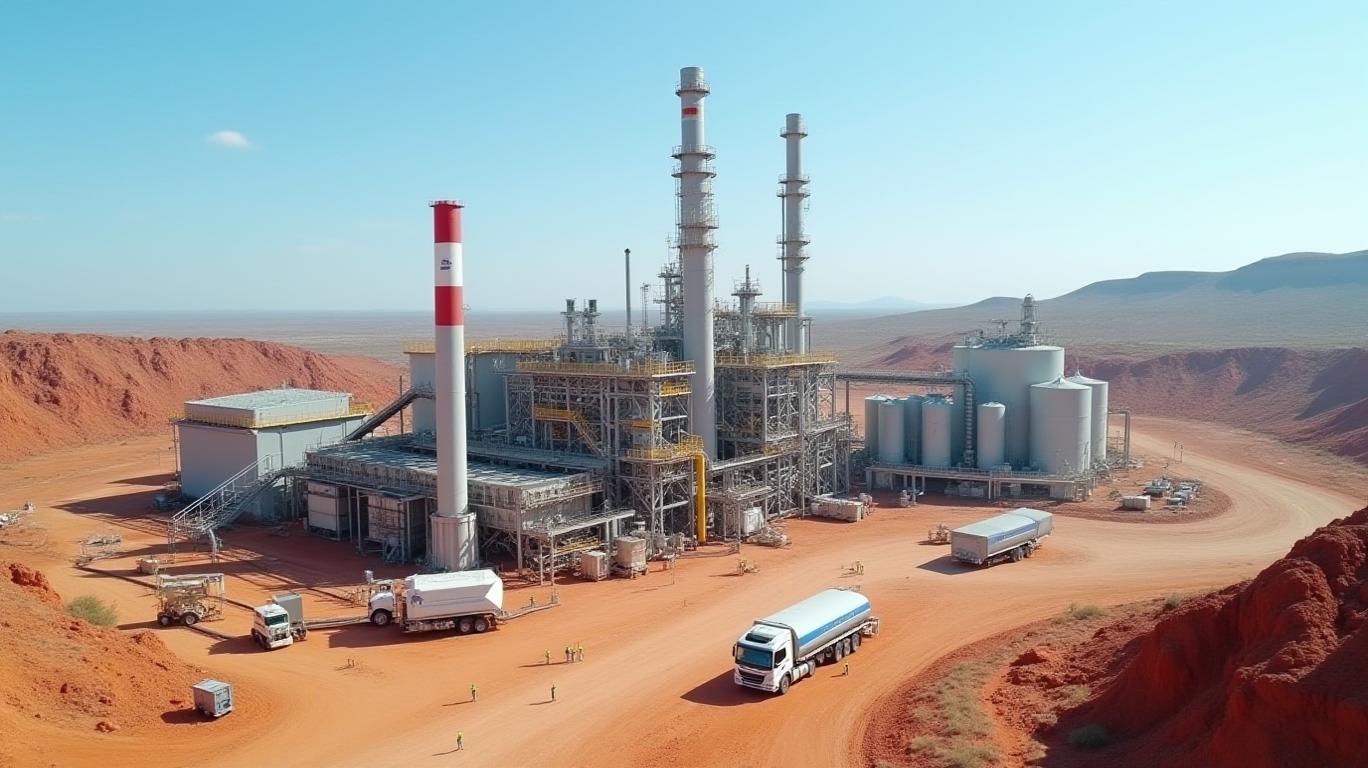
Global Lithium, an Australian company, has applied for a A$100 million grant from the Australian Government's Critical Minerals Development Fund to build a lithium hydroxide processing plant in Western Australia. This move aligns with Australia's broader critical minerals strategy, aiming to build sovereign capability in processing critical minerals to become a "renewable energy superpower." The government's goal is to extract more value from Australia's resources by processing them domestically, rather than shipping raw materials overseas.
The alleged Chinese control attempt in the lithium market has significant implications for the geopolitical dynamics and Australia's lithium industry. Australia is the world's largest producer of lithium, but it lacks the processing and manufacturing capabilities that China possesses. This dependence on China for downstream production creates a strategic vulnerability for Australia. As of 2023, China controls over 60% of the world's lithium processing and 75% of all lithium-ion batteries (Zhang, 2023).
The high concentration of lithium processing in China makes the supply chain vulnerable to disruptions due to geopolitical tensions, natural disasters, or other unforeseen events. This could impact Australia's ability to export its lithium resources and maintain its market share. Geopolitical tensions and trade wars could also affect Australia's lithium industry, as the US and EU aim to increase their self-sufficiency in the lithium supply chain out of a concern about potential disruption to battery supplies stemming from China's dominance of production.
Environmental and Social Governance (ESG) concerns surrounding lithium mining in Australia are significant, as the industry's rapid growth and the demand for critical minerals have raised questions about sustainability and social responsibility. Australia's lithium mining, primarily in Western Australia, has been criticized for its impact on water resources. The process of extracting lithium from spodumene ore requires significant amounts of water, which can strain local water supplies, particularly in drought-prone areas (Source: [The Guardian](https://www.theguardian.com/australia-news/2021/nov/29/lithium-mining-in-western-australia-could-leave-a-legacy-of-water-scarcity)).
Indigenous communities in Australia have raised concerns about the impact of lithium mining on their traditional lands and cultural heritage. There have been instances of disputes and protests, such as those involving the Wadjarri people in Western Australia (Source: [ABC News](https://www.abc.net.au/news/2021-09-22/wadjarri-people-protest-against-lithium-mining-in-western-australia/100456666)).
The Australian government has been working on improving ESG standards in the mining industry. In 2022, the government announced a A$22.7 billion investment over a decade to maximize the economic and industrial benefits of the clean energy transition, including critical minerals processing (Source: [Australian Government](https://www.futuremadeinaustralia.gov.au/)).
In conclusion, Australia's Global Lithium seeking government help amidst alleged Chinese control attempts highlights the geopolitical dynamics and ESG concerns surrounding the lithium market. As Australia aims to upgrade its critical minerals processing capabilities, it must address these challenges to secure its position in the global lithium market and contribute to the creation of more diverse, resilient, and sustainable global supply chains.
GWRS--
LAC--
Global Lithium, an Australian company, has applied for a A$100 million grant from the Australian Government's Critical Minerals Development Fund to build a lithium hydroxide processing plant in Western Australia. This move aligns with Australia's broader critical minerals strategy, aiming to build sovereign capability in processing critical minerals to become a "renewable energy superpower." The government's goal is to extract more value from Australia's resources by processing them domestically, rather than shipping raw materials overseas.
The alleged Chinese control attempt in the lithium market has significant implications for the geopolitical dynamics and Australia's lithium industry. Australia is the world's largest producer of lithium, but it lacks the processing and manufacturing capabilities that China possesses. This dependence on China for downstream production creates a strategic vulnerability for Australia. As of 2023, China controls over 60% of the world's lithium processing and 75% of all lithium-ion batteries (Zhang, 2023).
The high concentration of lithium processing in China makes the supply chain vulnerable to disruptions due to geopolitical tensions, natural disasters, or other unforeseen events. This could impact Australia's ability to export its lithium resources and maintain its market share. Geopolitical tensions and trade wars could also affect Australia's lithium industry, as the US and EU aim to increase their self-sufficiency in the lithium supply chain out of a concern about potential disruption to battery supplies stemming from China's dominance of production.
Environmental and Social Governance (ESG) concerns surrounding lithium mining in Australia are significant, as the industry's rapid growth and the demand for critical minerals have raised questions about sustainability and social responsibility. Australia's lithium mining, primarily in Western Australia, has been criticized for its impact on water resources. The process of extracting lithium from spodumene ore requires significant amounts of water, which can strain local water supplies, particularly in drought-prone areas (Source: [The Guardian](https://www.theguardian.com/australia-news/2021/nov/29/lithium-mining-in-western-australia-could-leave-a-legacy-of-water-scarcity)).
Indigenous communities in Australia have raised concerns about the impact of lithium mining on their traditional lands and cultural heritage. There have been instances of disputes and protests, such as those involving the Wadjarri people in Western Australia (Source: [ABC News](https://www.abc.net.au/news/2021-09-22/wadjarri-people-protest-against-lithium-mining-in-western-australia/100456666)).
The Australian government has been working on improving ESG standards in the mining industry. In 2022, the government announced a A$22.7 billion investment over a decade to maximize the economic and industrial benefits of the clean energy transition, including critical minerals processing (Source: [Australian Government](https://www.futuremadeinaustralia.gov.au/)).
In conclusion, Australia's Global Lithium seeking government help amidst alleged Chinese control attempts highlights the geopolitical dynamics and ESG concerns surrounding the lithium market. As Australia aims to upgrade its critical minerals processing capabilities, it must address these challenges to secure its position in the global lithium market and contribute to the creation of more diverse, resilient, and sustainable global supply chains.

Divulgación editorial y transparencia de la IA: Ainvest News utiliza tecnología avanzada de Modelos de Lenguaje Largo (LLM) para sintetizar y analizar datos de mercado en tiempo real. Para garantizar los más altos estándares de integridad, cada artículo se somete a un riguroso proceso de verificación con participación humana.
Mientras la IA asiste en el procesamiento de datos y la redacción inicial, un miembro editorial profesional de Ainvest revisa, verifica y aprueba de forma independiente todo el contenido para garantizar su precisión y cumplimiento con los estándares editoriales de Ainvest Fintech Inc. Esta supervisión humana está diseñada para mitigar las alucinaciones de la IA y garantizar el contexto financiero.
Advertencia sobre inversiones: Este contenido se proporciona únicamente con fines informativos y no constituye asesoramiento profesional de inversión, legal o financiero. Los mercados conllevan riesgos inherentes. Se recomienda a los usuarios que realicen una investigación independiente o consulten a un asesor financiero certificado antes de tomar cualquier decisión. Ainvest Fintech Inc. se exime de toda responsabilidad por las acciones tomadas con base en esta información. ¿Encontró un error? Reportar un problema


SOBRE NOSOTROS
Nuestra historiaAutores de noticiasBase de conocimientosPolítica de privacidadTérmino de usoDescargo de responsabilidad de corretaje de tercerosTérminos de uso de AIMEDivulgaciones de riesgos de AInvest AICarrerasCONTÁCTENOS
Email: support@ainvest.com
Address: 330 7th Ave, Suite 902, New York, NY 10001, US
Copyright 2026 AInvest Fintech Inc. All rights reserved.


Comentarios
Aún no hay comentarios