
Australia's Evolving Inflation Trajectory and RBA Policy Outlook: Assessing Early 2026 Rate Hike Risks and Sectoral Implications
Australia's inflation trajectory remains a focal point for investors and policymakers as the Reserve Bank of Australia (RBA) navigates the delicate balance between curbing price pressures and supporting economic growth. With core inflation hovering near the upper end of the 2–3% target range and housing costs surging, the RBA's December 2025 policy statement signaled a cautious but hawkish stance. This analysis evaluates the likelihood of a rate hike in early 2026 and its potential sectoral impacts, drawing on recent data and expert forecasts.
Inflation Dynamics and RBA Policy Signals
The RBA's December 2025 meeting minutes underscored its vigilance toward inflation, noting "signs of a more broadly based pick-up in inflation", part of which may be persistent and will bear close monitoring. Core inflation, which excludes volatile items like energy and food, rose to 3.2% in November 2025, with housing costs contributing significantly at 5.2% annually. These figures, combined with tightening labor markets and resilient private demand, have shifted expectations toward potential rate hikes.
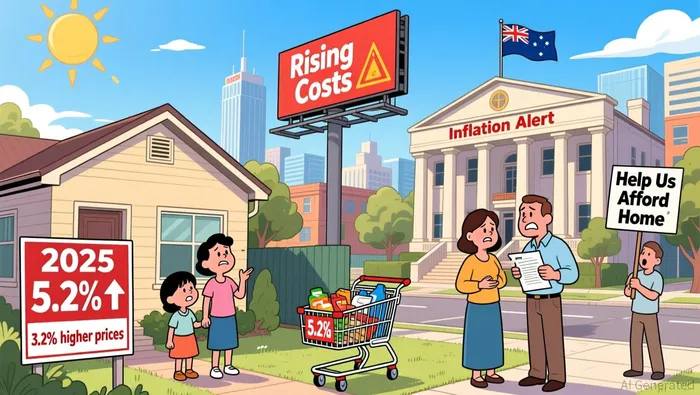 While the RBA left the cash rate unchanged at 3.6% in December 2025, it removed references to external risks like geopolitical tensions, focusing instead on domestic inflation dynamics. Market pricing reflects a 34% probability of a rate hike at the February 3, 2026, meeting, with a 93% chance of tightening by June 2026. Major banks like NAB and CBA anticipate one or two 0.25 percentage point hikes in the first half of 2026, while Westpac and ANZ economists advocate for extended rate stability. This divergence highlights the uncertainty surrounding inflation's trajectory, particularly as sticky price pressures in services and housing persist.
Sectoral Impacts of a Rate Hike
Housing Market: A rate hike would immediately elevate borrowing costs for homeowners. For a $600,000 to $1 million mortgage, a 0.25 percentage point increase could raise monthly repayments by $90 to $150. While housing prices have risen solidly in 2025, analysts expect a moderation in 2026 as higher rates dampen demand. This could lead to a correction in overvalued property markets, particularly in cities like Sydney and Melbourne, where affordability gaps remain pronounced.
Consumer Goods and Services: Tighter monetary policy is likely to suppress discretionary spending, disproportionately affecting sectors like retail and travel. A Bloomberg report notes that consumer discretionary stocks and tech firms, which rely on credit-driven demand, could face headwinds. Conversely, consumer staples-such as food and household essentials-may remain resilient, as households prioritize essential purchases amid higher borrowing costs.
Financial Services: Banks are poised to benefit from higher interest rates through expanded net interest margins. Most lenders are expected to pass on rate hikes fully to borrowers, though savings rate adjustments may vary. This asymmetry could compress profit margins for smaller banks, while larger institutions with diversified portfolios may gain market share. Investors should also monitor credit risk, as higher rates could strain household budgets and increase loan defaults.
Investment Implications and Strategic Considerations
For investors, the evolving RBA policy landscape necessitates a sectoral rebalancing. Defensive sectors like consumer staples and utilities may offer stability, while financials could outperform in a rising rate environment. Conversely, cyclical sectors such as real estate and consumer discretionary may underperform, particularly if rate hikes accelerate.
A key risk lies in the RBA's ability to manage inflation without triggering a recession. If inflation moderates more quickly than anticipated, the central bank may delay hikes, preserving economic momentum. Conversely, persistent inflation could force a more aggressive tightening cycle, exacerbating sectoral volatility.
Conclusion
Australia's inflation trajectory remains a critical determinant of RBA policy in early 2026. While the likelihood of a rate hike is moderate in February, the probability intensifies by mid-year. Investors must remain agile, factoring in sectoral vulnerabilities and the RBA's dual mandate of price stability and growth. As the central bank navigates this balancing act, a nuanced understanding of inflationary drivers and policy responses will be essential for capitalizing on emerging opportunities.







Comentarios
Aún no hay comentarios