
Australia's Energy Strategy and Its Impact on Data Center Development
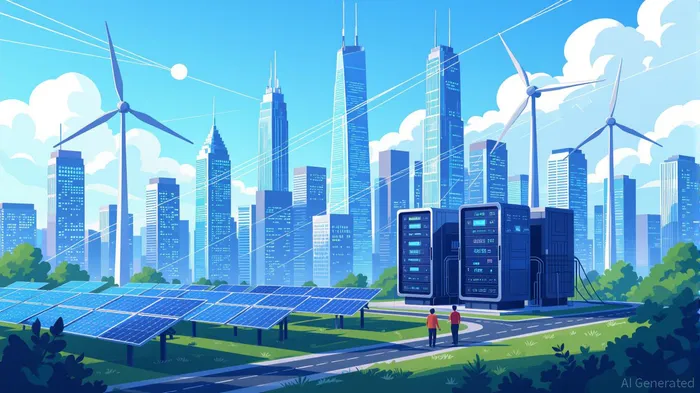
Australia's 2024–2025 energy strategy, anchored in the Future Made in Australia plan, is reshaping the nation's infrastructure landscape, creating compelling near-term investment opportunities at the intersection of renewable energy and technology. With a focus on decarbonization, critical minerals, and grid modernization, the strategy not only positions Australia as a global renewable energy leader but also indirectly catalyzes demand for data center development—a critical enabler of digital transformation in smart cities and energy management systems.
Renewable Energy Investments: A Foundation for Sustainable Growth
The Australian government has committed A$3.5 billion to renewable energy projects and grid infrastructure through the Clean Energy Finance Corporation (CEFC) in the 2024–2025 financial year[2]. This funding supports initiatives that reduce energy consumption and lower carbon footprints for homes and businesses, aligning with the nation's net-zero targets. Complementing this, the Australian Renewable Energy Agency (ARENA) is receiving A$3.2 billion to commercialize technologies such as green hydrogen, batteries, and low-carbon fuels[1]. These investments are not only accelerating the transition to clean energy but also creating a resilient energy ecosystem that can power energy-intensive sectors like data centers.
For instance, the Solar Sunshot program (A$1 billion) and Battery Breakthrough Initiative (A$500 million) aim to strengthen domestic solar and battery supply chains[1]. As data centers require stable, low-cost energy to operate, proximity to renewable energy sources—such as solar farms or wind projects—becomes a strategic advantage. This synergy is particularly relevant for regions like South Australia and Western Australia, where renewable energy capacity is expanding rapidly[1].
Grid Modernization and Smart Cities: A Catalyst for Data Center Demand
The push for smart city projects is another critical driver. According to a 2025 market analysis, Australia's construction sector is prioritizing disaster-resistant infrastructure and renewable energy integration, with advanced transportation systems and digital connectivity at the core[1]. These initiatives require robust data center infrastructure to manage real-time traffic monitoring, energy distribution, and urban planning analytics.
For example, the development of Building Information Modeling (BIM) and 3D printing in construction relies on high-speed data processing and cloud storage, both of which depend on localized data centers[1]. As cities like Sydney and Melbourne expand their smart infrastructure, the demand for colocation facilities and edge computing hubs is expected to surge. This trend is further amplified by the government's A$168.1 million investment to streamline approvals for renewable energy projects, which includes improving digital tools for community engagement and environmental assessments[1].
Hydrogen and Critical Minerals: Indirect Enablers for Energy Security
While not directly tied to data centers, Australia's National Hydrogen Strategy and critical minerals investments are creating a supportive environment for energy security—a key concern for data center operators. The Hydrogen Production Tax Incentive (A$2 per kilogram of renewable hydrogen) and the Hydrogen Headstart Program aim to establish Australia as a global hydrogen exporter[1]. Hydrogen's potential as a long-duration energy storage solution could eventually provide backup power for data centers during grid outages, enhancing their reliability.
Similarly, the Critical Minerals Production Tax Incentive and A$10.2 million allocated for pre-feasibility studies are boosting domestic processing of minerals like lithium and cobalt, which are essential for battery storage systems[1]. These advancements reduce supply chain risks and lower costs for energy storage solutions, indirectly benefiting data centers that rely on uninterrupted power.
Policy Streamlining and Workforce Development: Enabling Faster Deployment
The government's focus on streamlining project approvals—including for renewable energy—reduces bureaucratic delays, making it easier for data center developers to integrate clean energy sources into their operations[1]. Additionally, workforce training programs like the New Energy Apprenticeship Initiative are addressing labor shortages in both the energy and tech sectors, ensuring a skilled workforce to support infrastructure projects[1].
Investment Opportunities: Where to Focus
- Renewable Energy-Linked Data Centers: Developers leveraging proximity to solar/wind farms or hydrogen hubs can capitalize on low-cost, sustainable energy.
- Smart City Infrastructure Providers: Firms supplying edge computing solutions, IoT sensors, or cloud services for urban management stand to benefit.
- Energy Storage and Grid Tech: Innovations in battery systems and hydrogen storage will support both energy transition and data center resilience.
Conclusion
Australia's energy strategy is not just a blueprint for decarbonization but a catalyst for digital infrastructure growth. By aligning renewable energy investments with smart city development, the government is creating a fertile ground for data center expansion. Investors who recognize this interplay—between clean energy, grid modernization, and digital connectivity—stand to gain from a dual-income stream: supporting the energy transition while capitalizing on the tech sector's insatiable demand for data processing.







Comentarios
Aún no hay comentarios