
Australia's Energy Dilemma: Balancing Fossil Fuel Projects with Net-Zero Commitments and Investor Risks
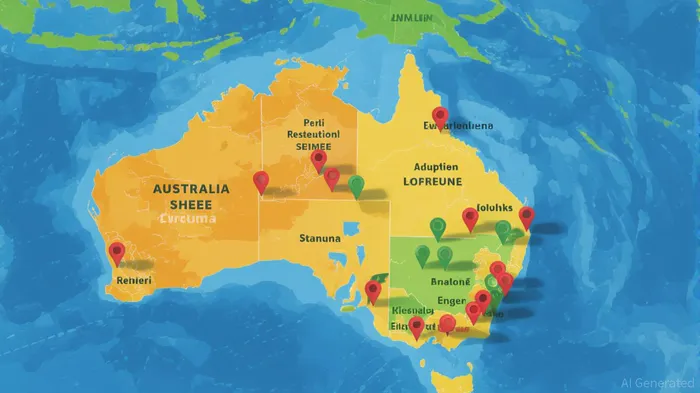
Australia's energy transition is a paradox. On one hand, the government has legislated a net-zero target by 2050 and accelerated investments in renewable hydrogen, critical minerals, and grid modernization[1]. On the other, it has approved 31 coal, oil, and gas projects since 2023, with lifetime emissions exceeding 6.5 billion tonnes of CO2-e[2]. This duality creates a complex risk landscape for investors, who must navigate contradictory signals from policymakers, environmental advocates, and market realities.
The Fossil Fuel Conundrum
The Albanese government's approval of projects like Woodside's North West Shelf gas extension—a 45-year operation projected to emit 3,955 million tonnes of CO2-e—has drawn sharp criticism[2]. While these projects are technically required to align with net-zero baselines under the Safeguard Mechanism (SGM), critics argue the SGM's emissions caps are insufficient to meet 2035 targets[3]. For instance, the Climate Council estimates that emissions from approved projects could raise Australia's 2035 target baseline by up to two percentage points[2]. This undermines the credibility of climate commitments and raises questions about the government's ability to phase out fossil fuels without economic fallout.
The contradiction is further amplified by the government's reliance on indirect financing. Major banks like ANZ and Westpac have lent $3.6 billion to fossil fuel projects in 2023, with 70% of loans directed to companies not aligned with Paris Agreement goals[4]. Critics accuse these institutions of greenwashing through bond arrangements and corporate lending, which indirectly fund methane-intensive operations like metallurgical coal mining[4].
Investor Risks in a Shifting Landscape
Investors face dual risks from Australia's energy policies. First, legal vulnerabilities: A recent report reveals Australia ranks fifth globally in exposure to investor-state dispute settlements (ISDS), where fossil fuel companies could claim compensation for climate regulations[5]. This creates a chilling effect on policy innovation, as governments fear costly legal battles. Second, stranded asset risks: With global markets increasingly favoring net-zero-aligned investments, projects like the Middle Arm petrochemicals hub could become financially unviable within a decade[6].
Renewable energy projects also face hurdles. While the government has launched initiatives like the Hydrogen Production Tax Incentive (A$2/kg for 10 years), infrastructure bottlenecks and land-use conflicts threaten progress. An EY report warns that delays in transmission projects could cost $40 billion by 2050[7]. Meanwhile, a Nature study highlights that renewable infrastructure deployment could clash with biodiversity and Indigenous land rights, requiring urgent collaborative planning[8].
The Path Forward for Investors
For investors, the key lies in hedging against policy volatility. Diversifying portfolios to include both fossil fuel projects with strict emissions conditions (e.g., Woodside's net-zero-by-2050 pledge) and renewable ventures with strong regulatory backing (e.g., hydrogen hubs) may mitigate risks[1]. However, due diligence is critical. For example, Queensland's recent halt on new wind farm applications underscores the unpredictability of state-level policies[9].
Moreover, investors must pressure for transparency. The Climate Council and Jubilee Australia have called for stricter emissions accounting and a phase-out of public financing for fossil fuels[2][6]. Aligning with these demands could enhance long-term returns while avoiding reputational damage from supporting projects at odds with global climate goals.
Conclusion
Australia's energy transition is a high-stakes balancing act. While the government's renewable investments signal optimism, the continued approval of fossil fuel projects creates a policy quagmire. Investors must weigh short-term energy security needs against long-term climate risks, recognizing that the path to net zero will be neither linear nor without conflict. As the Climate Council aptly notes, “Ignoring these confronting warnings will simply be negligent”[5].







Comentarios
Aún no hay comentarios