
Aurubis' Strategic Expansion in Copper Recycling: A Catalyst for Supply Security and Profitability in the Clean Energy Transition
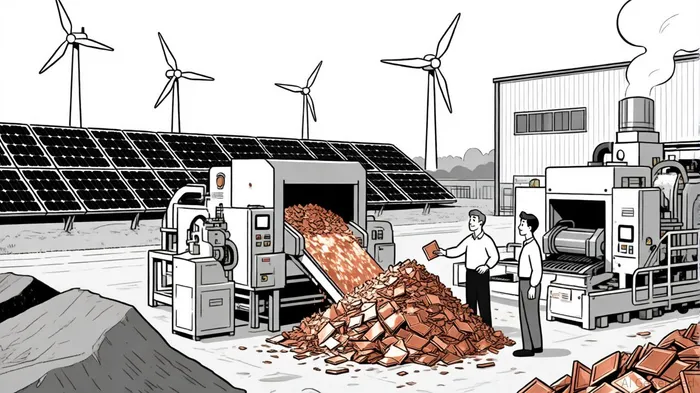
The global clean energy transition is accelerating demand for copper, a critical enabler of renewable energy systems, electric vehicles (EVs), and smart infrastructure. Aurubis AG, a leading European copper recycler, is positioning itself at the forefront of this transformation through strategic investments in recycling capacity, hydrogen-based production, and circular economy initiatives. These moves not only address supply chain vulnerabilities but also enhance profitability in a decarbonizing world, offering compelling opportunities for investors.
Strategic Recycling Capacity: Bolstering Supply Security
Copper demand is projected to double by 2050, driven by its role in electrification and renewable energy infrastructure[1]. Aurubis' recent €200 million investment from the European Investment Bank (EIB) underscores its commitment to securing supply chains. The loan funds two key projects:
1. Bulgarian Refinery Expansion: Allocating €120 million to boost cathode production by 50% to 340,000 tons annually by 2025/26[2]. This expansion aligns with Bulgaria's economic development goals and creates jobs while ensuring a stable supply of high-purity copper for European manufacturers.
2. Complex Recycling Hamburg (CRH): A €190 million initiative to process an additional 30,000 tons of recycled material annually at its Hamburg plant[2]. By recovering copper from end-of-life products, CRH strengthens the circular economy and reduces reliance on primary mining, which faces constraints from declining ore grades and geopolitical risks[3].
These projects are explicitly designed to support the EU's Critical Raw Materials Act, which aims to localize production of strategic materials and reduce dependency on imports[2]. Aurubis' U.S. expansion, including a Georgia facility processing 180,000 tons of scrap annually, further diversifies its footprint and mitigates risks from trade policies like the 50% U.S. tariffs on copper products[4].
Profitability of Recycling: A Competitive Edge
Recycling copper is not only environmentally sustainable but also economically advantageous. Secondary production grew by 9.58% in 2023, outpacing primary production's 5.3% increase[5]. This trend is driven by recycling's energy efficiency—saving up to 85% of the energy required for primary extraction[5]—and lower exposure to volatile mining costs. Aurubis' focus on recycling positions it to capitalize on this growing sector, with the global recycled copper market valued at USD 50.49 billion in 2025 and projected to grow at a 10.6% CAGR through 2032[5].
Government incentives for circular economy practices further bolster profitability. For instance, the EU's Critical Raw Materials Act prioritizes domestic recycling, creating a favorable regulatory environment for companies like Aurubis[2]. Additionally, recycled copper's use in high-value products such as wires and sheets enhances margins compared to primary production[5].
Decarbonization and Emission Reductions
Aurubis' initiatives align with stringent climate targets. The company aims to reduce Scope 1 and 2 emissions by 50% by 2030 (using 2018 as a baseline) and achieve carbon neutrality by 2050[6]. Key measures include:
- Hydrogen-Based Production: Replacing natural gas with hydrogen in its Hamburg anode furnaces, eliminating 5,000 tons of CO2 annually once fully operational[7].
- Renewable Energy Integration: Expanding solar capacity at its Bulgarian Pirdop site by 14 MW, avoiding 22,400 tons of CO2 yearly[8].
These efforts not only reduce environmental impact but also future-proof Aurubis against carbon pricing and regulatory penalties. For example, the hydrogen transition at Hamburg's plant could save an additional 1,200 tons of CO2 annually by reducing natural gas consumption by 30%[7].
Implications for the Clean Energy Transition
Aurubis' expanded recycling capacity directly supports clean energy projects. The Georgia facility, for instance, supplies refined copper for EVs, wind turbines, and solar plants, reducing the U.S.'s reliance on imported materials[4]. Similarly, the CRH initiative ensures a steady flow of recycled copper for European renewable energy installations, where demand is expected to surge due to AI infrastructure and data center growth[4].
Conclusion
Aurubis' strategic investments in recycling and decarbonization address two critical challenges: securing supply chains for a copper-intensive future and enhancing profitability through sustainable practices. By leveraging its expertise in circular economy models, the company is well-positioned to benefit from the clean energy transition while mitigating risks associated with primary mining and global trade volatility. For investors, Aurubis exemplifies how industrial innovation can align environmental stewardship with long-term financial returns.







Comentarios
Aún no hay comentarios