
AUKUS and the Defense Sector: Navigating Geopolitical Shifts and Investment Opportunities
The AUKUS partnership—a trilateral security alliance between the United States, United Kingdom, and Australia—has emerged as a cornerstone of Indo-Pacific strategy, driven by rising geopolitical tensions and the need to counter China's military ambitions. The Pentagon's 2025 AUKUS Review underscores a transformative shift in defense spending, technology collaboration, and military modernization. For investors, this presents both risks and opportunities in sectors ranging from submarine manufacturing to cutting-edge AI and cybersecurity. Here's what to watch.
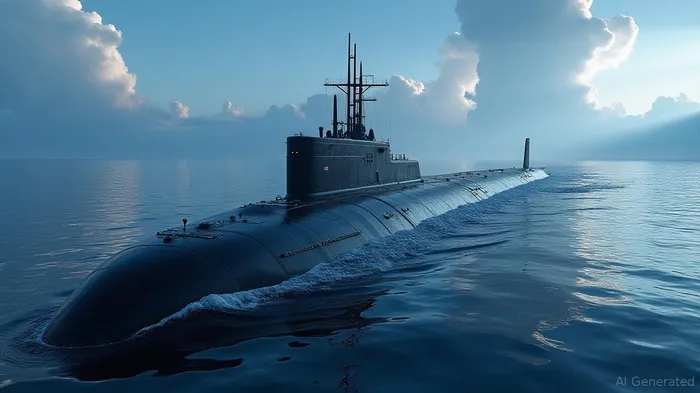
Geopolitical Shifts: The Indo-Pacific Pivot
The AUKUS Review reflects a clear pivot toward the Indo-Pacific, where China's military expansion and assertive behavior have intensified regional instability. The partnership's three pillars—submarine development, advanced technology co-creation, and industrial resilience—are designed to bolster deterrence and interoperability among allies. Key geopolitical drivers include:
1. Submarine Dominance: Australia's shift to nuclear-powered submarines (SSNs) and the UK's plan to deploy up to 12 SSNs by the 2040s aim to counter China's submarine fleet, which now exceeds 60 vessels.
2. Technological Edge: Collaboration on AI, quantum computing, and cyber warfare aims to outpace China's technological advancements, particularly in areas like hypersonic missiles and undersea systems.
3. Regional Alliances: AUKUS is deepening ties with Japan, South Korea, and other Indo-Pacific partners, creating a network of interoperable defense ecosystems.
Defense Spending Trends: A Gold Rush for Key Sectors
The AUKUS Review mandates significant increases in defense spending, with profound implications for industries tied to military modernization.
1. Submarine Manufacturing and Infrastructure
The UK's £15 billion investment to expand submarine production facilities (e.g., BAE Systems in Barrow, Rolls-Royce in Derby) and Australia's procurement of SSNs create long-term demand for:
- Nuclear propulsion systems: Companies like Rolls-Royce (LSE:RR) and Westinghouse (a unit of Brookfield Business Partners) are critical suppliers.
- Advanced materials: Firms such as Raytheon (RTX) and Leonardo (IT:LDO) supply stealth coatings and precision components.
2. AI, Cybersecurity, and Munitions
The UK's £20.3 billion allocation for sovereign nuclear warheads and AI-driven “Digital Targeting Web” highlights growth areas:
- AI and autonomous systems: Companies like Palantir (PLTR), which provides AI for military logistics, and Kratos (KTOS), a leader in drone systems, stand to benefit.
- Cybersecurity: The UK's new Cyber and Electronic Command demands advanced tools from firms like CrowdStrike (CRWD) and Palo Alto Networks (PANW).
- Munitions production: The UK's £6 billion commitment to long-range weapons favors manufacturers like Raytheon and Lockheed Martin (LMT), which supply precision-guided munitions.
3. Quantum and Space Tech
AUKUS Pillar II's focus on quantum computing and space systems opens doors for:
- Quantum tech: Honeywell (HON) and Rigetti Computing (RGTI) are pioneers in quantum hardware, critical for codebreaking and secure communications.
- Space infrastructure: Maxar Technologies (MAXR), which builds satellites for defense and intelligence, is a key player.
Challenges and Risks
While AUKUS presents opportunities, investors must navigate hurdles:
- Funding Gaps: The UK's defense spending targets (3% of GDP by 2034) may strain budgets amid inflation and public spending constraints.
- Procurement Delays: Programs like the UK's “Atlantic Bastion” underwater surveillance system face logistical and cost overruns.
- Regulatory Barriers: U.S. export controls (ITAR/EAR) still hinder technology sharing, despite AUKUS exemptions.
Investment Strategy: Targeting the Winners
Investors should prioritize companies with:
1. Direct AUKUS Contracts: Firms like BAE Systems and Rolls-Royce are core to submarine programs.
2. AI/Cyber Exposure: Palantir, CrowdStrike, and Kratos offer exposure to the “warfighting readiness” push.
3. Quantum and Space Tech: Honeywell and Maxar are positioned for long-term growth in emerging tech.
Conclusion: AUKUS as an Investment Catalyst
The AUKUS Review marks a historic realignment of defense priorities, fueled by geopolitical urgency and technological innovation. While risks like budget shortfalls and regulatory hurdles exist, the long-term trajectory favors defense and tech sectors. Investors should focus on companies with deep ties to AUKUS programs, particularly in submarines, AI-driven systems, and quantum computing. As tensions in the Indo-Pacific escalate, this alliance is more than a strategic shift—it's a blueprint for the next decade of defense investment.
Final Take:
- Buy: BAE Systems (LSE:BA), Palantir (PLTR), Honeywell (HON)
- Hold: Monitor defense budgets and geopolitical developments closely.
- Avoid: Firms reliant on legacy platforms or non-interoperable systems.
The AUKUS era is here. Investors who align with its priorities will capitalize on a new era of defense spending and technological dominance.







Comentarios
Aún no hay comentarios