
AUKUS Defense Innovation: A Strategic Investment Opportunity in Emerging Technologies
The AUKUS partnership, a trilateral defense pact between the United States, United Kingdom, and Australia, has entered a critical phase with its Maritime Innovation Challenge 2025, a technology competition aimed at advancing undersea and autonomous systems. As officials conclude a review of Stage 1 submissions in late May 2025, the initiative underscores a strategic push to dominate emerging technologies—quantum computing, AI-driven autonomy, and undersea communications—that could redefine military capabilities and civilian applications alike. For investors, this marks a pivotal moment to assess opportunities in defense innovation.
Strategic Focus: Where AUKUS is Leading
The review process highlights three core focus areas, each with significant investment potential:
- Undersea Command and Control (C3) Systems
The challenge prioritizes real-time communication networks for uncrewed undersea vehicles (UUVs), seabed infrastructure, and command systems. Proposals are evaluated for their ability to operate in contested environments, ensuring seamless interoperability across AUKUS forces. - Investment Angle: Companies developing low-latency, secure communication technologies (e.g., fiber-optic or quantum-encrypted systems) could see demand surge.
- Key Players: Firms like L3Harris (LHX) and Booz Allen Hamilton (BAH), which specialize in defense communications, may benefit from AUKUS contracts.
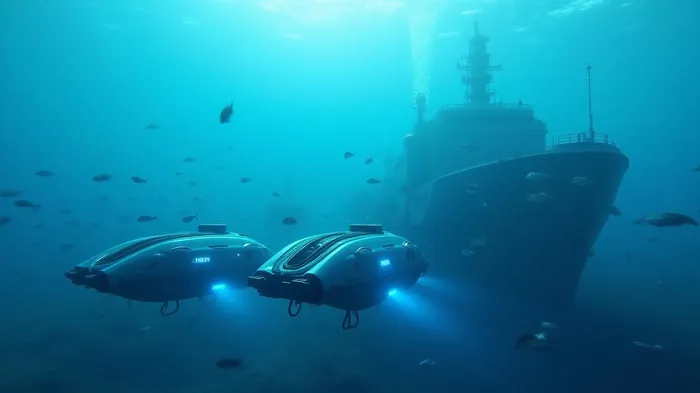
- AI-Driven Autonomy and Task Allocation
Innovations in dynamic task allocation—enabling UUVs to adapt missions in real time—are central to the challenge. Solutions must navigate environmental hazards (e.g., drifting containers) while maintaining data integrity. Investment Angle: AI firms with edge computing or machine learning for robotics expertise, such as C3.ai (AI) or NVIDIA (NVDA), are well-positioned to contribute to this space.
Quantum Technologies and Secure Systems
The AUKUS Quantum Arrangement (AQuA) targets advancements in quantum positioning and encryption, critical for precision navigation and secure data transmission.- Investment Angle: Quantum computingQUBT-- startups like IonQ (IONQ) or Rigetti (RGTI), as well as established players investing in quantum research (e.g., Microsoft (MSFT)), could see defense-related R&D funding rise.
The Financial Landscape: Funding and Market Potential
The AUKUS challenge has allocated up to $8 million for Stage 1 winners, with contracts expected to begin in November 2025. This is just the tip of the iceberg:
- Total Defense Tech Investment: Global spending on defense innovation, including AI and autonomy, is projected to reach $240 billion by 2030, per MarketsandMarkets.
- Geopolitical Catalyst: Tensions in the Indo-Pacific, particularly with China’s military modernization, are accelerating AUKUS’s urgency.
Risks and Considerations
While the AUKUS initiative presents clear opportunities, investors must account for risks:
- Regulatory Hurdles: Export control reforms (e.g., ITAR exemptions) are still evolving, potentially delaying tech sharing.
- Technological Uncertainty: Quantum and AI projects carry execution risks, with timelines often extended.
- Geopolitical Volatility: Escalating Sino-Western tensions could redirect funds away from innovation toward immediate defense needs.
Conclusion: AUKUS as a Growth Catalyst for Tech Investors
The AUKUS Maritime Innovation Challenge 2025 is more than a defense project—it’s a blueprint for technological leadership in critical sectors. With $8 million allocated in the near term and trilateral commitments to expand into quantum, AI, and undersea systems, the initiative creates a pipeline for long-term growth in defense tech.
Investors should prioritize firms with dual-use applications—technologies that serve both military and civilian markets. For example:
- Undersea communications could revolutionize offshore energy or climate monitoring.
- AI autonomy has applications in logistics, disaster response, and smart infrastructure.
The data underscores this opportunity:
- The global autonomous underwater vehicle market is projected to grow at a 12.3% CAGR, reaching $2.1 billion by 2030.
- Quantum computing’s defense and cybersecurity applications could capture $3.5 billion of the total $20 billion quantum market by 2030.
In conclusion, AUKUS is not just about submarines—it’s about shaping the future of technology. Investors who align with this vision stand to benefit as the partnership turns innovation into global strategic advantage.
Data sources: AUKUS Maritime Innovation Challenge documentation, MarketsandMarkets, ETF Database.





Comentarios
Aún no hay comentarios