
The Attractive Valuation and Resilience of Emerging Markets in Q3 2025
In Q3 2025, emerging markets emerged as one of the most compelling asset classes, delivering robust returns while trading at historically significant valuation discounts to developed markets. This combination of performance and undervaluation has created a unique opportunity for investors seeking strategic entry points into equities poised for long-term growth. The Columbia Emerging Markets Fund, which posted an 11.26% return in the quarter, exemplifies how active management can capitalize on these dynamics, outperforming the MSCIMSCI-- Emerging Markets Index's 10.95% gain.
A Valuation Discount That Stands Out
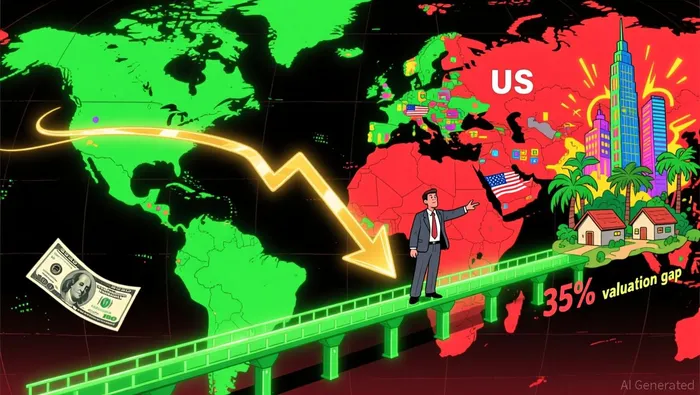
Emerging market equities are currently trading at a 35% forward price-to-earnings (P/E) discount to developed markets, the largest such gap in 15 years, according to RBC Global Asset Management. This discount persists despite strong earnings growth and resilient economic performance in key markets like China, South Korea, and Taiwan. For instance, the MSCI Emerging Markets (Net) Index surged 10.6% in U.S. dollar terms during Q3 2025, outpacing the S&P 500's 8.1% return. This divergence underscores the potential for capital appreciation as valuations normalize.
The discount is not merely a function of lower growth expectations but reflects structural undervaluation. As J.P. Morgan Research notes, emerging markets still trade at a 32% P/E discount to developed markets, even as they demonstrate stronger earnings resilience according to J.P. Morgan Research. This mispricing creates a margin of safety for investors, particularly in markets where fundamentals are improving.
Macroeconomic Tailwinds: Fed Rate Cuts and Capital Flows
 The Federal Reserve's 25 basis point rate cut in September 2025 acted as a catalyst for capital inflows into emerging markets. A weaker U.S. dollar reduced the cost of debt for emerging market borrowers and made their assets more attractive to global investors. According to Schroders, this shift spurred "fresh portfolio inflows" into regions like North Asia and Latin America, where markets such as South Korea and Peru delivered over 20% returns.
The Fed's easing cycle also amplified the appeal of emerging markets by reducing the relative attractiveness of U.S. equities, which trade at elevated valuations. Meanwhile, progress in U.S.-China trade negotiations and AI-driven demand in technology sectors further bolstered investor sentiment. China, for example, led major emerging markets with a 21% gain, driven by policy support for innovation and easing trade tensions.
Active Management in a Diversified Landscape
While broad indices like the MSCI Emerging Markets Index benefited from macro trends, active managers like the Columbia Emerging Markets Fund leveraged value-based strategies to outperform. This aligns with broader industry trends: funds such as Macquarie Emerging Markets and Artemis SmartGARP Global Emerging Markets Equity have consistently delivered top-quartile returns by focusing on fundamentals and sectoral opportunities. The Columbia fund's 11.26% return suggests a similar approach, capitalizing on undervalued equities in markets like Egypt, South Africa, and Vietnam, which saw double-digit gains in Q3.
However, not all emerging markets thrived. India and Brazil faced headwinds from political uncertainties and trade tensions, with India's market declining 7.5% amid rising U.S. tariffs according to recent reports. This highlights the importance of active stock selection and regional diversification in navigating the fragmented performance across emerging markets.
A Case for Strategic Reallocation
The confluence of undervaluation, macroeconomic tailwinds, and active management success makes a compelling case for reallocating capital to emerging markets in 2025. While J.P. Morgan Research cautions that global growth may slow in the second half of 2025, the current momentum in emerging markets-driven by Fed easing, AI demand, and trade normalization-suggests that the window for entry remains open.
Investors should consider funds like the Columbia Emerging Markets Fund, which not only matched but exceeded the MSCI Emerging Markets Index's performance, as a vehicle to access this opportunity. By targeting undervalued equities in high-growth regions, such strategies can harness the resilience of emerging markets while mitigating risks through active oversight.
Conclusion
Q3 2025 has reaffirmed emerging markets as a strategic asset class for investors seeking both capital appreciation and diversification. With valuations at historic discounts, supportive macroeconomic conditions, and active managers delivering alpha, the case for capital reallocation is stronger than ever. As the Fed's easing cycle continues and trade dynamics evolve, emerging markets are poised to remain a cornerstone of forward-looking portfolios.





Comentarios
Aún no hay comentarios