
Atour Lifestyle's High-Growth Momentum and Strategic Moat in China's Evolving Hospitality Market
In the fiercely competitive Chinese hospitality market, Atour Lifestyle Holdings LimitedATAT-- (NASDAQ: ATOUR) has emerged as a standout performer, leveraging a dual-engine strategy of scalable hotel expansion and a rapidly growing retail business to build a durable competitive moat. With non-GAAP profitability metrics surging, a disciplined cost structure, and a unique retail model, AtourATAT-- is not just surviving in a post-pandemic recovery—it's redefining the industry's growth trajectory. For investors seeking long-term outperformance, the company's financial and operational momentum offers a compelling case.
Non-GAAP Profitability: A Barometer of Operational Excellence
Atour's second-quarter 2025 results underscore its ability to translate scale into profitability. Adjusted net income (non-GAAP) rose 30.2% year-over-year to RMB427 million ($60 million), while adjusted EBITDA (non-GAAP) grew 37.7% to RMB610 million ($85 million). These figures outpace the 37.4% revenue growth, signaling margin expansion driven by cost discipline and pricing power.
The company's hotel operating costs fell to 61.7% of revenue in Q2 2025, down from 64.3% in 2024, reflecting streamlined operations and economies of scale. This efficiency is critical in a sector where margins are often squeezed by labor and supply costs. Atour's ability to maintain profitability while expanding its footprint—now 1,824 hotels with 204,784 rooms—demonstrates a scalable business model.
Hotel Expansion: A Strategic Bet on Market Penetration
Atour's 2025 expansion strategy is a masterclass in disciplined growth. The company's managed hotel segment, which now accounts for 816 properties in the development pipeline, is a key driver of its “2,000 Premier Hotels” goal. This focus on managed rather than franchised hotels allows Atour to maintain tighter control over brand consistency and customer experience, a critical differentiator in China's upper midscale segment.
The company's market penetration strategy is equally noteworthy. By targeting tier-1 and tier-2 cities—where demand for premium but affordable accommodations is surging—Atour is capturing growth in both urban and emerging markets. Its modular hotel refurbishment model further reduces capital intensity, enabling faster deployment of new properties without sacrificing quality.
Retail GMV: A Hidden Growth Engine
While hotel operations form the backbone of Atour's business, its retail segment is the sleeper hit. In Q2 2025, retail GMV surged 84.6% year-over-year to RMB1,144 million, contributing 39% of total revenue. This represents a seismic shift from 2023, when retail accounted for just 30% of revenue.
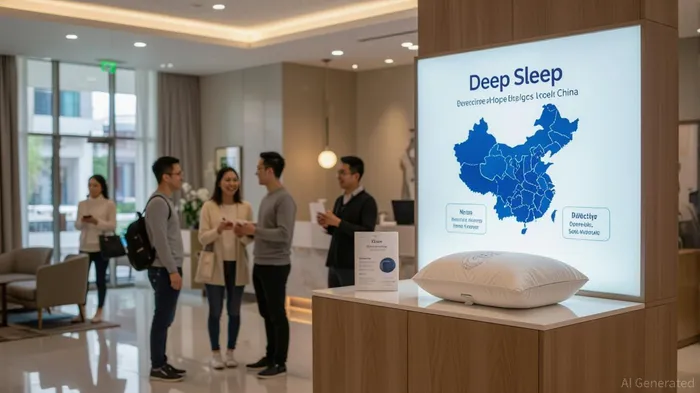
The success of Atour's scenario-based retail model—selling products like the Deep Sleep Pillow PRO and temperature control quilts—highlights its ability to monetize the guest experience. These products are not just ancillary; they're extensions of the brand's value proposition. By creating a direct-to-consumer retail channel, Atour is capturing a higher margin and building customer loyalty beyond the hotel stay.
Strategic Moat: Innovation, ESG, and Customer Loyalty
Atour's long-term outperformance is underpinned by a robust strategic moat. Its A-CARD membership program, with 63 million registered members, provides a data-rich ecosystem for personalized marketing and product development. Meanwhile, ESG initiatives—such as eco-friendly amenities and modular construction—align with global sustainability trends and reduce operational costs.
The company's balance sheet is another strength. With RMB2.7 billion in cash and cash equivalents, Atour has the flexibility to fund expansion, R&D, or strategic acquisitions without overleveraging. This financial fortitude is rare in a sector where capital expenditures are often a drag on profitability.
Investment Implications
For investors, Atour's combination of high-growth metrics and operational discipline is hard to ignore. The company's non-GAAP profitability, 29.2% year-over-year hotel growth, and 84.6% retail GMV surge collectively point to a business that is not just adapting to market changes but leading them.
However, risks remain. The Chinese hospitality market is highly competitive, and Atour's retail segment, while innovative, is still unproven at scale. That said, the company's ability to integrate retail into its core offering—creating a “hotel-as-a-platform” model—positions it to capture value across multiple touchpoints.
Conclusion
Atour Lifestyle is more than a hotel chain—it's a lifestyle brand with a clear vision for the future. By combining scalable hotel expansion, a disruptive retail model, and a focus on operational efficiency, the company is building a business that thrives on both scale and innovation. For investors with a long-term horizon, Atour represents a rare opportunity to invest in a company that is not only riding the wave of China's economic recovery but also shaping its direction.
Final Take: Buy for long-term growth, but monitor retail margin sustainability and competitive dynamics in the upper midscale segment.







Comentarios
Aún no hay comentarios