
ATOM's Fork Catalyst: A Tactical Rebound or a Death Knell?
The narrative for ATOMATOM-- is now defined by a specific, high-stakes event. Over the weekend, the CosmosATOM-- community approved a contentious proposal to peg ATOM's maximum inflation rate to 10%. This vote was a direct response to severe economic pressures, with critics arguing the old rate was overpaying for network security. Yet, the move has sparked deep division, with founder Jae Kwon and his allies warning of potential security implications.
Kwon's reaction was immediate and dramatic. In a Nov. 25 post on social media platform X, he proposed a separate, forked network called AtomOne. This new chain would run on the same underlying software as the Cosmos hub but operate autonomously, with its own governance and development team. The stated mission is to serve as a "bastion for diverse political thought" and a "political party base" within the broader Cosmos ecosystem, aiming to bypass the current governance deadlock.
This sets up the core tactical question: is this a timely, pragmatic response to a hemorrhaging ecosystem, or too little, too late? The backdrop is dire. Crypto analyst Ed, founder of Glider Airdope, recently warned the ecosystem is "pretty much dead," citing projects shutting down or exiting. The community vote and Kwon's fork are direct attempts to address this crisis-one through a top-down policy change, the other through a radical decentralization of the network itself.
The immediate market reaction underscores the volatility of this catalyst. The drama has contributed to ATOM falling by around 4% in the last 24 hours. The setup now is one of forced choice. The community has voted, but a significant faction, led by the project's originator, is walking away. For investors, the event-driven question is whether this bifurcation creates a new, viable path forward or simply accelerates the fragmentation and decline that analysts have already flagged.
Market Metrics: Quantifying the Bleed
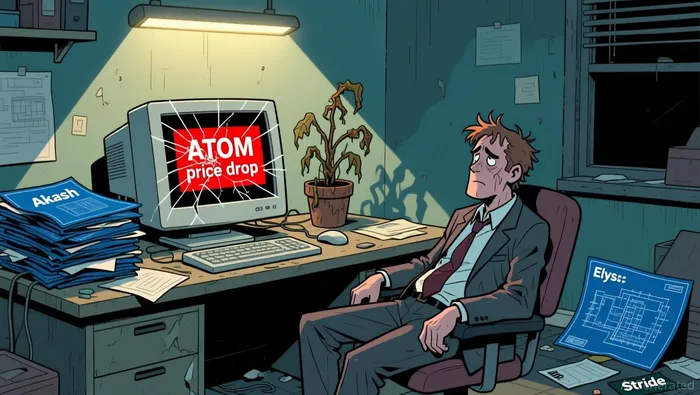
The scale of the exodus from the Cosmos ecosystem is staggering and directly quantifies the failure of its value-capture model. A detailed report from crypto analyst Steven Paterson lists over 20 projects that have shut down, migrated away, or abandoned the network entirely. The list includes major names like Akash, Elys, and Stride, alongside a long tail of others such as pStake, Jackal, Omniflix, Shade Protocol, and Orbit Earn. The pattern is clear: projects launch on Cosmos, achieve initial success, and then exit for ecosystems like SolanaSOL--, Base, and ArbitrumARB--.
The driver is straightforward. As one observer noted, there is "no structural reason to stay. No capture. No incentive alignment." The Cosmos tech stack offers interoperability, but it lacks the economic engine to retain builders. When stronger demand, deeper liquidity, and more mature infrastructure exist elsewhere, projects follow the capital. This isn't a minor migration; it's a systemic hemorrhage that has left the native token, ATOM, as a direct casualty.
The resulting impact on ATOM's price action is severe. The token is currently trading near $2.61, a level that represents a catastrophic decline from its 2021 peak. It has dropped out of the Top 100 by market cap, a stark indicator of its diminished relevance. This isn't just a bear market move; it's the market pricing in the collapse of the ecosystem's foundational thesis. The price bleed is the direct financial consequence of the project departures, validating the warning that the ecosystem is "pretty much dead." For investors, this data confirms the tactical event-the community vote and founder's fork-must be evaluated against a backdrop of irreversible capital flight and a token that has lost its moat.
Structural Drivers: Validator Economics and Treasury Focus
The exodus from Cosmos is not just a migration of projects; it is a symptom of broken economic incentives at the network's core. The structural drivers are twofold: the behavior of validators and the misalignment of the ecosystem's primary funding source.
First, validators are widely criticized as a "cancer" on the network. The core accusation is that they validate nearly every chain launched on Cosmos, regardless of its economic viability, simply to extract fees and rewards. This creates a system where validators take the airdrop and validate all the chains, draining capital from the ecosystem without providing proportional security. The result is a uniform pattern of decline across the network's 100+ chains, as they all share the same validator set and suffer from similar issues like huge inflation and few users. This behavior directly undermines ATOM's purpose of providing security and liquidity, turning the validator base into a collective rent-seeker rather than a steward of network health.
Second, the Interchain Foundation's treasury-the key source of funding for ecosystem development-has shifted its focus. According to analyst Christopher Goes, the treasury is now focused mainly on business development and value accrual to specifically ATOM. This means resources that could have been used to support new projects, improve tooling, or attract talent are being redirected inward to prop up the native token. It's a classic case of a sinking ship prioritizing its own lifeboats. This internal focus severely limits the capital available for broader ecosystem growth, making it even harder for projects to justify staying or launching on Cosmos.
This brings us to the heart of the tension highlighted by the recent inflation cap vote. The community's decision to peg ATOM's maximum inflation rate to 10% is a direct attempt to balance two competing needs. On one side, the network must pay validators enough to maintain security and attract staking. On the other, excessive inflation risks over-diluting the token's value and further discouraging participation. The validator criticism and treasury reallocation show that the current system is failing on both counts: it's not paying validators sustainably, and it's not creating enough value to retain projects or capital. The vote is a stopgap measure, but it doesn't fix the underlying structural flaws that are driving the ecosystem's decline.
Catalysts and Risks: Forking the Future
The immediate tactical question is whether the AtomOne fork becomes a catalyst for renewal or a formal death knell for the original Cosmos Hub. The primary catalyst is the outcome of Kwon's proposal. If the AtomOne network gains traction, it would split the community and further fragment the ecosystem's value. This could create a new, potentially more agile chain for projects aligned with its "political party base" ethos. Yet, it also risks accelerating the capital flight that has already crippled the original hub, as more projects and validators follow the founder's lead.
A key risk is that the fork merely formalizes the existing fragmentation. The validator base, already criticized as a "cancer" that validates nearly every chain for fee extraction, may simply migrate en masse to the new chain. This would leave the original Cosmos Hub with a diminished validator set and less security, making it even less attractive for projects. The result would be a hollowed-out core network, with the AtomOne chain absorbing the remaining energy and capital. In this scenario, the fork doesn't solve the problem; it institutionalizes it.
Watch for any shift in the Interchain Foundation's treasury allocation or validator behavior. The foundation's current focus on business development and value accrual to specifically ATOM is a major red flag. If this inward focus continues unabated, it will likely accelerate the exodus of projects that need external funding to thrive. Similarly, if validators continue to validate chains solely for rewards, regardless of their viability, the economic model for both chains will remain broken. The setup now is one of forced choice: the community has voted, but the founder is walking away. The next few weeks will show whether this bifurcation creates a new, viable path forward or simply confirms the ecosystem's terminal decline.





Comentarios
Aún no hay comentarios