
Atlassian Insider Selling: Signal or Noise?
In late 2025, AtlassianTEAM-- (NASDAQ: TEAM) found itself at the center of investor scrutiny due to a series of high-profile insider transactions. CEO Michael Cannon-Brookes and co-founder Scott Farquhar executed multiple share sales under Rule 10b5-1 trading plans, reducing their indirect beneficial ownership by over 1.6% in a single month, as shown in a StockTitan Form 4 filing. These actions, while legally compliant, coincided with a 52-week low stock price of $146.88 and a -0.06% total shareholder return year-to-date, according to a Simply Wall St. analysis. The question looms: Is this insider selling a red flag for governance misalignment, or merely a routine financial strategy in a volatile market?
Corporate Governance: A Framework of Compliance
Atlassian's corporate governance policies are among the most robust in the software industry. The company prohibits trading during blackout periods, mandates pre-clearance for all transactions, and restricts hedging or pledging of company stock, as noted in an Atlassian SEC exhibit. Insiders are permitted to trade only during designated quarterly windows, typically post-earnings releases, a practice described in that SEC exhibit. For instance, Farquhar's October 3, 2025, sale of 7,665 Class A shares occurred under a Rule 10b5-1 plan adopted in February 2025, as documented in a StockTitan 10b5-1 filing - a non-opportunistic framework designed to insulate transactions from accusations of insider trading.
These protocols align with broader industry trends. A 2025 Harvard Law survey found that 89% of U.S. companies enforce quarterly blackout periods and preclearance procedures, underscoring common governance practices across the market (Harvard Law survey). Atlassian's adherence to such standards suggests a commitment to ethical governance. However, the sheer volume of its insider sales-exceeding $13 million in late 2025-has raised eyebrows, according to a Waiker.ai report. While the company's policies prevent trading on material nonpublic information, they do not eliminate the perception of disengagement from long-term shareholder value.
Industry Context: A Tech Sector Bearish Trend
Atlassian's insider selling must be contextualized within a broader industry pattern. In 2025, the U.S. market's Insider Buy/Sell Ratio stood at 0.29, far below historical averages, per an SEC FilingData analysis. Tech executives, in particular, have been aggressive sellers: Oracle's Safra Catz liquidated $1.83 billion in shares, while Dell's Michael Dell sold $1.22 billion. These actions reflect a sector-wide trend of profit-taking after years of post-2023 market euphoria.
Yet, Atlassian's case is nuanced. While most insiders sell during peak valuations, its executives sold as the stock declined. This contrasts with the typical "buy low, sell high" pattern observed in an ScienceDirect study. For example, CRISPR Therapeutics' director Simeon George purchased $51.5 million in shares during a 2025 price slump, signaling confidence in undervaluation, according to the SEC FilingData analysis. Atlassian's lone notable buy-a $251,715 transaction by director Scott Belsky in August 2025-was an outlier in an otherwise bearish trend, as shown in the StockTitan Form 4 filing.
Shareholder Confidence: A Fragile Equilibrium
The market's reaction to Atlassian's insider activity has been mixed. On one hand, the company's strict governance policies and transparency in SEC filings have reassured some investors. On the other, the timing of the sales-amid a 6.26% stock price drop from August to September 2025-has fueled skepticism, as the StockTitan filing shows. Analysts at Simply Wall St. note that Atlassian's price-to-sales ratio of 7.6x, while below its peer average of 13.8x, still suggests undervaluation given its AI-driven product roadmap. However, this optimism clashes with Q1 fiscal 2026 revenue guidance that fell short of expectations, citing "economic pressures and customer discounting," per Waiker.ai.
The disconnect between governance rigor and market sentiment highlights a critical tension. While Atlassian's policies reduce the risk of illicit trading, they do not address investor concerns about leadership's alignment with long-term value. A Virginia Tech study found that insiders often time trades around retail investor attention, selling when hype peaks and buying when interest wanes. Atlassian's executives may be leveraging such dynamics, but the lack of coordinated buying has eroded trust.
Signal or Noise? A Balanced Verdict
Atlassian's insider selling is neither a definitive warning nor a benign footnote. The company's governance framework is sound, and its use of Rule 10b5-1 plans demonstrates legal diligence. However, the consistency and scale of the sales-particularly during a stock downturn-signal a potential misalignment between leadership and shareholder interests. This is compounded by broader tech-sector trends where insiders are 16 times more likely to trade on material nonpublic information than average investors, according to a Gitnux market report.
For investors, the key lies in context. Atlassian's insider activity should be evaluated alongside its strategic execution. The company's aggressive AI integration and expanding cloud collaboration tools remain compelling long-term drivers, as highlighted by Simply Wall St. Yet, without a reversal in insider sentiment or a rebound in stock price, the current trajectory risks undermining confidence. As one Waiker.ai analyst put it, "The market is asking: If the insiders don't believe in the stock, why should we?"
In the end, Atlassian's insider selling is a signal-but one that requires careful decoding. It is not noise, but neither is it a clarion call for alarm. Investors must weigh governance strengths against market realities, recognizing that even the most robust policies cannot fully insulate a company from the psychological impact of leadership's financial choices.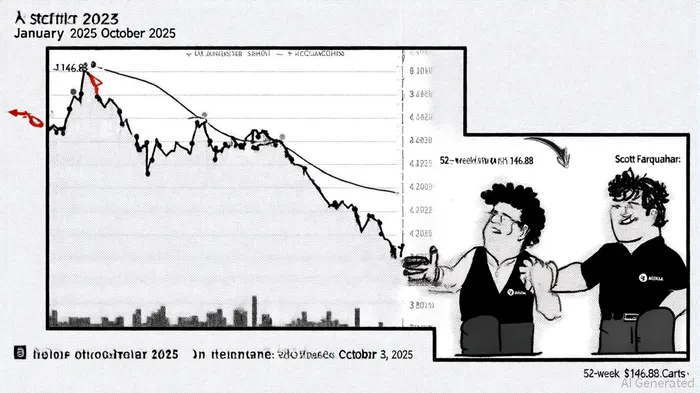





Comentarios
Aún no hay comentarios