
Atlas Copco's Strategic Expansion into High-Growth Industrial Sectors
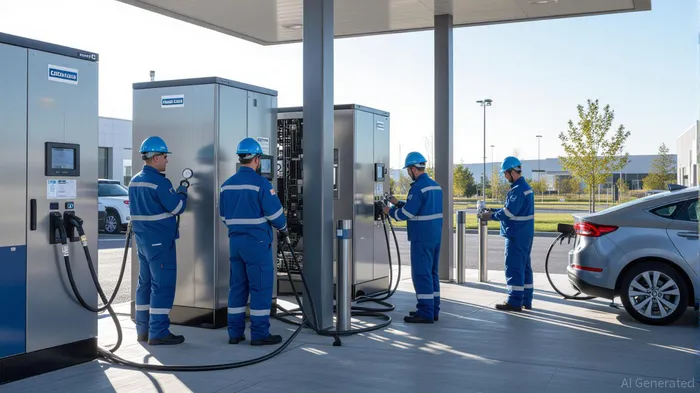
In the race to decarbonize global industries, one name is emerging as a critical enabler of the energy transition: Atlas Copco. Over the past two years, the Swedish industrial giant has executed a masterclass in strategic M&A, acquiring niche technologies and expanding into high-growth sectors like hydrogen infrastructure and gas compression. These moves are not just reshaping Atlas Copco's portfolio—they're positioning it as a linchpin in the global shift toward energy efficiency and renewable infrastructure. For investors, this represents a compelling opportunity to align with a company that's not only adapting to the energy transition but actively accelerating it.
The ABC of Strategic M&A
Atlas Copco's 2025 acquisition of ABC Compressors is a case study in precision. By acquiring a 1943-founded specialist in reciprocating compressors, Atlas Copco has secured a critical piece of the hydrogen infrastructure puzzle. Reciprocating compressors are indispensable for hydrogen refueling stations, biogas processing, and gas-to-wire projects—sectors expected to balloon as hydrogen investment surges toward $1.2 trillion by 2030.
The integration of ABC into Atlas Copco's Compressor Technique Business Area, which already generates $5 billion in annual revenue, is a masterstroke. This synergy reduces integration risks and amplifies operational efficiencies. For instance, ABC's manufacturing hubs in China and the U.S. now serve as strategic anchors for Atlas Copco's clients in Asia and North America, minimizing costs and maximizing scalability. Analysts project that this acquisition could unlock 5–10% revenue synergies by 2027 through cross-selling and shared supply chains.
A Disciplined M&A Machine
Atlas Copco's M&A strategy since 2018 has been nothing short of surgical. Over 80 acquisitions later, the company has diversified into high-margin segments like pumps and machine vision while fortifying its dominance in gas compression. The 2025 acquisition of South Korea's Kyungwon Machinery—a leader in industrial pumps—further underscores this approach. By targeting companies with complementary geographies and technologies, Atlas Copco avoids the pitfalls of overpaying for “growth at all costs.”
This discipline is backed by a rock-solid financial foundation. With a 27.15% return on equity and a free cash flow of SEK 31.4 billion in the trailing twelve months, Atlas Copco has the firepower to execute deals without stretching its balance sheet. Its debt-to-EBITDA ratio remains conservative, ensuring flexibility to pursue opportunities as they arise.
Energy Transition: The Catalyst and the Catalyst
The energy transition isn't just a trend—it's a $1.2 trillion opportunity for hydrogen infrastructure alone. Atlas Copco's focus on reciprocating compressors places it at the heart of this growth. Unlike centrifugal or axial compressors, reciprocating models excel in high-pressure applications, making them ideal for hydrogen storage and transport. As governments and corporations ramp up hydrogen projects, Atlas Copco's technology becomes a non-negotiable component of the value chain.
Moreover, Atlas Copco's recent forays into biogas and natural gas processing—via acquisitions like ABC—position it to benefit from both decarbonization and the ongoing role of natural gas as a transitional fuel. This dual-play strategy ensures the company isn't overexposed to any single energy source while capturing growth across the spectrum.
Valuation and Investment Implications
As of June 2025, Atlas Copco's stock trades at a 20% discount to its price target of SEK 167, a discount that seems unjustified given its accelerating growth trajectory. The integration of ABC is expected to drive margin expansion and revenue diversification, particularly as hydrogen infrastructure projects gain regulatory and financial momentum.
For long-term investors, this discount represents a compelling entry point. The company's M&A-driven strategy is not just about short-term revenue—it's about securing a leadership position in sectors that will define the next decade of industrial innovation. With a strong balance sheet, a history of disciplined execution, and a clear line of sight to the energy transition's megatrends, Atlas Copco is a buy for those seeking exposure to the industries of the future.
Final Thoughts
Atlas Copco's recent M&A activity isn't just about growth—it's about control. By acquiring companies that fill critical gaps in the energy transition value chain, it's building a moat that's both technological and geographic. As the world pivots toward hydrogen and renewable infrastructure, Atlas Copco's compressors, pumps, and machine vision systems will be the unsung heroes enabling this shift. For investors, the message is clear: this is a company that's not only riding the wave of the energy transition but shaping its direction.







Comentarios
Aún no hay comentarios