
Atlas Copco's Strategic Expansion in the Compressed Air Market: Strengthening EMEA Distribution and Long-Term Profitability
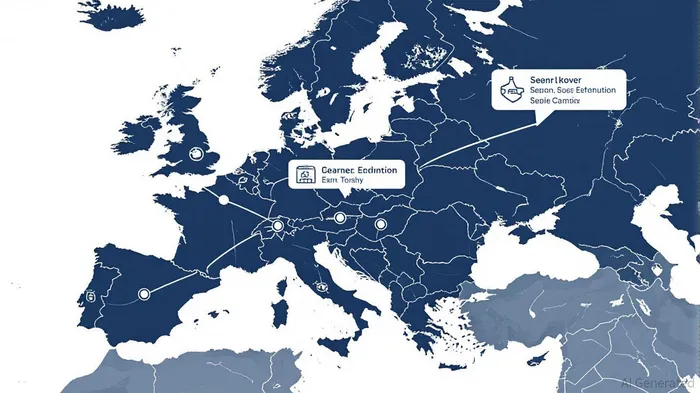
Atlas Copco’s recent acquisition of CRI-MAN S.p.A., an Italian manufacturer of pumps and separators, and its earlier purchase of a Turin-based compressed air distributor, underscore a strategic pivot to fortify its EMEA operations. These moves align with the company’s long-term vision to dominate industrial automation and energy transition markets, leveraging its disciplined M&A approach and operational resilience.
Strategic Rationale Behind the Italian Acquisitions
The acquisition of CRI-MAN S.p.A. is a targeted effort to strengthen Atlas Copco’s foothold in the biogas and wastewater treatment industries, sectors poised for growth amid global decarbonization efforts. CRI-MAN’s 2024 revenue of 30 million euros (342 million SEK) highlights its scalability, while its expertise in high-efficiency pumps and separators complements Atlas Copco’s existing portfolio of compressed air solutions [2]. The earlier acquisition of a Turin-based distributor, finalized in 2021, expanded the company’s local service capabilities, ensuring tighter integration with industrial clients in Italy’s manufacturing heartland [1]. Together, these acquisitions create a dual-layered strategy: enhancing product offerings for energy-intensive industries and optimizing last-mile distribution in a geographically fragmented market.
EMEA Market Dynamics and Growth Prospects
The EMEA region accounts for 23.80% of the global air compressor market in 2025, driven by industrial automation and stringent energy efficiency regulations [3]. Europe, in particular, is a mature market for low-pressure gas compressors, with a projected 3.2% CAGR from 2025 to 2033 [5]. Atlas Copco’s focus on oil-free compressors and digitally monitored systems aligns with the energy transition, as industries adopt technologies to meet net-zero targets. For instance, the integration of IIoT (Industrial Internet of Things) in compressor systems enables real-time asset management, reducing downtime and energy consumption—a critical differentiator in competitive markets [4].
Atlas Copco’s M&A Track Record and Capital Allocation
Atlas Copco’s M&A strategy has historically prioritized bolt-on acquisitions that enhance its core competencies in industrial solutions. The company’s decentralized structure and high return on capital employed (ROCE) have enabled it to integrate smaller, specialized firms without diluting operational efficiency [1]. While Q2 2025 results showed mixed performance—organic order declines in Compressor and Industrial Techniques segments—the company closed five acquisitions year-to-date, signaling continued confidence in strategic growth [2]. The Italian deals, expected to finalize in Q4 2025, are likely to mitigate currency headwinds and integration costs observed in earlier quarters, as the company scales its EMEA footprint.
Investment Potential in Industrial Automation and Energy Transition
Atlas Copco’s alignment with the energy transition and automation trends positions it as a compelling long-term investment. Its recent foray into biogas and wastewater treatment through CRI-MAN taps into a $12 billion global biogas market, expected to grow as renewable energy adoption accelerates [2]. Meanwhile, the company’s vacuum and power techniques segments, which saw 3% and 10% organic order growth in Q2 2025, respectively, reflect demand for precision engineering in semiconductor and pharmaceutical industries [2]. Investors should monitor how these segments leverage the Italian acquisitions to reduce supply chain bottlenecks and enhance cross-selling opportunities in EMEA.
Risks and Considerations
Despite its strategic advantages, Atlas Copco faces challenges. Currency fluctuations and integration costs from recent acquisitions have temporarily pressured operating margins [2]. Additionally, the EMEA market’s regulatory complexity—particularly in the Middle East and Africa—requires localized expertise to avoid compliance risks. However, the company’s historical resilience, including maintaining a 15% operating margin during past economic crises, suggests it can navigate these hurdles [1].
Conclusion
Atlas Copco’s Italian acquisitions are a calculated move to solidify its EMEA distribution network and capitalize on the energy transition. By combining CRI-MAN’s industrial expertise with its own innovation-driven model, the company is well-positioned to outperform in a market projected to grow steadily through 2033. For investors, the key will be tracking the integration of these acquisitions and their impact on Atlas Copco’s ROCE and EMEA revenue contributions in 2026.
Source:
[1] Atlas Copco: The Only Three Things That Matter [https://www.bestanchorstocks.com/p/atlas-copco-the-only-three-things]
[2] Italian Pump Maker Joins Atlas Copco Group [https://themanufacturedata.com/italian-pump-maker-joins-atlas-copco-group/]
[3] Air Compressor Market Report 2025 (Global Edition) [https://www.cognitivemarketresearch.com/air-compressor-market-report]
[4] Reciprocating Air Compressor Market Sustainability [https://www.linkedin.com/pulse/reciprocating-air-compressor-market-sustainability-strategic-voz8e/]
[5] Low Pressure Gas Compressor Decade Long Trends [https://www.marketreportanalytics.com/reports/low-pressure-gas-compressor-330980]







Comentarios
Aún no hay comentarios