
Atkore's Strategic Restructuring: Operational Efficiency and Shareholder Value Implications
Atkore's Strategic Restructuring: Operational Efficiency and Shareholder Value Implications
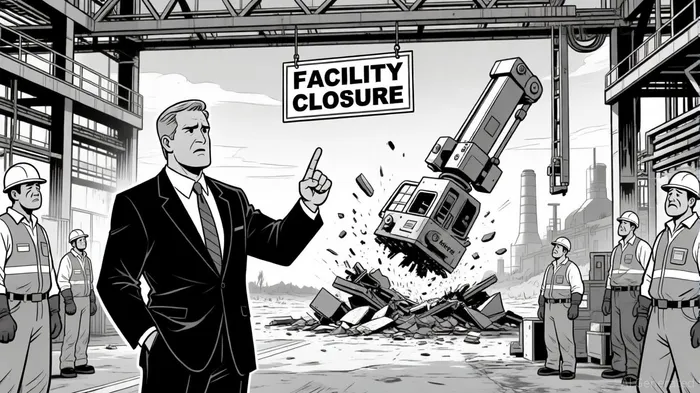
Atkore Inc. (ATKR) has embarked on an aggressive strategic restructuring in 2025, aiming to streamline operations, reduce costs, and refocus on its core electrical infrastructure portfolio. This initiative includes the consolidation of three manufacturing facilities by Q2 2026, the divestiture of non-core assets like its HDPE pipe and conduit business, and workforce reductions. While the company has framed these actions as essential for long-term profitability, the financial and operational outcomes remain a mixed bag, raising critical questions about the effectiveness of the restructuring and its impact on shareholder value.
Operational Efficiency: Cost-Cutting and Asset Optimization
Atkore's restructuring plan centers on eliminating redundancies in its manufacturing footprint. According to a Panabee report, the company will shutter three plants by mid-2026, incurring pre-tax charges of $5–15 million for employee-related and shutdown costs. Relocating production equipment to existing facilities is expected to optimize asset utilization, though a Sahm Capital report notes the company has not disclosed specific cost-saving figures. Analysts estimate that these measures could generate annualized savings, but they are offset by $50 million in unmitigated headwinds for 2026, driven by tariffs and pricing pressures per the StockAnalysis forecast.
The divestiture of non-core assets, such as the HDPE pipe business, further underscores Atkore's pivot toward electrical infrastructure. As stated by the company in an Atkore investor update, this strategy aims to "strengthen financial returns and improve profitability" by concentrating resources on higher-margin segments. However, the absence of concrete data on projected savings from these actions leaves room for skepticism about their immediate financial impact.
Financial Performance: Mixed Results and Marginal Guidance
Atkore's Q3 2025 results highlight the challenges of balancing restructuring costs with revenue growth. As summarized in a Finviz recap, net sales rose to $735 million-slightly above estimates-while earnings per share (EPS) fell to $1.25, a 62.5% decline year-over-year. Adjusted EBITDA dropped 51.5% to $99.9 million, reflecting margin pressures from declining average selling prices in key product categories like PVC and steel conduit, as noted by StockAnalysis.
Despite these setbacks, management raised full-year adjusted EPS guidance to a midpoint of $6.50, citing sequential improvements in steel conduit pricing and reduced imported volumes due to tariffs, according to the Finviz recap. However, this optimism contrasts with weaker-than-expected 2025 outlooks. For instance, AtkoreATKR-- projected adjusted EPS of $7.80–$8.90 for 2025, significantly below the $11.67 analyst consensus reported by StockAnalysis. Revenue guidance of $2.9–$3.2 billion also fell short of estimates, signaling ongoing demand-side challenges noted in the StockAnalysis forecast.
Shareholder Value: Strong Fundamentals vs. Structural Risks
Atkore's balance sheet remains a bright spot, with a net debt-to-EBITDA ratio of 0.95x and $300 million in cash reserves, according to a DeepValueCapital analysis. Over the past decade, the company has generated a median return on invested capital (ROIC) of 19.5%, outperforming industry averages, while its consistent share buybacks have reduced outstanding shares by ~6% annually since 2017, per the DeepValueCapital analysis. These metrics suggest a disciplined approach to capital allocation, even as restructuring costs and leadership transitions introduce uncertainty.
Analyst price targets for ATKRATKR-- reflect a cautious outlook. As of June 2025, the average target of $79.80 implies a 24.8% upside from current levels, though five analysts have assigned a "Hold" rating per StockAnalysis. The primary risks include:
1. Tariff and pricing headwinds: Analysts at StockAnalysis note that aluminum tariffs and raw material costs could erode margins in 2026.
2. Leadership transition: The impending retirement of Atkore's long-time CEO raises concerns about strategic continuity, as discussed in the Finviz recap.
3. Restructuring execution risks: Delays in plant closures or asset sales could delay cost savings, impacting near-term earnings.
Conclusion: A Calculated Bet on Core Competencies
Atkore's restructuring represents a calculated shift toward operational efficiency and core competencies, but its success hinges on execution. While the company's strong balance sheet and historical ROIC provide a buffer against short-term volatility, the absence of concrete cost-saving figures and ongoing margin pressures cast a shadow over its 2026 outlook. For investors, the key will be monitoring the pace of asset divestitures, the realization of synergies from plant consolidations, and Atkore's ability to navigate macroeconomic headwinds. If the company can stabilize its core business and deliver on promised efficiencies, the restructuring could unlock long-term value. However, the path remains fraught with challenges that demand close scrutiny.





Comentarios
Aún no hay comentarios