
Athira Pharma's Strategic Turnaround: A High-Conviction Long Thesis Amid Neurodegenerative Innovation and Breast Cancer Breakthroughs
Athira Pharma (NASDAQ: ATHA) has emerged as a compelling case study in strategic reinvention, leveraging a dual-pronged approach to value creation through neurodegenerative disease innovation and oncology advancements. As of late 2025, the company is navigating a pivotal inflection point, marked by a diversified pipeline, capital structure optimization, and emerging synergies between its neurology and oncology programs. This analysis argues that Athira's strategic realignment positions it as a high-conviction long-term investment, driven by its focus on the hepatocyte growth factor (HGF) system and a disciplined financial strategy.
Diversified Pipeline: Dual-Track Innovation in ALS and Breast Cancer
Athira's pipeline now spans two high-potential therapeutic areas: neurodegenerative diseases and oncology. In neurology, ATH-1105, a next-generation small molecule targeting the HGF system, has demonstrated favorable safety, tolerability, and central nervous system (CNS) penetration in Phase 1 trials involving 80 healthy volunteers presented at the 4th Annual ALS Drug Development Summit. These results, presented at the ALS Nexus 2025, support its advancement into ALS patient trials in late 2025. The compound's preclinical data-showing improvements in nerve function and reductions in neurofilament light chain (NfL) biomarkers-underscore its potential to address the unmet need in ALS, a disease with no curative therapies.
Simultaneously, Athira's oncology pivot has gained momentum through its acquisition of lasofoxifene, a selective estrogen receptor modulator (SERM) in a potentially registrational Phase 3 trial (ELAINE-3) for metastatic breast cancer with ESR1 mutations announced in a licensing agreement. With over 50% enrollment achieved and data expected in mid-2027, this program is backed by a $90 million upfront financing package, providing capital to navigate key regulatory milestones. The dual-track strategy-neurology and oncology-reduces reliance on a single therapeutic area, mitigating risk while expanding the company's addressable market.
Capital Structure Optimization: Pruning Costs and Restoring Liquidity
Athira's financial discipline has been a cornerstone of its turnaround. In September 2025, the company executed a 10-for-1 reverse stock split to comply with Nasdaq's minimum bid price requirements, signaling a commitment to restoring shareholder value. This move, coupled with a 70% reduction in operating expenses in Q3 2025 compared to the same period in 2024, narrowed the net loss to $6.6 million from $28.7 million. The cost-cutting measures-targeting both R&D ($2.8 million vs. $17.9 million) and G&A ($4.1 million vs. $7.6 million)-reflect a leaner operational model, enabling the company to allocate resources to high-impact programs like ATH-1105 and lasofoxifene.
The $90 million financing for lasofoxifene further strengthens Athira's balance sheet, ensuring sufficient capital to advance its breast cancer program without dilutive equity raises. This financial prudence, combined with the reverse stock split, addresses historical liquidity concerns and positions the company for sustainable growth.
Oncology-Neurology Synergy: HGF System as a Cross-Disease Platform
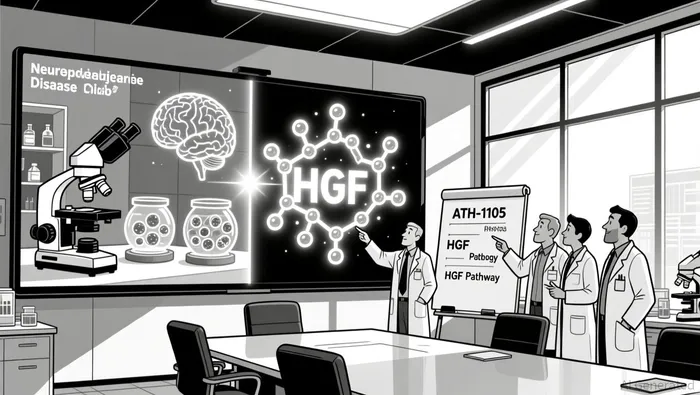
The most compelling aspect of Athira's strategy lies in the HGF system's dual role in neuroprotection and oncology. ATH-1105's mechanism-modulating the HGF system to activate neurotrophic and anti-inflammatory pathways-has shown preclinical promise in ALS models presented at the 4th Annual ALS Drug Development Summit. CEO Mark Litton has emphasized that the HGF system's neuroprotective properties could extend beyond neurology, with potential applications in cancer biology. For instance, HGF/MET signaling has been implicated in tumor progression and metastasis, suggesting that insights from ATH-1105's development could inform future oncology programs.
While lasofoxifene operates via a distinct SERM mechanism, the shared focus on modulating biological pathways (HGF in neurology, estrogen receptors in oncology) highlights Athira's broader ambition: to build a platform capable of addressing unmet needs across disease categories. This cross-program insight reduces R&D risk and accelerates therapeutic innovation, as preclinical and clinical data from one area may inform the other.
Conclusion: A High-Conviction Long Thesis
Athira Pharma's strategic turnaround is anchored in three pillars: a diversified pipeline with near-term catalysts in ALS and breast cancer, a lean capital structure optimized for growth, and a cross-disease platform centered on the HGF system. The company's ability to pivot from a neurology-focused entity to a dual-therapeutic-area innovator-while maintaining financial discipline-demonstrates operational agility. With ATH-1105 poised to enter ALS trials in late 2025 and lasofoxifene's Phase 3 data expected in mid-2027, AthiraATHA-- offers investors a compelling risk-reward profile. For those willing to bet on scientific innovation and strategic execution, this is a high-conviction long thesis.





Comentarios
Aún no hay comentarios