
AstraZeneca's Direct Listing on the NYSE: Strategic Market Access and Capital Efficiency in the Biopharma Sector
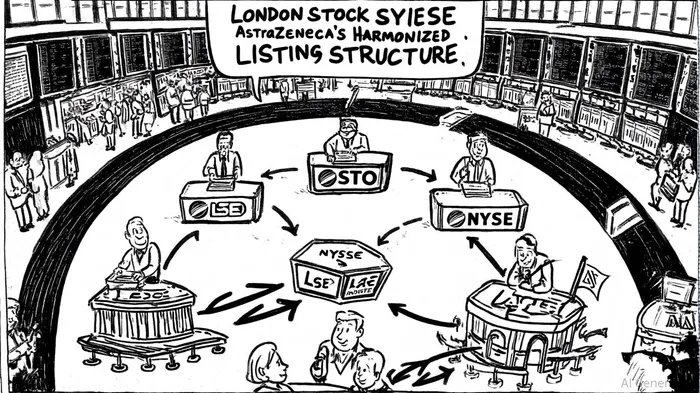
AstraZeneca's decision to transition from American Depositary Receipts (ADRs) on Nasdaq to a direct listing of ordinary shares on the New York Stock Exchange (NYSE) marks a pivotal strategic move in the biopharmaceutical sector. This shift, part of a broader harmonization of its listing structure across the London Stock Exchange (LSE), Nasdaq Stockholm (STO), and NYSE, underscores the company's commitment to enhancing global market access while optimizing capital efficiency. By aligning its equity structure with the preferences of international investors, AstraZenecaAZN-- is positioning itself to capitalize on the U.S. market's liquidity and the sector's evolving capital-raising dynamics.
Strategic Market Access: Expanding Investor Reach and Liquidity
AstraZeneca's direct listing on the NYSE eliminates the complexity of ADRs, enabling shareholders to trade ordinary shares directly across three major exchanges. This simplification is expected to broaden the company's investor base, particularly in the U.S., where the NYSE's status as the world's largest and most liquid market offers unparalleled access to capital, as AstraZeneca announced plans to harmonise its listing structure across the London Stock Exchange, Nasdaq Stockholm and New York Stock Exchange. For a global biopharma giant like AstraZeneca, which operates in high-cost, high-stakes R&D environments, liquidity is critical. The harmonized structure reduces friction for institutional and retail investors, fostering greater participation and potentially stabilizing share price volatility, as Invezz reported.
The move also aligns with broader trends in the biopharma sector, where companies are increasingly prioritizing global capital access to fund innovation pipelines. As noted in a 2025 Pharmaphorum analysis, lower interest rates and easing credit conditions are incentivizing firms to pursue commercial expansion and R&D investments. By directly listing on the NYSE, AstraZeneca taps into the U.S.'s deep pools of institutional capital, which remain a cornerstone for scaling therapeutic innovations in oncology, respiratory, and immunology—key focus areas for the company, according to its 2024 annual report.
Capital Efficiency: Balancing Cost and Flexibility
While direct listings do not raise new capital (unlike traditional IPOs), they offer distinct advantages in cost efficiency and operational flexibility. AstraZeneca's decision to forgo underwriting fees—typically 5–7% of an IPO's total offering—retains capital internally, which can be redirected toward R&D or strategic acquisitions, as outlined in a Direct Listing comparison. This approach resonates with the sector's current emphasis on capital preservation, especially as biopharma firms navigate prolonged clinical trial timelines and regulatory uncertainties.
The biopharma sector's 2025 capital landscape is shaped by a mix of IPO activity and strategic partnerships. For instance, companies like CG Oncology and Kyverna Therapeutics raised hundreds of millions via IPOs in 2024 to advance cancer and autoimmune therapies, as shown in a Dealforma roundup. However, AstraZeneca's direct listing strategy diverges from this model, leveraging its existing shareholder base to maintain control over capital allocation. This aligns with the company's “Ambition 2030” initiative, which prioritizes high-impact R&D in antibody-drug conjugates, bispecific antibodies, and gene editing, as highlighted in a JP Morgan 2025 note.
Sector-Wide Implications and Competitive Positioning
AstraZeneca's move reflects a sector-wide recalibration of market access strategies. Traditional IPOs, while historically vital for biotechs, have become riskier in a climate of selective public investors. As highlighted in a Barclays report, only 18 biotech IPOs occurred in the U.S. in 2024, down from 10 in 2023, as firms prioritized de-risked clinical-stage assets. Direct listings, by contrast, allow companies to bypass the scrutiny of underwriters and public market expectations while retaining liquidity.
For AstraZeneca, the direct listing reinforces its dual focus on U.S. market access and UK-based governance. The company will remain a constituent of the FTSE 100 and OMX Stockholm 30 indices, ensuring continuity for European investors while expanding its footprint in the U.S. This hybrid approach mirrors the strategies of other multinational pharma firms seeking to balance regulatory compliance with global capital efficiency.
Conclusion: A Model for Future Biopharma Listings?
AstraZeneca's direct listing on the NYSE exemplifies a strategic, cost-conscious approach to market access in an evolving biopharma landscape. By harmonizing its listing structure, the company enhances liquidity, reduces operational complexity, and aligns with macroeconomic trends favoring capital efficiency. As the sector continues to navigate interest rate fluctuations and regulatory shifts, AstraZeneca's model may serve as a blueprint for other global firms seeking to optimize capital access without compromising governance or innovation pipelines.
For investors, the move signals AstraZeneca's confidence in its ability to compete in both traditional and emerging markets. With a shareholder meeting scheduled for November 3, 2025, the approval of this transition will likely be seen as a catalyst for renewed investor interest in a company poised to lead the next wave of therapeutic advancements. Historically, AstraZeneca's share price has shown a modest but statistically notable uptick in the two-to-three-week period following its shareholder meetings, with average cumulative returns of approximately 8–10% over a 14–20 day window, outperforming the benchmark by 7–9 percentage points, according to a historical analysis of AstraZeneca's shareholder meeting impact. This pattern, which sees a win rate of 80–100% between day 14 and day 22, suggests that post-meeting clarity on guidance, dividends, or governance may drive short-term momentum.







Comentarios
Aún no hay comentarios