
Aster's Tokenomics Clarity and Market Stability: How Transparent Token Management Mitigates Volatility and Restores Investor Confidence
Aster's Tokenomics: A Blueprint for Scarcity and Stability
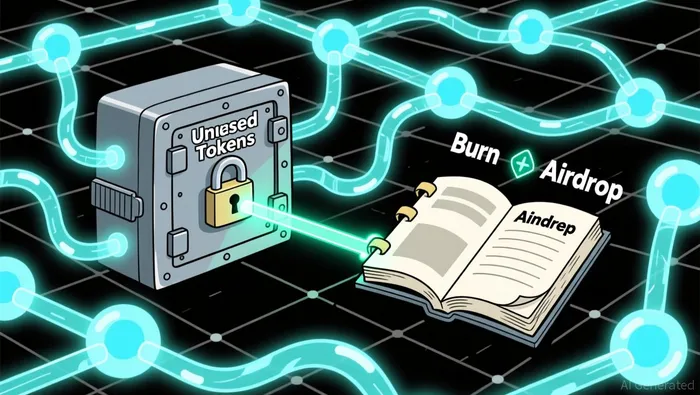
Aster's 2025 tokenomics strategy is a masterclass in balancing scarcity with community incentives. The project allocates 50% of all buybacks to permanent burns, directly reducing the circulating supply of ASTER tokens. The remaining 50% is distributed to locked airdrop addresses, rewarding long-term holders and fostering loyalty. This dual approach creates a deflationary pressure while ensuring that value accrues to those who support the ecosystem over time.
What sets Aster apart is its uncompromising transparency. All burn and airdrop transactions are publicly trackable via blockchain explorers like BSCScan. For instance, users can verify the exact addresses where tokens are burned or airdropped, eliminating speculation about hidden allocations or rug pulls. This level of openness is rare in an industry plagued by opaque token distributions and sudden supply shocks.
A recent hiccup further highlighted Aster's commitment to clarity. In October 2025, a CoinMarketCap (CMC) update erroneously displayed delayed unlock schedules for ASTER tokens, sparking community confusion. Aster swiftly clarified that no changes had been made to its tokenomics and that the tokens in question were stored in a locked address, notNOT-- contributing to the circulating supply. To address concerns, the project announced it would transfer these unused tokens to a public address for independent tracking. This proactive response reinforced trust, demonstrating that the team prioritizes accountability over short-term gains.
Transparent Tokenomics and Market Stability: A Broader Perspective
Aster's approach aligns with a growing industry consensus: transparent tokenomics reduces volatility and attracts institutional investors. A 2025 report by Quecko highlights that projects with clear allocation strategies, vesting schedules, and deflationary mechanisms see lower price swings compared to those with ambiguous token models. For example, Ethereum's transition to a deflationary model post-EIP-1559 and Solana's staking incentives have both been credited with stabilizing their ecosystems by aligning token holder interests.
The data supports this. Aster's price action in late 2025 shows a bullish technical outlook, with the token rising over 8% as it approaches a key resistance level of $1.21. While this could be attributed to broader market sentiment, the underlying tokenomics likely played a role. By reducing circulating supply and rewarding holders, Aster creates a flywheel effect: scarcity drives demand, and demand reinforces price stability.
However, challenges remain. Despite a total trading volume exceeding $3 trillion on decentralized exchanges (DEXs), protocol fees have declined, signaling waning user adoption. On-chain metrics like Open Interest (OI) and perpetual volume also dipped in October, reflecting a risk-off sentiment. These trends underscore the importance of sustained transparency-not just in tokenomics, but in governance and utility-to maintain momentum.
The Bigger Picture: Tokenomics as a Trust-Building Tool
Beyond Aster, the 2025 crypto landscape is seeing a shift toward utility-driven tokenomics. Projects are increasingly tying token value to real-world use cases-such as governance, staking, and cross-chain interoperability-to avoid the pitfalls of speculative hype. For instance, tokens that function across multiple blockchains (e.g., via bridge tokens) enhance liquidity and adoption, making them more attractive to institutional investors.
Regulatory clarity is another piece of the puzzle. As governments crack down on unregulated tokens, projects with transparent tokenomics are better positioned to comply with evolving standards. Aster's public tracking of token flows, for example, aligns with the kind of accountability regulators demand, reducing friction for future compliance.
Conclusion: A Model for the Future
Aster's tokenomics strategy exemplifies how transparency can mitigate volatility and restore investor confidence. By burning tokens, rewarding holders, and making all transactions publicly verifiable, the project creates a self-reinforcing cycle of scarcity and trust. While challenges like declining protocol fees persist, the broader industry trend toward transparent, utility-driven tokenomics suggests that projects like Aster are well-positioned for long-term success.
As the crypto market continues to mature, investors will increasingly favor projects that prioritize clarity over complexity. Aster's 2025 updates are not just a win for its community-they're a blueprint for the future of stable, sustainable tokenomics.






Comentarios
Aún no hay comentarios